Most amputations in diabetes follow a wound that was watched for too long rather than a sudden disaster. Limb salvage brings circulation, infection control and reconstruction together, so the leg is kept and walking continues.
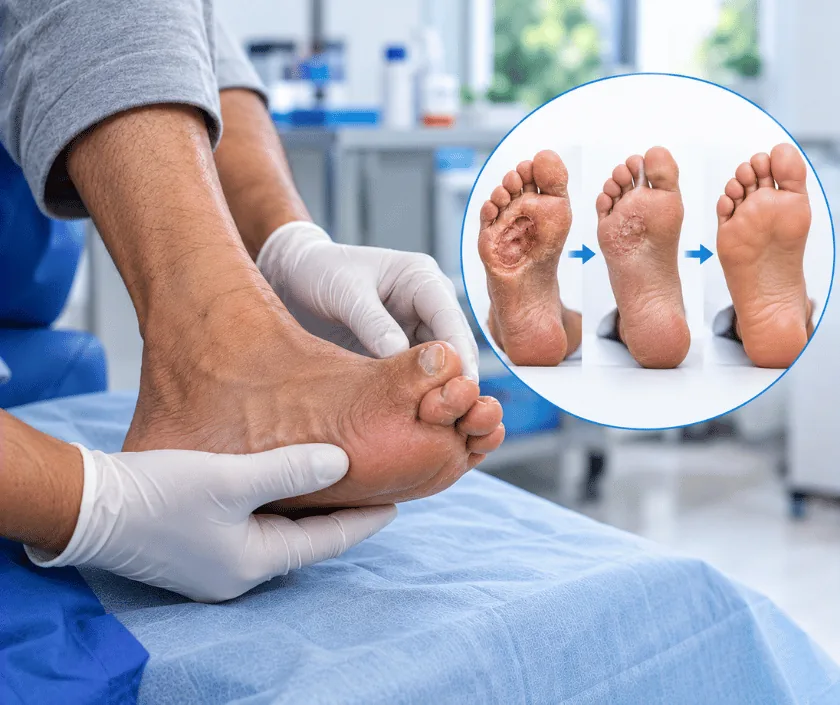
Amputation prevention means treating a threatened foot as an emergency rather than a dressing problem. Blood supply is restored where possible, infection is cleared surgically, pressure is taken off the wound, and the defect is reconstructed. Bringing those steps together in time saves many limbs that would otherwise be lost.
Three problems usually threaten a diabetic limb at the same time. Circulation is reduced, so tissue cannot heal. Infection is present, sometimes deep inside bone. Pressure keeps falling on the very spot that needs rest. Treating any one of these alone rarely works, which is why salvage is planned as a package from the first visit.
Assessment comes first and it is thorough. Pulses are examined, doppler and angiographic studies show where arteries are narrowed, and swabs or bone samples identify the organism. Sugar control, kidney function and nutrition are reviewed too, because healing depends on the whole body and not on the foot alone. Where blood flow can be improved, that is arranged before any reconstruction.
Surgery then removes what cannot recover and rebuilds what can. Grafts and flaps provide cover, offloading procedures change where the load falls, and footwear protects the result. Reviews continue for years afterwards, since the conditions that damaged the foot in the first place have not gone away.
Salvage suits someone whose foot still has, or can regain, enough blood flow to heal, and who is able to take part in the long follow up that keeps a saved limb intact.
Examination, blood tests, imaging and vascular studies are arranged quickly. Speed matters greatly here, since tissue starved of blood or overwhelmed by infection does not wait.
Where arteries are narrowed, angioplasty or bypass is arranged with vascular colleagues. Reconstruction is planned only once the foot has the circulation needed to support it.
Dead and infected tissue is removed in theatre, sometimes on more than one occasion. Cultures guide antibiotics, and drainage relieves pressure within the deep spaces of the foot.
Grafts, flaps and offloading procedures rebuild cover and change the pressure pattern. The aim throughout is a closed wound on a foot that can carry weight safely.
Footwear, insoles, sugar control and regular checks continue afterwards. A saved limb stays saved through surveillance rather than through the operation alone.
Admission focuses on infection control, sugar stabilisation and urgent surgery where needed. Vascular studies are arranged, and the plan is explained to you and your family.
Further cleaning, dressing changes and reconstruction happen in stages. Weight stays off the foot, while mobility is maintained with aids and physiotherapy.
Wounds close and loading begins gradually in protective footwear. Physiotherapy rebuilds strength and confidence in walking again.
Life returns to normal in fitted shoes, with reviews continuing. Both feet are checked, since the second foot carries the same underlying risk.
Many threatened limbs are saved when circulation, infection and pressure are addressed together and early. The foot is usually altered in shape and will need protective footwear from then on. Several procedures are sometimes required rather than one. Not every limb can be salvaged, and where a limited amputation offers better walking and health than a long uncertain struggle, that is said clearly.
Salvage is a demanding path, and it is only fair to know what it can involve before starting out.
The work of keeping a limb carries on long after the wound has closed.
Many feet are saved when circulation, infection and pressure are treated together and without delay.
Absence of pain is not reassurance. Small wounds in numb feet deepen quietly and often reach bone.
A second opinion with proper vascular assessment sometimes finds options that were not available before.
Risk continues for life, so footwear, checks and medical control are what keep the limb afterwards.
Elegance Clinic in Surat coordinates vascular assessment, infection control and reconstruction, so a threatened foot is not treated one appointment at a time. Dr. Ashutosh Shah explains what salvage will involve and when it is not the wiser path.

Salvage is rarely a single procedure, so the estimate covers admission, surgery, dressings and often more than one visit to theatre. Vascular procedures are billed separately by the team performing them. Most of this care is claimable under mediclaim, and a written estimate with insurance support is provided before treatment begins.
These are the questions that come up most often in consultation. If yours is not here, send it on WhatsApp and the team will reply, usually the same day.
Ask your question →Because salvage usually involves more than one procedure, the estimate covers the whole plan rather than a single operation. Vascular treatment is billed by that team separately. Most of this care is claimable under mediclaim, and a written estimate is given before admission.
It is safer when blood supply can be restored and infection controlled, because keeping the limb protects mobility. Where infection threatens life or tissue is already dead, prompt amputation is the safer choice, and that is said openly.
Salvage is measured in months rather than days, with staged surgery, wound healing and rehabilitation. Walking returns gradually in protective footwear. Recovery can vary widely with circulation, the extent of infection and general health.
Outcomes depend on blood flow, how far infection has spread and how early treatment starts, so no promise can be made. Many limbs are saved when all three problems are treated together. Your own assessment gives the honest picture.
A second opinion is reasonable, especially when vascular studies have not been done. Sometimes restoring blood flow changes what is possible. Sometimes it confirms the earlier advice, and that answer is given plainly rather than hidden.
Immediately. Blackening skin, spreading redness, foul discharge or fever with a foot wound needs assessment the same day. Days matter in this situation, and early treatment is the strongest factor in keeping a limb.
Both feet are examined, pulses and sensation are tested, wounds are measured and photographed, and blood tests, imaging and vascular studies are arranged urgently. The plan, its stages and a written estimate are then explained to you and your family.
Seeing patients from across the city and beyond: read about the practice on the plastic surgeon in Surat page, or check what a written estimate covers on the costs and insurance page.
