Tendons work in pairs, and nerve damage often leaves one side pulling harder than the other. Over time that imbalance bends the foot into shapes that press on the ground and ulcerate in the same spot again and again.
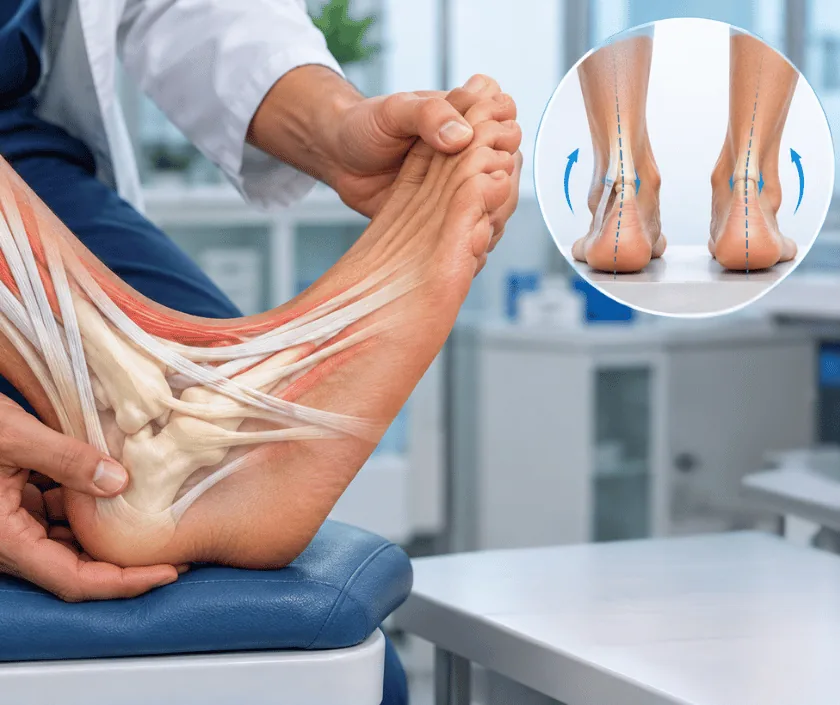
Tendon balancing procedures correct the uneven pull that bends a diabetic foot out of shape. Some tendons are lengthened or released, and occasionally a working one is moved to a new position. Once the pull is even, toes sit flatter and pressure spreads across the sole instead of piling onto one point.
Every joint in the foot is held in position by opposing tendons. Small muscles inside the foot balance the stronger tendons that travel down from the leg. Diabetic nerve damage tends to weaken those small muscles first. What remains is unopposed pull, which curls the toes, lifts the arch and tips more load onto the ball of the foot.
The calf plays its own part. When the Achilles complex tightens, the heel lifts early during each step and the forefoot is pressed harder into the ground. Many long standing ulcers under the ball of the foot are driven by this single factor, and it can be tested easily during examination.
Balancing surgery answers the imbalance directly. A contracted flexor tendon in a curled toe may be released, so the toe lies flat again. A tight calf can be lengthened in small, measured steps. Occasionally a working tendon is transferred to take over the job of one that no longer functions. Each choice is guided by which joints still move and where the pressure actually falls.
The best candidates have a deformity that is still flexible, or a tight calf that can be lengthened, along with circulation good enough to heal small wounds.
Each toe is moved to see whether the deformity is flexible or fixed, and ankle movement is measured with the knee straight and then bent. Callus and pressure points are mapped too.
Your plan names each tendon to be treated and the reason for it. Combining a calf lengthening with a toe release is common, since these two problems usually travel together.
Through small incisions, a tight tendon is divided or lengthened in stages until the joint sits in a better position. Only as much release as needed is carried out.
If a tendon has stopped working altogether, a functioning neighbour is sometimes rerouted to take over its role. That restores balance where simple lengthening would not be enough.
A splint, cast or protective shoe holds the corrected position while healing takes place. Loading returns gradually, so the repair is not stretched too early.
Swelling and mild discomfort are usual. The foot is elevated as much as possible, and walking is limited to what the protective shoe or cast allows.
Wounds are checked and stitches removed at the right time. Toes are inspected for position and colour, and any existing ulcer is reviewed at the same visit.
Healing is usually complete and gentle stretching or physiotherapy may begin. Weight bearing increases, guided by how the skin over the corrected area is coping.
The new position settles into daily walking. Insoles and footwear are refitted, and reviews continue because tendons can slowly tighten again over the years.
Balancing improves position and the pressure pattern, though the foot will not look or feel like an unaffected foot afterwards. Toes usually sit flatter and callus builds more slowly. Sensation does not return, so daily checks remain essential. Deformity can also recur over the years, particularly where nerve damage keeps progressing, and further small corrections are sometimes needed.
Tendon surgery in a numb foot is generally well tolerated, yet the following possibilities are explained before any decision is made.
Correction holds far better when the foot is protected through the weeks that follow.
In a numb foot they usually reflect muscle imbalance from nerve damage, and they raise the risk of ulcers.
Lengthening is measured and controlled. The aim is a balanced foot, and most people walk normally afterwards.
Some of the most useful procedures here are small, quick and done through incisions of a few millimetres.
Nerve damage carries on, so footwear, checks and occasional adjustment remain part of long term care.
Elegance Clinic in Surat examines why a foot is deforming before offering to operate on it. Dr. Ashutosh Shah favours measured, minimal corrections that improve pressure without weakening how the foot works.

Most tendon procedures are done as day care or with a single overnight stay, which keeps the estimate modest. The figure depends on how many tendons are treated, whether a bone correction is combined with it and the anaesthesia chosen. A written estimate is prepared after assessment, and insurance cover is checked before the date is fixed.
These are the questions that come up most often in consultation. If yours is not here, send it on WhatsApp and the team will reply, usually the same day.
Ask your question →Since most are day care operations, the estimate is usually modest compared with reconstruction. It changes with the number of tendons treated and whether bone work is combined. A written estimate is given after examination, and insurance cover is checked in advance.
The operations are short and use small incisions, so they suit a numb foot well. Circulation and infection are checked before surgery is offered. Reduced feeling afterwards is the reason protective footwear must be worn strictly.
Walking in a protective shoe usually begins straight away, while ordinary footwear waits until healing is complete. Stretching may start after a few weeks. Recovery can vary with the number of tendons treated and the state of the skin.
The aim is a functional position that keeps pressure off the tips and knuckles, rather than a cosmetic result. Toes usually sit much flatter than before. Some residual bend often remains, especially where joints have stiffened.
A clean ulcer without spreading infection can sometimes be treated in the same sitting, because relieving the pull helps it close. Active infection has to be controlled first. Timing is decided after examining the wound properly.
Flexible deformities respond better than rigid ones, so earlier treatment usually means a smaller procedure. Waiting allows joints to stiffen and skin to break down, which turns a simple release into a larger reconstruction.
Toes and joints are moved to test flexibility, ankle movement is measured, and callus is mapped across the sole. Imaging is arranged when needed. Options, expected gains and a written estimate are then discussed openly with you.
Seeing patients from across the city and beyond: read about the practice on the plastic surgeon in Surat page, or check what a written estimate covers on the costs and insurance page.
