Facial reanimation surgery is a family of operations that bring closure, movement and balance back to a weakened face. What suits you depends on how long the face has been paralysed and how much working muscle is left.
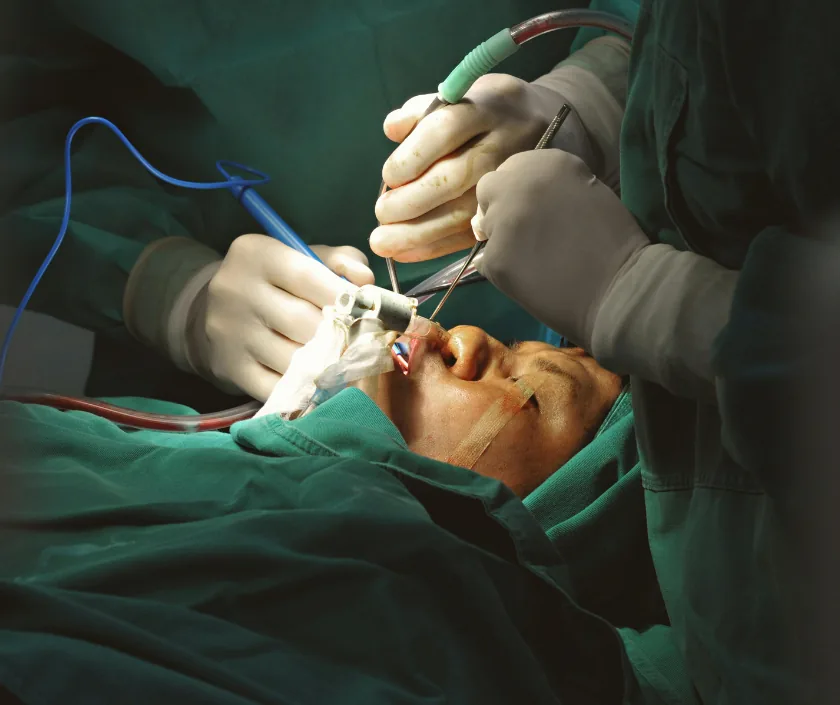
Facial reanimation surgery is planned around two questions. How long has the face been paralysed, and is the facial muscle still healthy? When muscle remains, a nerve can be rerouted to wake it up. When the muscle has wasted, a new muscle is brought in. Eye protection is arranged first, before anything else.
The facial nerve carries signals from the brain to the muscles that blink, smile and hold the lips closed. When that nerve is injured by infection, tumour surgery, trauma or a stroke, those muscles stop working on one side. Facial reanimation surgery does not settle the whole problem with a single operation. Instead a plan is built in layers, starting with the eye, then adding whatever gives the safest gain in movement and balance.
Choices fall into three broad groups. Nerve procedures reroute healthy nerve fibres to muscle that is still alive, and these include a cross facial nerve graft, a masseteric transfer and a hypoglossal transfer. Muscle procedures bring in a new muscle, usually the gracilis from the inner thigh, when the original muscle has wasted away. Static procedures use a sling or an eyelid weight to hold tissue in a better position without creating movement.
Assessment therefore matters more than any single technique. Examination, photographs, video of the face in motion and sometimes nerve testing help decide which group fits, and facial therapy runs alongside surgery in almost every plan.
Suitability is decided case by case, and the answer often shifts with the length of the paralysis and your general health.
Your face is examined at rest and in motion, and photographs or video are recorded. History matters here, because the cause and the length of the paralysis point towards nerve based or muscle based options.
Blink, tear production and corneal sensation are checked, often with an eye specialist. If the surface of the eye is exposed, protection is arranged before any smile surgery is booked.
Options are discussed with their trade offs, including how much movement each can give and how long that movement takes to appear. A written estimate follows once the plan is agreed.
Surgery is carried out under general anaesthesia. Depending on the plan, a nerve is rerouted, a graft is tunnelled across the face, a muscle is transferred, or a sling is placed.
Facial therapy begins once healing allows, and it teaches the brain to use the new signal. Reviews continue over many months, because movement develops gradually rather than all at once.
Swelling and bruising are at their peak. A soft diet, head elevation and prescribed pain relief are usual, while eye care carries on through this period.
Stitches are checked or removed. Many patients feel well enough for light activity at home, although the face still looks swollen and uneven.
Most swelling has settled and therapy is well underway. Nerve based procedures usually show no movement yet, which is expected rather than a setback.
First flickers of movement often appear several months after surgery, then strengthen slowly. Reviews continue while therapy shapes the result.
Movement after facial reanimation is real, yet it is not the same as movement on the healthy side. A rebuilt smile is usually smaller and slower, and it may need practice before it feels natural. Symmetry at rest often improves more predictably than symmetry in motion. Results also keep changing for a long time, so judging the outcome too early tends to disappoint. Therapy makes a genuine difference to the final quality.
Every operation on the face carries risk, and these are discussed openly before you decide anything.
Simple habits at home protect the repair while it heals, and your team will write them down for you.
Options change with time rather than disappear. Longstanding paralysis is usually treated with a new muscle instead of a nerve repair.
The eye, the smile and the brow are usually addressed separately, and sometimes in stages months apart.
Nerve fibres grow slowly, so a wait of several months before the first flicker is normal.
Therapy trains the brain to use the new signal, and results are usually weaker without it.
Elegance Clinic in Surat plans facial paralysis care as a sequence rather than a single procedure, with Dr. Ashutosh Shah reviewing the eye, the smile and the resting face together.

Facial reanimation covers several different operations, so a single price would be misleading. Cost depends on the technique chosen, the length of theatre time, the type of anaesthesia and the hospital stay. After assessment you receive a written estimate listing surgeon fees, hospital charges, grafts or implants if they are used, and follow up visits. Reconstructive work after nerve injury may attract insurance cover, and the team can help you prepare the paperwork.
These are the questions that come up most often in consultation. If yours is not here, send it on WhatsApp and the team will reply, usually the same day.
Ask your question →Often yes. Once the original muscle has wasted, a new muscle can be transferred and given its own nerve supply, so a smile becomes possible again. The result takes many months to develop, and therapy is needed throughout that time.
There is no single figure, because these operations differ so widely. A written estimate is prepared after assessment and lists the surgeon fee, hospital charges, anaesthesia and follow up. Reconstructive work after nerve injury may be partly covered by insurance.
General anaesthesia is used routinely for these procedures and is monitored throughout. Fitness checks happen beforehand, and any heart, lung or diabetes issue is settled first. Risks are explained in detail so you can weigh them before deciding.
Wound healing usually takes a couple of weeks, and many patients return to light routine within that time. Movement is a slower story. Nerve fibres grow gradually, so the face keeps improving over many months alongside therapy.
The aim is balance rather than an exact match. A rebuilt smile is generally smaller and slower than the healthy side, though it often reads naturally in conversation. Symmetry at rest tends to improve more predictably than symmetry in motion.
Eye protection is dealt with before smile surgery, since an exposed cornea can be damaged quickly. Drops, ointment, taping at night and sometimes an eyelid weight or a small eyelid procedure are used. An eye specialist is usually involved.
Sooner is better, even while you are still recovering. An early assessment records how the face moves, protects the eye and sets a timeline. Some options only work while the facial muscle is still healthy, so waiting can narrow the choices.
Each technique below has its own page explaining how it works and when it is chosen.
Seeing patients from across the city and beyond: read about the practice on the plastic surgeon in Surat page, or check what a written estimate covers on the costs and insurance page.
