Most people living with filariasis swelling begin with treatment that needs no operation. Daily skin washing, raising the limb, steady compression and quick attention to any break in the skin can settle the swelling and reduce the infections that make it worse.
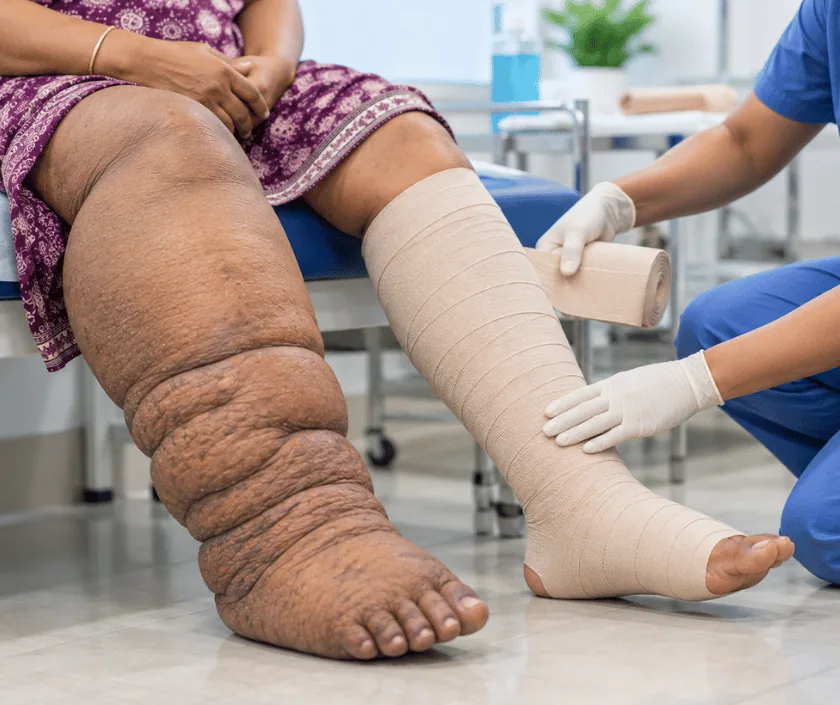
Conservative management is the first treatment for filariasis limb swelling. It combines daily skin washing and drying, raising the limb, compression bandaging or garments, gentle exercise, and prompt treatment of any cut or infection. Medicines are added when a physician advises them. Many patients keep swelling under control this way and never need an operation.
Filariasis spreads through mosquito bites and is still present in parts of India. The tiny worm settles in the lymph vessels, which are the fine drainage channels that carry fluid out of a leg or arm. Once those channels are damaged, fluid collects and the limb slowly grows heavier. Conservative management is the set of daily habits and simple treatments that keep this fluid moving and protect the skin.
The plan has four parts. Washing and drying the skin every day removes the bacteria that trigger repeated attacks of fever and redness. Raising the limb at rest lets gravity assist drainage. Compression, using a bandage or a fitted garment, stops fluid gathering again through the day. Gentle exercise works the muscles that pump lymph along.
Alongside all of this, a physician may prescribe medicine for the parasite and antibiotics when the skin becomes infected. Nothing here works overnight. Even so, many people who follow the routine steadily report a softer, lighter limb and far fewer infections, and a good number need no surgery at all.
Almost everybody with filariasis swelling starts here. The question is not whether to use conservative care but how much of the work the patient and family can keep up at home.
The limb is examined and measured, the skin is checked for cracks and fungal patches, and any history of repeated fever attacks is recorded. Circulation and diabetes control are also reviewed before compression is advised.
You are taught to wash the limb with plain soap and clean water, dry carefully between the toes and folds, and apply the cream advised. Small cracks are treated early rather than ignored.
A bandage or a garment is chosen to match the shape and firmness of the limb. Wearing it correctly matters more than wearing it tightly, so fitting and teaching take time.
Simple positions for raising the limb during rest are demonstrated, along with ankle and foot movements. These are practised with the therapist first so the technique is right.
Measurements are repeated at review visits, garments are replaced as they lose their grip, and a physician prescribes medicine for the parasite or for infection when this is needed.
The routine feels unfamiliar and takes effort. Bandaging may need adjusting once or twice before it settles comfortably. Some patients notice the limb feels lighter by the end of the week.
Skin usually looks cleaner and less flaky, and the swelling often reduces most in the early weeks. Measurements are checked to confirm real change rather than impressions.
By now the routine is familiar. Attacks of fever and redness typically become less frequent. Garments are reviewed and replaced when they have stretched.
Care continues indefinitely, because the lymph channels stay damaged. Most people find the daily routine takes only a few minutes once it becomes a habit.
Conservative care controls filariasis swelling rather than reversing the damage behind it. Many patients see a clear reduction in size and a real fall in infection attacks within the first few months. The limb will usually remain larger than the other side, and swelling returns if compression and skin care stop. Results vary with how advanced the swelling was and how consistently the routine is followed.
Conservative treatment is gentle, but it is not without problems, and most of them come from technique rather than from the treatment itself.
The clinic sets the plan, yet the daily work happens at home. These points cover what matters most between visits.
Daily skin care, elevation and compression reduce size and infections for most patients, even in longstanding swelling.
Surgery is reserved for limbs that stay grossly enlarged despite good conservative care, and it never replaces the daily routine.
Medicine treats the parasite and any infection, but it does not drain fluid already trapped in a damaged limb.
Correct, even pressure works better than tightness, and an overly tight bandage can damage the skin.
Elegance Clinic in Surat treats filariasis swelling as a long relationship rather than a single visit, and the same team follows the limb through conservative care and surgery if that is ever needed.

Conservative care is priced after the limb has been examined, because the plan depends on limb size, the type of compression needed and how often review is required. Garments and dressings are quoted separately so you can see what each item costs. A written estimate is shared before treatment begins, and it is updated if the plan changes. Insurance cover for non surgical care differs a great deal between policies, so please bring your policy papers to the consultation and the team will help you check them.
These are the questions that come up most often in consultation. If yours is not here, send it on WhatsApp and the team will reply, usually the same day.
Ask your question →Cost depends on the compression garments, dressings and number of review visits your limb needs, so it is worked out after the limb is examined. A written estimate is given before treatment begins, with garments and consultations listed separately.
Not always. Compression is unsafe when the arteries of the leg are narrowed, so blood flow is checked before it is advised. Patients with diabetes or heart problems need assessment first, and pressure is then adjusted to suit them.
Many patients notice the limb feels lighter within the first week or two of proper compression and elevation. Measurable reduction usually shows over the first few months. Progress is slower when the tissue has already become firm and thickened.
Usually not. The lymph channels stay damaged, so the limb tends to remain larger than the other side. Realistic aims are a softer, lighter limb, fewer infection attacks and easier walking rather than a return to the original shape.
Almost anyone with filariasis swelling can start here, including patients who are unfit for surgery. It suits those who can look after the skin daily, with family help if needed, and who accept that the routine continues long term.
Surgery is discussed when a limb stays grossly enlarged, or when thickened skin keeps breaking down despite months of committed conservative care. Even then the daily routine continues afterwards, because the underlying lymphatic damage does not go away.
The limb is examined and measured, circulation and skin are checked, and previous fever attacks are discussed. You are then shown the washing, elevation and compression routine, and given a written plan with an estimate before anything is started.
Seeing patients from across the city and beyond: read about the practice on the plastic surgeon in Surat page, or check what a written estimate covers on the costs and insurance page.
