When a limb has grown so heavy that washing, walking and clothing are no longer possible, surgery can remove the bulk of the swollen tissue. The work is done in stages, and daily care of the limb continues afterwards.
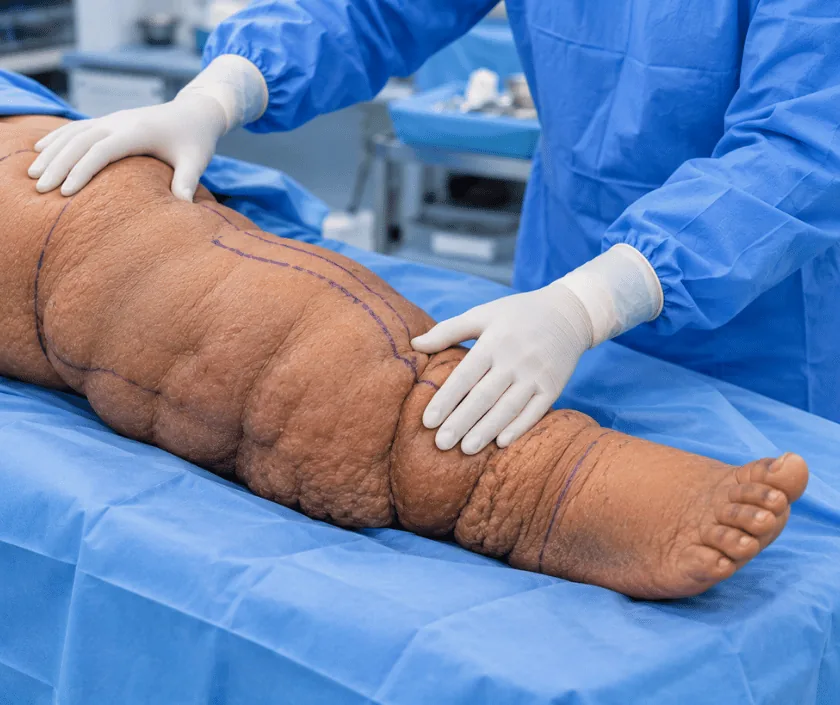
Debulking surgery removes thickened skin and the heavy fatty, fibrous tissue beneath it from a limb swollen by filariasis. Because the volume involved is large, the operation is usually done in stages rather than all at once. It reduces weight and size, but the damaged lymph channels remain, so compression and skin care continue for life.
Years of filariasis swelling change a limb in a way that fluid alone does not explain. Fat and fibrous tissue build up under the skin, the skin itself thickens, and the whole limb becomes solid and heavy. At that stage raising the limb and wearing a garment no longer make much difference, because what has collected is no longer just fluid that can be moved.
Debulking is the operation that removes that tissue. Through a long incision along the limb, the surgeon lifts the skin, takes away the thickened fatty and fibrous layer beneath, trims the excess skin and closes the wound over a drain. The amount removed can be considerable, which is why the limb is usually treated in stages, often one side or one segment at a time, with healing allowed in between.
Honesty matters here. Surgery changes the shape and the weight of the limb, yet it does nothing to repair the lymph vessels that were damaged by the parasite. Fluid will still tend to collect, so compression, elevation and careful skin care carry on afterwards for as long as the patient lives with the condition.
Debulking is a major operation on skin that has already been through years of infection. Selection is careful, and not everyone with a large limb is a good candidate.
Skin infection is cleared, sugar levels and general health are optimised, and blood tests and circulation checks are completed. The stages are planned and drawn on the limb so you know what each sitting will cover.
Spinal or general anaesthesia is given depending on the limb and your fitness. The limb is cleaned thoroughly and positioned so the surgeon can reach the whole planned segment safely.
A long incision is made, the skin is lifted as a flap, and the thickened fatty and fibrous tissue underneath is removed. How much is taken depends on how well the skin flap keeps its blood supply.
Excess skin is trimmed, drains are placed to stop fluid collecting under the flap, and the wound is closed in layers. A firm dressing supports the limb and reduces movement at the suture line.
The remaining segment or the opposite side is treated at a separate sitting once the first wound has healed soundly. Spacing the stages protects the skin and lowers the risk of wound breakdown.
You stay in hospital with the limb raised and the dressing undisturbed. Pain relief and antibiotics are given, drains are watched, and sitting up or standing with support usually begins within this period.
Dressings are changed at intervals and drains come out once output settles. Walking increases gradually. Wound checks are frequent, because healing is the main issue at this stage.
Most wounds have healed by now and compression is restarted over the new limb shape. Many patients are back to light routine work, although heavy lifting and long standing are still avoided.
The limb shape settles and scars soften over many months. Compression, elevation and daily skin care continue, and the next stage is planned if further reduction is wanted.
The limb becomes considerably lighter and easier to manage, but it does not become normal. Contours stay irregular in places, long scars remain along the limb, and swelling still gathers because the lymph channels are damaged. Several stages may be needed before the shape is acceptable. Patients who continue compression and skin care hold their result far better than those who stop once the wounds have healed.
This is major surgery on skin that has often been infected many times before, so complications are not rare and are discussed openly beforehand.
The weeks after discharge decide how well the wounds heal, so the home routine is worth taking seriously.
The operation removes bulk tissue, but the damaged lymph vessels remain, so fluid still gathers and compression is still needed.
Large limbs are usually treated in planned stages, because removing everything at once puts the skin and its blood supply at risk.
Garments matter more after surgery, not less, since they protect the new shape and help the wounds settle.
Reducing a very large limb needs long incisions, so visible scars along the limb are an accepted part of the trade.
Elegance Clinic in Surat plans filariasis surgery in stages with the whole journey mapped out first, so families know what each sitting involves and what the limb will realistically look like at the end.

Debulking is quoted after the limb has been assessed, because the cost depends on how many stages are planned, the length of hospital stay and the dressings each stage needs. A written estimate covering surgeon, anaesthesia, theatre, stay and dressings is given before admission, and later stages are quoted separately as they are planned. Many insurance policies cover surgery for filariasis when it is documented as a medical problem rather than a cosmetic one, so bring your policy papers and the team will help you prepare the paperwork.
These are the questions that come up most often in consultation. If yours is not here, send it on WhatsApp and the team will reply, usually the same day.
Ask your question →Cost depends on how many stages your limb needs, the hospital stay and the dressings used, so it is quoted after assessment. A written estimate covering surgeon, anaesthesia, theatre and stay is given before admission, with later stages quoted as they are planned.
It is a major operation, and safety comes from preparation. Skin infection is cleared first, sugar and general health are optimised, and the bulk is removed in stages rather than at one sitting so the skin keeps its blood supply.
Expect a few days in hospital, then two to three weeks of frequent wound checks at home. Most patients return to light routine activity around six weeks, while heavy work and long standing wait longer depending on how the wounds heal.
No. It becomes much lighter and easier to wash, dress and walk on, yet contours stay irregular and long scars remain. Several stages may be needed before the shape feels acceptable, and some swelling always continues.
Yes, and it matters even more than before. Surgery removes tissue but cannot repair the lymph channels the parasite damaged, so fluid still gathers. Compression, elevation and daily skin care protect the result you have gained.
Anyone with an active skin infection or an open weeping wound waits until it settles. Smokers who will not stop, patients with uncontrolled diabetes or poor limb circulation, and those expecting a normal looking limb are not good candidates.
That is decided after the limb is examined and cannot be fixed in advance. Larger limbs generally need more sittings, and each stage is planned only once the previous wound has healed soundly, which protects the skin.
Yes, and it is one of the most transformative operations in filariasis care. The thickened tissue is excised and the scrotal skin reconstructed, which restores mobility, hygiene and the ability to wear ordinary clothing. Compression and skin care continue afterwards.
Seeing patients from across the city and beyond: read about the practice on the plastic surgeon in Surat page, or check what a written estimate covers on the costs and insurance page.
