Some fungal infections settle in the fat and fascia below the skin rather than on its surface. They grow over months, resist ordinary creams and antibiotics, and need proper testing before any treatment plan is made.
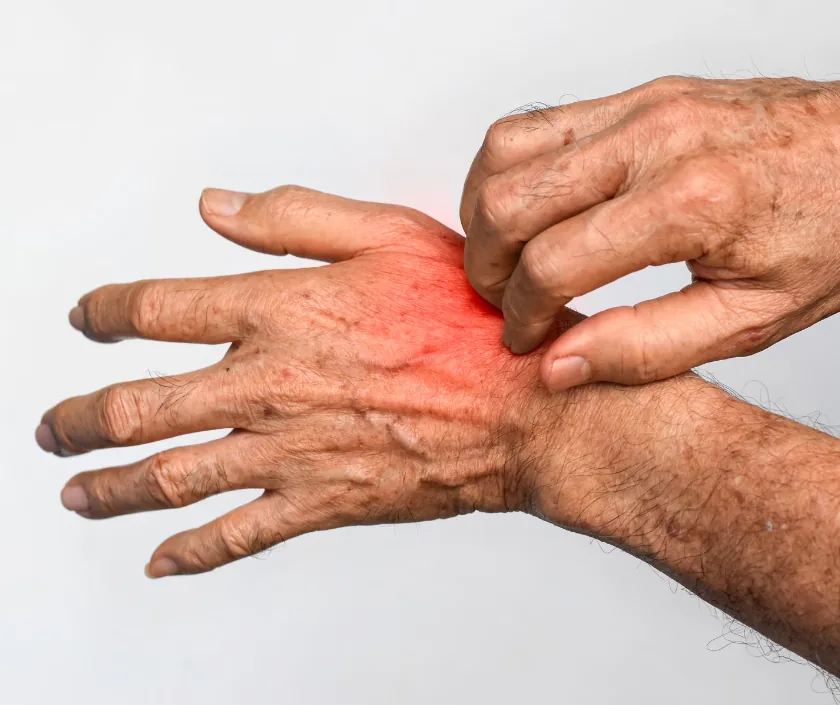
Chronic fungal soft tissue infection describes deep fungal disease of the skin and the tissue beneath it, usually following a minor injury or arising in people with reduced immunity. Lumps, plaques, ulcers and discharging openings develop over months. Diagnosis needs a biopsy and fungal culture, since these lesions closely resemble tuberculosis and cancer. Treatment then combines long antifungal medicine with surgery to remove diseased tissue and cover the wound.
Getting the diagnosis right takes priority over treating quickly. A sample of tissue is taken, not just a swab, and it is sent for microscopy, fungal culture and histopathology. Tuberculosis testing usually runs alongside, because the two conditions look remarkably similar under the skin. Imaging is added when the lesion feels deep or fixed, so the extent can be mapped before anything is planned.
Medical treatment then does most of the work. Antifungal medicine chosen for the identified organism is taken for a long period, and liver function and blood counts are checked at intervals. Any condition that weakens immunity, such as diabetes or steroid use, is reviewed at the same time, since the infection often took hold because of it.
Surgery has a defined role. Small lesions may be excised completely, while larger areas need debridement of unhealthy tissue followed by dressings, a skin graft or a flap. Medicines are continued afterwards, and the site is reviewed for a long period because these infections return quietly.
Medicine is the mainstay for almost everyone. Surgery is added when a lesion is limited, when tissue is needed for diagnosis, or when disease persists after a full medical course.
A biopsy is taken from the active edge of the lesion and divided between fungal culture, microscopy and histopathology. Testing for tuberculosis usually runs in parallel, because the appearance overlaps so closely.
Blood sugar, kidney and liver function, blood counts and any immune suppressing medicine are reviewed. Correcting these gives the antifungal treatment a far better chance of working.
Medicine matched to the identified fungus is started and continued for months under supervision. Blood tests are repeated at intervals, and the dose or drug is adjusted if side effects appear.
A limited lesion may be excised with a margin, while larger areas are debrided until healthy tissue is reached. The defect is then closed directly, with a skin graft or with a local flap.
Medicines continue for the advised period after surgery, and the site is examined regularly. Any new lump, crust or discharge is biopsied early rather than treated blindly.
Discomfort after excision or debridement is usually mild. Dressings are checked, the limb is elevated where relevant, and antifungal medicine continues without a break.
Sutures or graft dressings are reviewed and most people manage normal indoor activity. Blood tests for medicine monitoring are arranged for the coming weeks.
Wounds are commonly healed and daily work is comfortable again. Medicine continues, since the visible wound heals much sooner than the infection clears.
Scars soften and the treated area is watched closely. Review visits continue while medicine is completed, and any suspicious change is biopsied.
Improvement is gradual and it varies with the organism and with general health. Many people see lesions flatten, discharge stop and wounds close over a course of months. Skin in the treated area usually stays thicker, darker or scarred, and full return of normal appearance is unlikely. Because these infections can return quietly, medicines are completed in full and the site is reviewed for a long time afterwards.
Long treatment brings its own difficulties, and these are explained before medicine or surgery begins.
Steady routines matter here, because treatment runs for months rather than days.
Creams work on the surface only, while these organisms live in the fat and fascia below, where medicine must reach through the bloodstream.
The two look alike, which is exactly why a biopsy with fungal culture is taken before committing to months of any treatment.
Excision helps, yet fungal cells often remain in surrounding tissue, so medicine continues afterwards to reduce the chance of return.
Skin heals long before the infection clears, and stopping early is a common reason the lesion reappears.
Elegance Clinic in Surat begins with a proper tissue diagnosis rather than another course of guesswork, then runs medicine and surgery as one plan. Patients are told honestly how long treatment will take.

Cost falls into three parts. Diagnosis involves consultation, biopsy, fungal culture, histopathology and sometimes imaging. Medical treatment then continues for months, with the medicine and its monitoring blood tests forming a recurring cost. Surgery, when it is needed, is estimated separately according to the size of the area removed and the type of cover chosen. A written estimate for each part is given after assessment, and any change is discussed before it is carried out.
These are the questions that come up most often in consultation. If yours is not here, send it on WhatsApp and the team will reply, usually the same day.
Ask your question →By taking a piece of tissue rather than a surface swab. That sample goes for microscopy, fungal culture and histopathology, and testing for tuberculosis usually runs alongside. Appearance alone is unreliable, since several very different conditions look similar.
Antibiotics act on bacteria and have no effect on fungi. Repeated courses may briefly reduce redness by treating added bacterial infection, yet the underlying fungal disease continues to grow slowly beneath the skin.
Usually months, and sometimes longer, depending on the organism and how deep the disease has gone. Duration is decided by response rather than a fixed calendar, and blood tests during that period check that the medicine is well tolerated.
Cost covers diagnosis, medicines with their monitoring tests, and surgery if required. A written estimate is shared for each part after assessment, so the family can plan for a long course of care instead of a single procedure.
No. Some infections settle with medicine alone. Surgery is added for a limited lesion that can be removed with a margin, for tissue that stays unhealthy after treatment, or when a wound needs a graft or flap to close.
Yes, particularly when medicine is stopped early or when immunity stays low. Completing the full course, controlling diabetes, and attending review visits reduce that chance, and early biopsy of any new lump keeps treatment simple.
The lesion is examined and photographed, a biopsy is planned, and blood tests including sugar and liver function are arranged. Once results arrive, the medical plan, the role of surgery and a written estimate are explained.
Each technique below has its own page explaining how it works and when it is chosen.
Seeing patients from across the city and beyond: read about the practice on the plastic surgeon in Surat page, or check what a written estimate covers on the costs and insurance page.
