Madura foot is a slow infection caused by fungi or certain bacteria that enter through a thorn prick or small cut. It swells over years, discharges tiny grains, and needs long medical treatment alongside surgery.
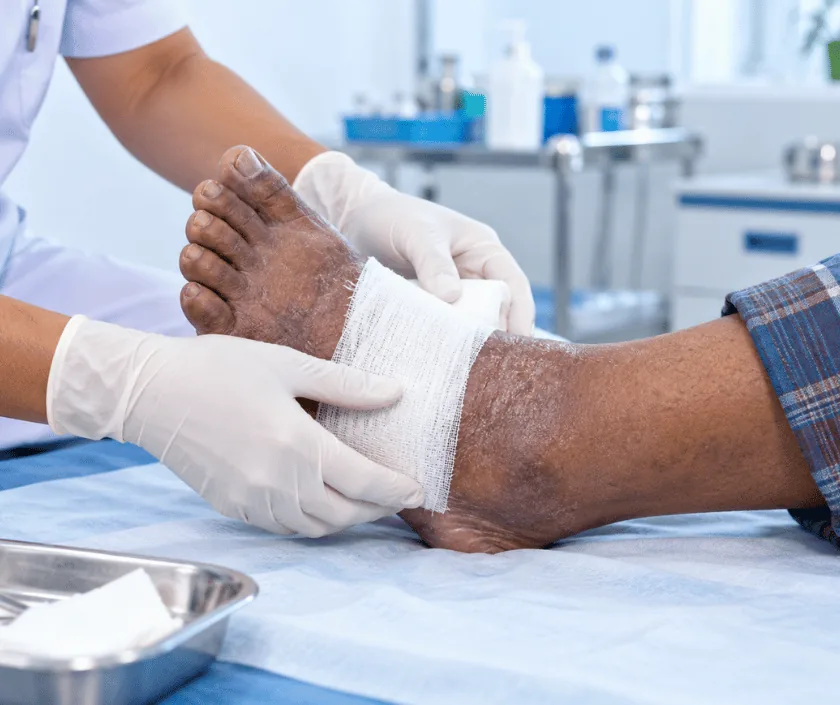
Madura foot, known medically as mycetoma, is a chronic infection of the foot caused either by fungi or by a group of bacteria. It begins after a minor injury, often in farmers who work barefoot, and grows slowly into a swollen foot with small openings that discharge grains. Treatment depends on the type, and it combines long courses of antifungal or antibacterial medicines with surgery to remove diseased tissue.
Diagnosis has to come before any operation. Grains from the discharge are examined and cultured, a biopsy is taken, and imaging shows the depth of spread. Separating the fungal form from the bacterial form matters a great deal, because the medicines used are completely different and the surgical plan changes with them.
Medical treatment forms the backbone of care. The bacterial form often settles with a long course of combination antibiotics under supervision. Fungal disease needs antifungal medicine taken for many months, with blood tests to check the liver along the way, and surgery generally follows once the mass has shrunk and become better defined.
Surgery aims to remove diseased tissue with a margin of healthy tissue, and the defect is then closed directly, with a skin graft or with a flap. Wide involvement of bone and joints sometimes makes amputation the option that restores walking soonest. Medicines continue after surgery, and review carries on for a long period because recurrence is common.
Almost everyone with mycetoma needs medical treatment. Surgery is added when disease is localised, when a mass remains after medicine, or when tissue must be sampled.
Grains are collected from the discharge, examined and cultured, and a biopsy is taken from the deeper tissue. This distinguishes the fungal form from the bacterial form, which decides every later step.
Ultrasound shows grains within the swelling, while MRI or a scan maps how far disease extends into tendon, joint and bone. That mapping guides how much tissue an operation will need to remove.
Antifungal or combination antibiotic treatment begins and continues for months under supervision, with blood tests to monitor the liver and blood counts. Response is judged by shrinking swelling and reduced discharge.
Once the disease is better defined, affected tissue is removed with a healthy margin. Closure follows by direct suture, a skin graft or a flap, and the margins are checked in the laboratory.
Medicines continue after surgery for the period advised, and the foot is reviewed regularly. Any new swelling or discharge is investigated early, because a returning lesion is treated more easily when small.
The foot is elevated and dressings are checked. Pain is usually modest, and medicines for the infection continue exactly as before the operation.
Sutures or graft dressings are reviewed, and gentle weight bearing may be allowed depending on the site. Going home with a dressing plan is usual.
Wounds are commonly healed and footwear can often be worn again. Antifungal or antibiotic treatment continues, and blood tests are repeated as advised.
Swelling settles further and walking improves. Review visits carry on for a long period, since disease can reappear months after treatment seemed complete.
Response is slow and it varies with the type of organism and how deep the disease has reached. Bacterial mycetoma often clears well with sustained medical treatment, while the fungal form is more stubborn and commonly needs both medicine and surgery. Some swelling and thickening of the foot may remain even after successful treatment. Disease can return, which is why medicines are continued for the full advised period and review carries on afterwards.
Both the disease and its treatment carry difficulties, and these are discussed before a plan is agreed.
Because treatment lasts many months, routines at home matter more than in most operations.
Mycetoma is an infection, so cutting it out without medical treatment usually leads to it coming back.
Slow growth with little discomfort is typical, yet the disease keeps spreading into tendon, joint and bone during that time.
The organisms are different, so treatment must follow grain examination and culture rather than a trial of unrelated drugs.
Stopping early is the most common reason the disease comes back, so the full advised course is completed.
Elegance Clinic in Surat treats Madura foot as a long partnership, with diagnosis first, medicines supervised properly, and surgery timed to give the best chance of clearance. Families understand what the coming months involve.

The cost of treating Madura foot has two parts. Diagnosis and long medical treatment involve consultations, grain examination, culture, imaging, medicines and monitoring blood tests, and these continue for months. Surgery, when needed, is estimated separately according to the extent of excision and the type of wound cover chosen. A written estimate for each part is given after assessment, so the family can plan for a course of care rather than a single procedure. Insurance cover varies with the policy, and the team helps with documentation.
These are the questions that come up most often in consultation. If yours is not here, send it on WhatsApp and the team will reply, usually the same day.
Ask your question →It develops over months or years rather than days, causes swelling with small openings that discharge grains, and rarely causes much fever. Ordinary infections are acute and respond quickly to short antibiotic courses, while this one needs prolonged treatment.
Sometimes. The bacterial form often responds well to a long course of combination antibiotics. Fungal disease usually needs antifungal medicine along with surgery, because grains sitting within dense scar tissue are hard for any drug to reach.
Treatment is measured in months. Medicines are taken for a prolonged period decided by the type of organism and the response seen, and review visits continue afterwards. Stopping early is the usual reason the swelling comes back.
Cost has two parts, one for diagnosis and long medical treatment, and one for surgery if it is required. A written estimate for each is given after assessment, so families can plan for a course of care rather than a single bill.
Usually not, particularly when disease is caught before it reaches bone and joints. Amputation is considered only for extensive destruction, where removing all the disease would leave a foot that cannot bear weight.
No. The organisms live in soil and enter through a wound such as a thorn prick, so it does not pass from person to person. Wearing protective footwear in fields lowers the chance of it happening again.
Expect examination of the swelling and openings, collection of grains for testing, a biopsy where needed, and imaging to map depth. The treatment plan, likely duration of medicines and a written estimate are then explained.
Each technique below has its own page explaining how it works and when it is chosen.
Seeing patients from across the city and beyond: read about the practice on the plastic surgeon in Surat page, or check what a written estimate covers on the costs and insurance page.
