No face is exactly the same on both sides, yet a clear difference in fullness, height or jaw position can be hard to live with. Facial asymmetry correction starts by finding the cause, then chooses the smallest treatment that will genuinely help.
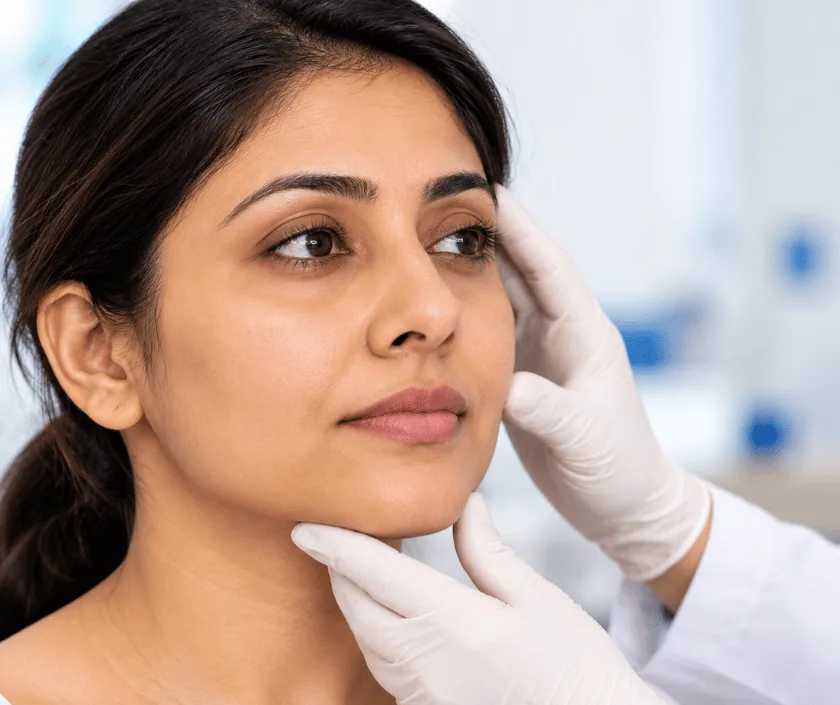
Facial asymmetry correction is treatment that reduces a visible difference between the two sides of the face. The right approach depends entirely on the cause, which may lie in the bone, in the soft tissue, in the muscles or in a growth difference from childhood. Options range from fat grafting and fillers through to jaw surgery. Assessment with photographs and scans comes first.
The first appointment is mostly about looking and measuring. Standard photographs from several angles, a bite check and often a CT scan tell the team whether the difference sits in the bone, in the fat and skin above it, in muscle activity or in some combination. Old photographs are useful too, because they show whether the unevenness has been there for years or has appeared recently.
Treatment then follows the cause. A hollow cheek or a wasted temple can be filled with the patient own fat, harvested by a small liposuction and injected in fine layers. Where a jaw has grown longer on one side, no amount of filling will fix the underlying tilt, and the answer lies in orthodontic alignment followed by surgery to reposition the jaws. Muscle imbalance after a nerve injury is treated differently again, sometimes with muscle transfer or with targeted injections.
Because several causes can sit together, plans are often staged. Skeletal work comes first, since it changes the framework, and soft tissue refinement follows once that has healed.
Correction suits people whose facial difference is stable, well understood and clearly bothering them. Timing matters as much as technique.
Photographs, clinical measurement and often a CT scan record the starting point. The bite is checked, and old family photographs help show whether the difference is lifelong or recent in origin.
The team works out whether the difference lies in bone, soft tissue, muscle or several layers. That decision sets the treatment, because filling a hollow will not correct a tilted jaw.
If the jaws are uneven, braces align the teeth first, and surgery then repositions the upper jaw, lower jaw or chin. Plates hold the new position while bone heals.
Fat is harvested by gentle liposuction and injected in thin passes to restore volume. Because some of it settles, a second smaller session is often planned rather than overfilling once.
Results are then reviewed at intervals using the same standard photographs and lighting. Further small adjustments are discussed only once swelling has fully resolved, which usually takes several months.
Swelling and bruising are at their most noticeable. After fat grafting the face looks fuller than the final result, which surprises people who were not warned.
Most bruising fades and social activity becomes comfortable again. After jaw surgery, diet stays soft and speech feels awkward for a while.
Swelling has largely settled and grafted fat begins to show its true volume. Bone is usually stable enough for normal eating after skeletal surgery.
The final shape becomes clear around this time. Any planned second session of fat grafting or minor contouring is usually timed from here.
Treatment aims to make the difference far less noticeable, not to produce two matching halves. Grafted fat partly settles, so a second session is often planned, and jaw surgery leaves swelling that hides the outcome for months. Nerve related weakness improves in tone and resting balance more than in movement. Results can vary between people with similar starting points, which is why photographs and honest review at each stage matter.
Risks depend on which treatment is chosen, and they are discussed for the specific plan rather than in general terms.
Simple care in the first weeks protects the result, especially where fat has been grafted or bone repositioned.
Filling helps only when volume is genuinely missing. Where the bone is tilted or the nerve is weak, adding volume can make the difference look worse rather than better.
Exercise helps in specific nerve conditions under a therapist. It does not change bone position or restore lost fat, and it is not a substitute for diagnosis.
Some differences need nothing more than reassurance, a dental adjustment or a small fat graft. Surgery is reserved for cases where the cause genuinely sits in the skeleton.
Symmetry is a common target and an unrealistic one. Natural faces differ from side to side, and a balanced result reads as normal while a forced one does not.
Assessment at Elegance Clinic in Surat begins with finding out why the two sides differ, so that treatment is matched to the cause rather than to whichever procedure is most familiar.

Cost varies widely, because facial asymmetry covers everything from a single fat grafting session under local anaesthesia to jaw surgery with months of orthodontic treatment beforehand. Once the cause is clear, a written estimate is prepared that separates surgeon fees, anaesthesia, hospital charges and any implants. Correction that restores function or follows injury or disease is often covered by insurance, while treatment sought purely for appearance usually is not.
These are the questions that come up most often in consultation. If yours is not here, send it on WhatsApp and the team will reply, usually the same day.
Ask your question →It depends entirely on what is needed. A single fat grafting session sits at one end of the range and jaw surgery with orthodontic treatment at the other. A written estimate is prepared after assessment, listing surgeon, anaesthesia and hospital charges separately.
Cover usually depends on the reason. Correction after injury, disease or a congenital condition is often approved because it restores function, while treatment sought only to improve appearance is generally excluded. Ask for the surgical indication in writing before you apply.
Fat grafting and jaw surgery are both established procedures with a well understood risk profile. Bruising and swelling are usual, while infection, numbness and uneven volume are less common. Fitness is assessed before any general anaesthetic with blood tests and a physician review.
After fat grafting most people are socially comfortable within about two weeks. Jaw surgery needs longer, with a soft diet for some weeks and swelling that fades gradually. Final shape usually becomes clear around six months in either case.
No treatment produces a mirror image, and aiming for one tends to look artificial. The realistic target is a face where the difference is no longer the first thing people notice, which most patients find is enough.
Skeletal correction usually waits until facial growth has finished, otherwise continued growth undoes the surgery. Some conditions in children are treated earlier for functional reasons, and those decisions are made case by case with the family.
Expect a facial examination, a bite check, standard photographs and a discussion of when you first noticed the difference. A scan may be arranged. Bring old photographs and any previous dental or surgical records, since they often change the plan.
Seeing patients from across the city and beyond: read about the practice on the plastic surgeon in Surat page, or check what a written estimate covers on the costs and insurance page.
