A heavy blow to the upper jaw can split the palate itself, usually front to back. The two halves of the upper arch then spread apart, and the teeth stop meeting across the width of the bite rather than only at the front.
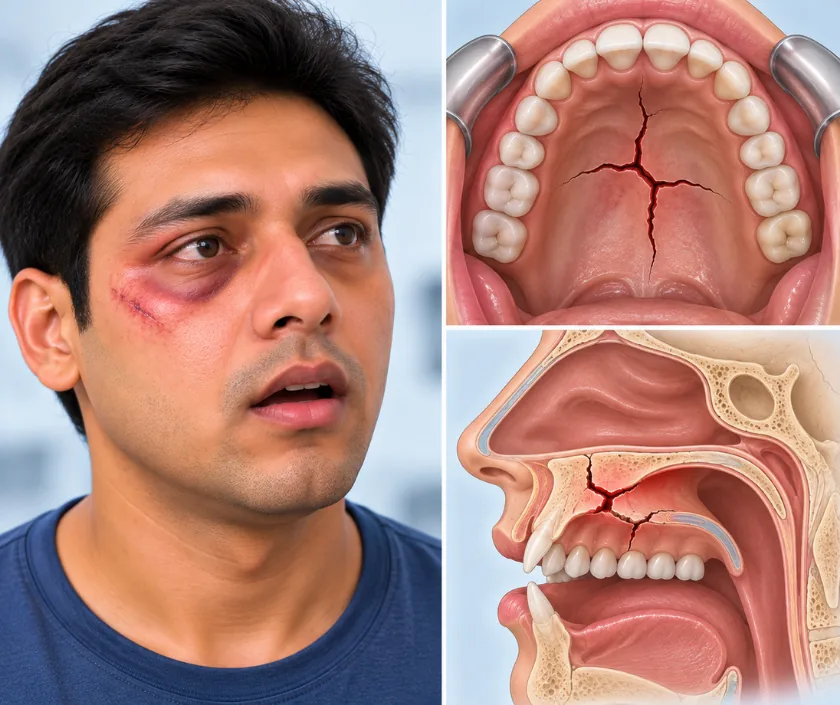
A palatal fracture is a split through the roof of the mouth that divides the upper arch into two halves. It usually travels alongside a separation of the upper jaw, and it widens the arch so the upper and lower teeth no longer meet side to side. Treatment narrows the arch back, then holds it with a splint or plates while the palate heals.
The palate is the bony roof of the mouth and the floor of the nose at the same time. It is formed from two halves that join in the midline. Under enough force, usually from a direct blow to the upper teeth or a fall onto the face, that join or a line beside it can split. Most often the split accompanies a separation of the upper jaw rather than occurring on its own.
Once the palate is divided, the arch behaves like a broken ring. The two halves rotate outwards and the upper teeth end up sitting wider than the lower ones, so the bite fails across its width. Patients notice teeth that no longer fit, pain on any attempt to chew, and often a tear in the gum or the palate lining with bleeding from the mouth. A gap between the front teeth can appear where none existed before.
Assessment therefore looks at the bite in three directions and not simply front to back. A scan and impressions or scans of the teeth guide the plan, since the aim is to bring the arch back to its earlier width before anything is fixed.
Fixation is advised once the arch has widened or the two halves move against each other. A hairline split with a normal bite may be managed without an operation.
The bite is checked in every direction, the palate is examined for a tear and the two halves are tested for movement. A scan shows the line of the split and any linked jaw separation.
Where the arch has widened, a custom splint or an arch bar is prepared to fit the upper teeth. This holds the arch at the correct width once the halves have been brought together.
Under anaesthesia the two halves are pressed back into their earlier width and the bite is checked against the lower teeth. This step comes before any plate is placed.
Small plates are placed at the front of the upper jaw or across the palate, depending on the pattern. Any tear in the palate lining is stitched at the same sitting.
The splint may stay in place for a few weeks. Reviews check the bite, the width of the arch and the healing of the lining, and diet is advanced only when it is safe.
The mouth is sore and swollen, and eating is limited to liquids. Rinses, pain relief and careful mouth care matter most in this period.
Lining tears begin to heal and swelling drops. A soft diet replaces liquids, and the splint is checked for comfort and fit.
The palate has united and the splint is usually removed. Chewing restarts gradually, and the width of the arch is reassessed against the lower teeth.
The bite is reviewed with a dentist if any small mismatch remains. Sensation over the palate and gum continues to improve slowly.
Bringing the arch back early usually restores a bite that works and a palate that feels solid. Small mismatches between the upper and lower teeth can remain and are often settled with dental adjustment or a short course of orthodontic treatment. Numbness of the palate and upper gum improves over months. Where teeth were lost along the fracture line, replacement is planned once healing is complete.
The procedure is well established, and the following issues are explained before you agree to it.
Diet and mouth hygiene decide much of the outcome here, because the palate heals under everything you eat.
The lining heals quickly, but split bone that has spread apart does not close by itself. Left alone, the arch heals wide and the bite stays wrong.
That gap is often the visible sign of an arch split down the middle. It points to a bone problem rather than a dental one.
Chewing pushes the two halves apart in exactly the direction they were brought together. Diet advice is part of the fixation, not an added precaution.
Fine adjustment of tooth position is common after any injury involving the arch. It refines a result rather than rescuing one.
At Elegance Clinic in Surat, injuries involving the palate are planned around the bite in all three directions, with dental input arranged when the teeth themselves have been damaged.

Cost depends on whether a splint is made, how many plates are used, whether a linked separation of the upper jaw is fixed at the same time, and how long you stay in hospital. Anaesthesia, theatre and imaging make up the rest. Because those details follow the scan and the bite assessment, a written estimate is prepared once the plan is agreed. Injury related treatment is usually covered by mediclaim, and the team assists with the claim.
These are the questions that come up most often in consultation. If yours is not here, send it on WhatsApp and the team will reply, usually the same day.
Ask your question →It depends on whether a splint is made, the number of plates used, any linked upper jaw fixation and the length of stay. A written estimate is prepared once the scan and the bite have been assessed, so the figure reflects the plan rather than an average.
Fixation after an accident is reconstructive treatment, so most policies consider it. Claims usually need accident papers, scan reports and operative notes. Waiting periods, room rent limits and any dental exclusions in your policy should be checked before admission.
It is performed under general anaesthesia with the airway protected, and the approach is inside the mouth. Infection along the split, a tooth lost on the fracture line and a small opening into the nose are the main risks, all discussed beforehand.
Liquids give way to soft food over the first two weeks, and the palate unites by about six weeks, when the splint usually comes out. Light work often restarts in three to four weeks, while chewing returns gradually after that.
Narrowing the arch early usually gives a bite that works well. Small mismatches can remain and are often settled with dental adjustment or a short course of orthodontic treatment once healing is complete.
Only when nothing has moved and the bite is unchanged, in which case review and a soft diet may be enough. A widened arch that is left alone heals in that position, and correcting it later is much harder.
Bring accident and hospital papers, any imaging done elsewhere, and details of previous dental treatment or braces. Photographs showing your smile before the injury are genuinely helpful when planning the width of the arch.
Seeing patients from across the city and beyond: read about the practice on the plastic surgeon in Surat page, or check what a written estimate covers on the costs and insurance page.
