Losing a hand at the palm or wrist is a true emergency, and the clock starts the moment blood supply stops. Replantation rebuilds bone, tendon, nerve and vessel in one long operation, then therapy does the rest.
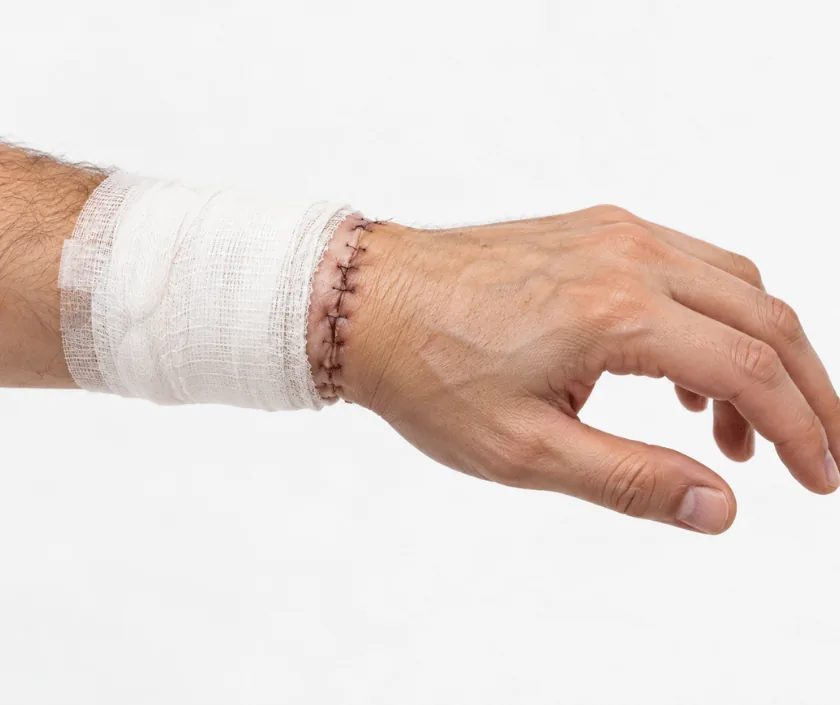
Hand replantation reattaches a hand that has been completely severed at the palm or wrist. Surgeons fix the bones, repair tendons and nerves, then join the arteries and veins under a microscope so the tissue lives again. Because the hand contains muscle, it tolerates loss of blood supply poorly, which makes speed even more important than it is for a single finger.
An amputation through the palm or wrist divides many structures at once. Several bones, a dense bundle of flexor and extensor tendons, three major nerves and a pair of arteries all have to be repaired in the same operation, and the vessel work is done under an operating microscope. Operations of this size commonly run for many hours, sometimes with two surgical teams working together.
Muscle changes everything about the timing. Unlike a finger, which is mostly skin, bone and tendon, the hand carries small muscles that begin to suffer quickly once circulation stops. Correct cooling slows that process, so the way the part is packed on the journey genuinely affects what can be achieved in theatre.
Our team assesses the level of the injury, how clean the cut is and how the amputated hand has travelled. If reattachment is not safe or not sensible, we say so early and discuss the alternatives, which may include shaping a comfortable stump now and considering reconstruction later. That conversation happens with the family present.
The decision is made in the emergency room by looking at the injury, the amputated part and your overall condition together. Nothing is promised before that examination.
You are stabilised, given pain relief and tetanus cover, and imaging is arranged. The amputated hand is kept cool and examined on a separate table while consent is discussed with your family.
Both ends are washed thoroughly and dead tissue is removed. Bone is shortened a little so that vessels and nerves can be joined without tension, which matters more than preserving every millimetre.
The bones of the wrist or palm are held with wires, screws or a plate. A stable skeleton is essential, because every tendon and vessel repair that follows depends on it not moving.
Tendons are stitched in order, nerves are aligned under magnification, and the arteries are joined so blood flows again. Veins are then repaired so blood can leave the hand properly.
Skin is closed without tension and a splint supports the limb. Circulation is then checked at short intervals, because a blocked vessel found early can often be salvaged.
You stay under close observation with the arm elevated and the room warm. Nurses record colour, warmth and refill regularly, and any change is reported immediately.
Wounds are inspected, dressings simplified and a therapy plan started. Splints hold the hand in a safe position while very gentle protected movement begins.
Imaging shows how the bone is uniting. Therapy usually progresses to more active movement, and you may begin using the limb for light steadying tasks.
Nerve recovery continues, so feeling and small muscle function keep changing. Some people go on to a planned secondary procedure such as a tendon release or transfer.
A replanted hand works, but it works differently. Grip is usually weaker, fine finger movement is limited and sensation returns partially over a long period. Many people end up using the replanted hand as a strong helper for the other hand rather than for delicate tasks. Cold intolerance is common. Your surgeon will explain what your level of injury and pattern of damage realistically allow.
This is one of the biggest operations in hand surgery, and complications are part of the honest picture. Most are manageable when they are caught early.
Home care protects a repair that is still fragile. Your team writes the plan down and goes through it with a family member as well.
Reattachment needs microsurgical training, an operating microscope and a team available at short notice, which is why travelling to the right centre saves time overall.
Therapy is what turns a living hand into a useful one. Without it, tendons stick down and joints stiffen, and the surgical result is wasted.
Every hour without blood supply damages muscle. Bring the patient and the part in first, and let the discussion happen at the hospital.
A prosthesis cannot feel. When the tissue allows reattachment, a living hand usually gives more useful function in ordinary daily life.
Elegance Clinic in Surat is set up for hand emergencies, with microsurgical instruments ready and a team used to working through the night. Dr. Ashutosh Shah discusses the realistic options with the family before consent is signed.

The cost of hand replantation depends on the level of injury, the number of structures repaired, the hours spent in theatre and the length of your hospital stay. Treat the band below as a planning guide rather than a fixed price.
Once the injury has been assessed, our team gives you a written estimate covering theatre charges, implants, stay, medicines and the therapy that follows. Insurance and government scheme paperwork is started by the front desk while surgery is being arranged.
These are the questions that come up most often in consultation. If yours is not here, send it on WhatsApp and the team will reply, usually the same day.
Ask your question →Replantation work sits in a band of Rs 1.2L to Rs 3.5L, and the exact figure depends on theatre time, implants and how long you stay. Emergency admission is often covered by insurance or a government scheme, and a written estimate is given after assessment.
Immediately, without stopping to arrange anything else. A severed hand contains muscle, and muscle deteriorates quickly once blood supply stops. Cool the amputated part correctly on the way and travel directly to a hospital that performs microsurgery.
Any operation of this length carries risk, so your heart, lungs and blood loss are monitored throughout by the anaesthetic team. Bleeding, clotting of the repaired vessels and infection are the recognised concerns, and each one is watched for closely afterwards.
Plan for about a week or more in hospital, then several weeks of splinting and protected movement. Light steadying use often starts around six weeks, while strength and feeling continue improving for a year or longer. Recovery can vary a great deal.
Not normally, but usefully. Most people regain the ability to hold and steady objects, with weaker grip and reduced fine movement. Sensation returns partly as the nerves regrow, and many people use the replanted hand as a strong assistant to the other one.
A hand crushed or torn over a long segment often has no vessel healthy enough to join. Long delay, damage from freezing or soaking, or serious injuries elsewhere in the body can also make reattachment unwise for that particular patient.
The injury and the amputated part are examined together, imaging and blood tests are arranged, and the options are explained to you and your family in plain language. Consent, anaesthetic checks and a written estimate all follow that discussion.
Each technique below has its own page explaining how it works and when it is chosen.
Seeing patients from across the city and beyond: read about the practice on the plastic surgeon in Surat page, or check what a written estimate covers on the costs and insurance page.
