Sometimes a finger or limb is still hanging on by skin or tendon, yet it has no blood supply at all. Revascularization repairs the damaged vessels so the tissue survives, and it is every bit as urgent as replantation.
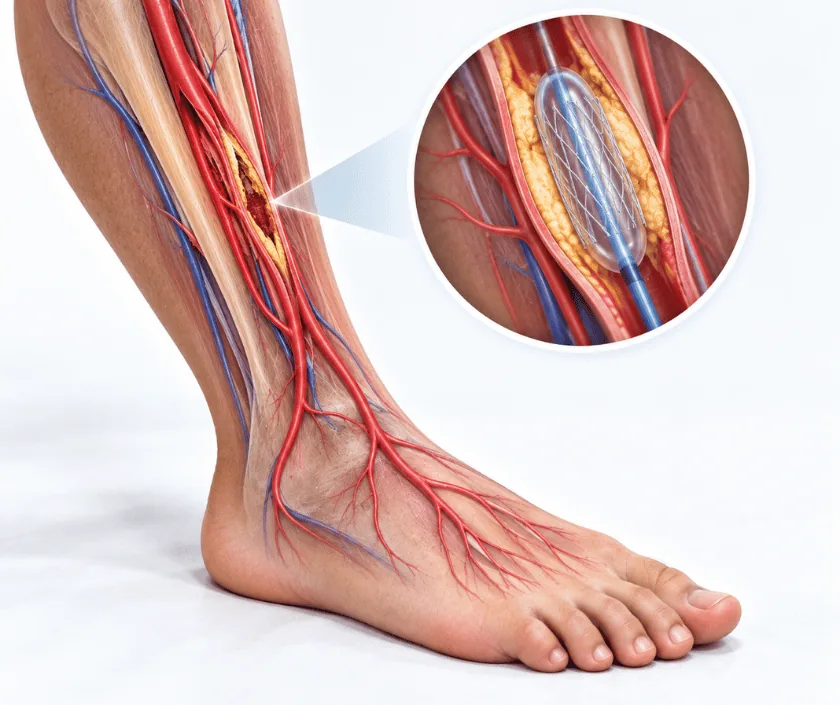
Revascularization is surgery that restores blood flow to a part which is still attached but not receiving circulation. The damaged artery is repaired or bridged with a vein graft, and a vein is usually repaired for drainage. Because the tissue is already starved of oxygen, timing is just as critical as it is for a completely severed part.
Injuries are not always tidy. A finger may remain joined by a strip of skin, or a forearm may stay connected by tendon and muscle, while the artery that feeds it has been cut or crushed. The part looks attached, so families sometimes assume the danger has passed. In truth the tissue is starved of oxygen and the clock is running exactly as it would after a complete amputation.
Surgery begins by finding the damaged vessel and removing the injured segment. If the gap left behind is short, the ends are joined directly under an operating microscope. When the gap is longer, a vein taken from the forearm or leg is used as a bridge. Veins are repaired as well, because blood that arrives must also be able to leave.
Other structures are treated in the same sitting. Bone is stabilised, tendons are repaired and nerves are aligned where they have been divided. Afterwards the limb is monitored closely, since restoring flow to starved muscle causes swelling, and rising pressure inside the compartments sometimes needs a release incision.
Revascularization suits people whose tissue is still salvageable and whose vessels can be repaired. Examination and imaging decide that, not the appearance of the wound alone.
Pulses, colour, warmth and sensation are checked, and imaging of the vessels may be arranged. Antibiotics and tetanus cover are given while the theatre team is being organised.
The wound is opened along safe lines and washed thoroughly. Damaged vessel is trimmed back until healthy ends are found, which often means the gap becomes longer than it first appeared.
Any fracture or dislocation is fixed or reduced first. A stable frame stops later movement from tugging on the vessel repair once flow has been restored.
Under the microscope the artery is joined directly or bridged with a vein graft. A vein is usually repaired as well, so blood can drain and swelling settles faster.
Tendons and nerves are repaired, skin is closed without tension and a splint is applied. Circulation is then checked frequently, since early clotting is treatable when it is found quickly.
You stay in hospital with the limb elevated and the room warm. Nursing staff record colour, warmth, refill and swelling, and any deterioration is reported immediately.
Wounds are reviewed and dressings simplified. Where a release incision was made, it is closed or grafted once the swelling has settled enough.
Fracture healing and tendon repairs are reassessed. Therapy moves towards more active movement, and light use of the limb is usually allowed at this point.
Sensation and strength continue to improve where nerves were repaired. Stiffness is addressed with therapy, and a small secondary procedure is sometimes helpful.
When the repair stays open, the part usually survives and settles into a limb that works, though not always as it did before. Stiffness, altered sensation and cold intolerance are common, particularly after crush injuries. Some people need further surgery to release a tight tendon or joint. Where the tissue was already badly damaged, survival of skin edges can be patchy and may need a graft.
Repairing a vessel in an injured field is delicate work, so a clear discussion of what can go wrong is part of consent.
The repaired vessel stays vulnerable for a while, so early home habits carry real weight.
A part can be attached and still have no blood supply. Without circulation the tissue dies just as it would after a complete amputation, so the urgency is the same.
A short skin wound can hide a divided or crushed artery. Pale, cold or numb tissue beyond the wound is the sign that matters, not the size of the cut.
Swelling after flow returns can raise pressure inside the limb, and the repair itself can clot in the first days, which is why monitoring in hospital continues.
Rubbing an injured limb can dislodge a fresh repair. Elevation, warmth and the plan your team gives you are what actually help.
Elegance Clinic in Surat assesses threatened limbs promptly, with microsurgical instruments and a trained team on hand. Dr. Ashutosh Shah reviews the circulation himself and explains whether salvage is realistic before any plan is agreed.

Revascularization varies too much for a single price. A short artery repair in a finger is a different operation from a vein graft in a crushed forearm with fracture fixation, so the cost follows what the injury actually needs.
After examining the limb, our team gives you a written estimate covering theatre, grafts, hospital stay, medicines and the therapy that follows. Insurance and government scheme approvals are started by the front desk while surgery is being arranged.
These are the questions that come up most often in consultation. If yours is not here, send it on WhatsApp and the team will reply, usually the same day.
Ask your question →A written estimate is prepared after assessment, because the operation varies widely. A simple artery repair costs far less than a vein graft combined with fracture fixation and tendon repair. The estimate covers theatre, stay, medicines and therapy before you are admitted.
Replantation reattaches a part that has been completely severed. Revascularization restores circulation to a part that is still attached but has lost its blood supply. The urgency is similar, because tissue without oxygen deteriorates either way.
It is performed under anaesthesia after a fitness check, and serious problems are uncommon in people who are otherwise well. Recognised risks include clotting of the repair, bleeding, infection and swelling that raises pressure inside the limb, all of which are monitored.
Expect several days in hospital, then weeks of protected movement with a therapist. Light use often resumes within a couple of months, while sensation and strength keep improving for much longer. Recovery can vary with the severity of the original injury.
Survival of the tissue is the first goal, and function follows. Stiffness, reduced feeling and cold intolerance are common, especially after crush injuries. Therapy improves movement considerably, and a small secondary procedure sometimes helps release a tight tendon.
If the tissue is already dead, or the vessel is damaged over a long distance with no healthy end to join, salvage is not possible. Severe vascular disease, uncontrolled diabetes and continued smoking also make a repair much less likely to stay open.
Circulation is checked in the injured part, imaging of the vessels may be arranged and the wound is assessed. Findings and realistic options are then explained to you and your family, followed by consent, anaesthetic checks and a written estimate.
Each technique below has its own page explaining how it works and when it is chosen.
Seeing patients from across the city and beyond: read about the practice on the plastic surgeon in Surat page, or check what a written estimate covers on the costs and insurance page.
