An amputation through the wrist or forearm is a major limb emergency, because the muscle in the forearm suffers quickly once its blood supply stops. Reaching a microsurgery team fast changes what is possible.
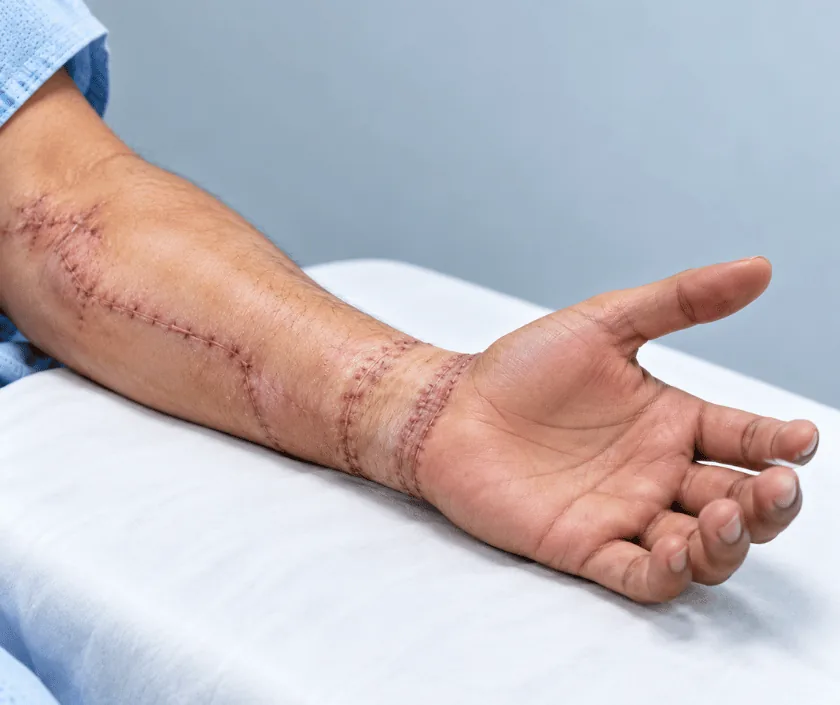
Wrist and forearm replantation reattaches a limb that has been severed above the hand. Bones are fixed, the muscle bellies and tendons are repaired, and the arteries, veins and nerves are joined under a microscope. The higher up the limb the injury sits, the more urgent it becomes, because the bulk of muscle involved tolerates loss of blood supply poorly.
Amputation at the wrist or through the forearm divides two bones, a large group of muscles and tendons, three major nerves and both main arteries of the limb. Putting all of that back is a long operation, usually with more than one surgeon working at the same time. Some steps are done with loupes, while the artery, vein and nerve repairs are done under an operating microscope.
Urgency rises with the level of injury. A fingertip has almost no muscle, so it can survive a longer wait, but the forearm is full of muscle that begins to suffer soon after circulation stops. Proper cooling on the journey slows the damage. It does not stop it, which is why we ask families to travel straight to hospital rather than stopping elsewhere first.
There is also a whole body effect to manage. When flow is restored to a large mass of muscle, waste products wash back into the circulation, so fluids, kidney function and blood chemistry are watched carefully after surgery. Our team explains this part clearly, because it is a genuine reason for the patient to stay in hospital longer.
Suitability is decided at the bedside, weighing the condition of the amputated limb against your overall stability. A blunt answer early is kinder than false hope.
Bleeding is controlled, fluids and antibiotics are started, and imaging is done. The amputated limb is cooled and inspected on a side table so the team can judge whether repair is realistic.
Contaminated and dead tissue is removed from both ends. The bones are then shortened enough to let vessels and nerves meet comfortably, which protects the repairs from tension.
The radius and ulna are fixed with plates or an external frame. Stability here decides whether the muscle and tendon repairs hold, so this step is not rushed.
Arteries are joined under the microscope so blood flows into the limb again, sometimes with a vein graft to bridge a gap. Veins are then repaired so blood can drain out.
Muscle bellies and tendons are stitched, the major nerves are aligned and repaired, and skin is closed loosely. A release incision is sometimes left open to allow for swelling.
You are monitored closely, often in a high dependency area, with attention to circulation, swelling, urine output and blood chemistry. The limb is kept elevated and warm.
Wounds are reviewed and any open areas are closed or grafted. Splinting protects the repairs, and a therapist starts very gentle movement of the shoulder and fingers.
Bone union is assessed on imaging. Therapy progresses to more active work, and you may begin using the limb to steady light objects if your surgeon agrees.
Nerve regrowth continues slowly down the forearm. Planned secondary surgery, such as a tendon transfer or release, is often discussed once healing has settled.
Expect a limb that helps rather than one that performs delicate work. Wrist movement is usually reduced, grip is weaker and fine finger control depends on how well the nerves regrow across the repair. Improvement continues for a long time and rarely stops at six months. Many people combine a replanted forearm with adapted tools at work. Your surgeon will set expectations based on your level of injury.
Reattaching a limb that contains muscle carries risks to the limb and to the body as a whole, so both are monitored after surgery.
Discharge instructions matter as much as the surgery. Bring a family member to the discharge talk so two people hear the plan.
It makes a large difference. Muscle suffers quickly without blood supply, so a forearm amputation is more time critical than a finger amputation.
Surgery restores circulation and structure. Function comes from nerve regrowth and months of therapy, and that is where most of the effort actually lies.
Slight shortening lets vessels and nerves meet without tension, which protects the repair. A living limb slightly shorter is better than a tense repair that fails.
Prostheses have real uses, but they do not feel. When the tissue allows reattachment, a sensate limb usually serves daily life better.
Elegance Clinic in Surat handles major limb emergencies with a microsurgery trained team, and Dr. Ashutosh Shah talks the family through what is realistic before consent, including the possibility that reattachment may not be advisable.

Costs at this level depend on the length of surgery, the implants or grafts used, how long you stay and whether high dependency care is needed after blood flow is restored. The band below is a guide for planning, not a quotation.
Our team shares a written estimate after examining the limb, covering theatre, implants, stay, medicines and therapy. If you hold insurance or a government scheme card, the front desk begins the approval process while the operation is being organised.
These are the questions that come up most often in consultation. If yours is not here, send it on WhatsApp and the team will reply, usually the same day.
Ask your question →Replantation work falls within a band of Rs 1.2L to Rs 3.5L, varying with theatre time, implants, grafts and length of stay. Emergency admission is frequently covered by insurance or a government scheme, and a written estimate follows the assessment of the limb.
Because the forearm is packed with muscle, and muscle tolerates loss of blood supply poorly. A fingertip has very little muscle and survives longer. The higher up the limb the injury lies, the faster the patient and the amputated part must reach hospital.
It is major surgery with real risks, including bleeding, clotting of the repaired vessels, infection and strain on the kidneys once blood flows back into the muscle. Monitoring after surgery is designed around exactly these concerns, which is why the hospital stay is longer.
Expect one to two weeks in hospital, then months of splinting, therapy and gradual loading. Nerve recovery travels slowly down the forearm, so feeling and finger control keep changing well past six months. Recovery can vary widely between patients.
Most people regain a limb that helps rather than one that performs fine tasks. Grip is weaker, wrist movement is reduced and sensation returns partially. Secondary procedures such as tendon transfers can improve specific movements once healing has settled.
If the forearm was crushed or torn over a long stretch, if the muscle has been without blood supply too long, or if other injuries make a lengthy anaesthetic unsafe, then shaping a comfortable stump is often the wiser choice.
The examination findings, imaging, the realistic range of outcomes and the alternative of stump formation are all explained to you and your family. Anaesthetic fitness is checked, consent is taken and a written estimate is provided before admission.
Each technique below has its own page explaining how it works and when it is chosen.
Seeing patients from across the city and beyond: read about the practice on the plastic surgeon in Surat page, or check what a written estimate covers on the costs and insurance page.
