The foot has one job that no prosthesis matches easily, which is to feel the ground while carrying your weight. Replantation aims to keep a sensate, stable foot whenever the tissue allows it.
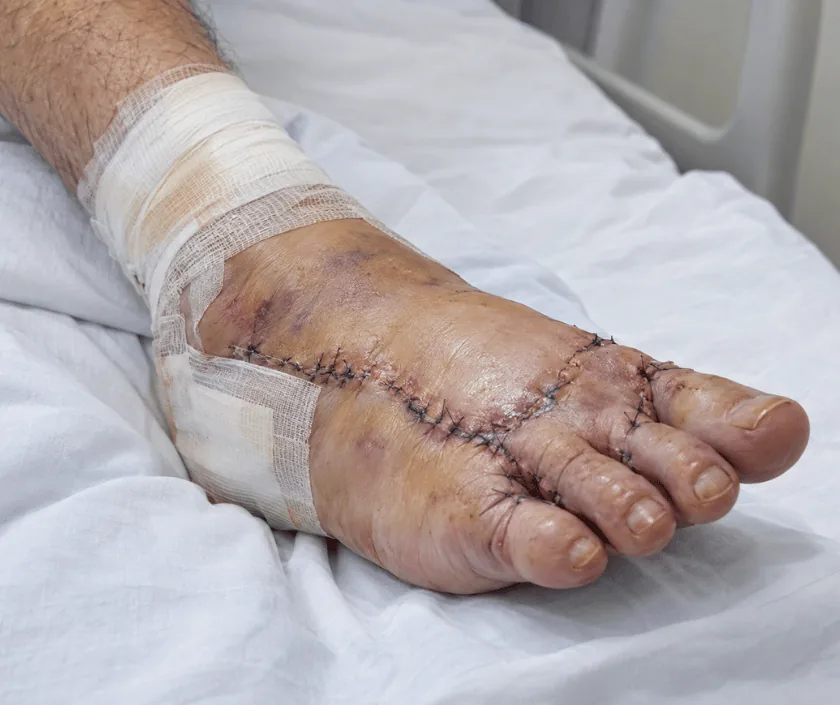
Toe and foot replantation reattaches an amputated part of the lower limb using microsurgery. Bones are fixed, tendons and nerves are repaired and the arteries and veins are joined under a microscope. A foot amputation is more urgent than a toe amputation, because the foot contains muscle and muscle tolerates loss of blood supply poorly.
Lower limb replantation follows the same principles as the hand, with different goals. In the foot the aim is a limb that stands, balances and walks comfortably, so a stable skeleton and a sole that can feel the ground matter more than fine movement. Bones are fixed first, tendons and nerves are repaired next, and the vessels are joined under an operating microscope.
Urgency depends on what has been cut. A single toe carries very little muscle, so it survives longer than a midfoot or ankle level amputation, where a mass of muscle loses its blood supply at once. That is why the same advice applies as for the hand. Cool the part correctly, do not delay, and travel to a hospital that performs microsurgery.
Not every amputated toe is reattached. Small toes contribute little to walking, and a painful or stiff reattached toe can be a nuisance inside a shoe. The great toe is different, since it carries a large share of push off and balance. Our team weighs these points with you and explains the alternative of a clean, well shaped closure.
Suitability depends on the level of the injury, the condition of the amputated part and what the foot needs to do afterwards. That assessment happens in the emergency room.
The wound and the amputated part are examined together, imaging is taken and tetanus cover and antibiotics are given. Consent covers replantation and the possibility of closure if repair proves impossible.
Contaminated tissue is removed from both surfaces. Bone is trimmed slightly and fixed with wires or screws, giving the stable base that every later repair depends upon.
Tendons are stitched so the toe or foot can be positioned properly, and the nerves are aligned under magnification so that feeling has a route back to the sole.
Arteries are joined under the microscope so blood flows again, then veins are repaired for drainage. Colour and warmth returning to the part confirm that circulation has been restored.
Skin is closed without tension and a padded splint holds the foot in a safe position. Elevation and monitoring then begin, since swelling in the foot rises quickly.
The foot stays elevated and warm while nurses check colour, warmth and refill. Getting out of bed is limited, because letting the foot hang down early stresses the repair.
Dressings are changed and wounds are reviewed. Movement of the hip and knee is encouraged, while the foot itself remains protected in a splint.
Imaging shows how the bone is uniting. Partial weight bearing usually begins around this stage in a protective shoe or boot, exactly as your surgeon advises.
Walking distance builds, sensation continues to improve and footwear is adjusted. Some people need a small procedure to correct a stiff toe or a pressure point.
A replanted foot is usually stiffer and less sensitive than before, and walking distance may be shorter for a long while. Most people who do well end up walking comfortably in modified footwear rather than returning to sport. Toes may remain stiff, and cold weather can bring aching. Progress depends on bone healing, sensation and how carefully weight bearing is introduced.
The lower limb heals under the pressure of standing and walking, so the risks reflect both microsurgery and weight bearing.
Home care in the lower limb is mostly about elevation and patience. Arrange help at home before discharge so this is realistic.
Small toes add little to walking, and a stiff, painful reattached toe can be worse inside a shoe than a clean closure. The great toe is judged differently.
A severed foot contains muscle and is genuinely time critical. Only a single toe, which carries almost no muscle, tolerates a longer wait.
Early weight bearing loads healing bone and stresses vessel repairs. Progress follows imaging and wound condition, not impatience.
Nerves regrow slowly, and feeling in the sole often keeps improving for many months after surgery.
Elegance Clinic in Surat treats lower limb amputation injuries with a microsurgery trained team and a plan that carries through to walking. Dr. Ashutosh Shah explains when reattachment helps and when a clean closure serves you better.

Cost depends on the level of the injury, the implants used, the length of the operation and how many days you stay in hospital. Wound care and footwear needs afterwards also affect the total, so treat the band below as a planning guide.
Our team shares a written estimate once the foot has been assessed, covering theatre, implants, stay, medicines and rehabilitation. If you hold insurance or a government scheme card, the front desk helps you begin approval while surgery is arranged.
These are the questions that come up most often in consultation. If yours is not here, send it on WhatsApp and the team will reply, usually the same day.
Ask your question →Replantation work falls within a band of Rs 1.2L to Rs 3.5L, depending on the level of injury, implants, theatre time and hospital stay. Emergency admission is often covered by insurance or a government scheme, and a written estimate is shared after assessment.
Very urgent. The foot contains muscle, and muscle tolerates loss of blood supply poorly, so the part should be cooled correctly and brought in immediately. A single toe carries little muscle and can tolerate a somewhat longer journey.
It is major surgery under anaesthesia, so fitness is checked first. Bleeding, clotting of the repaired vessels and infection are the recognised risks, and soil contaminated farm injuries carry a higher infection risk that is treated with thorough washout and antibiotics.
Expect several days to a week in hospital with the foot elevated, then a period without weight on it. Partial weight bearing in a protective shoe often begins around six weeks, and comfortable walking distance builds over months.
Not quite. The foot is usually stiffer, partly numb and sometimes uncomfortable in cold weather. Feeling in the sole often improves over many months, and modified footwear helps most people walk comfortably for everyday distances.
No. Small toes contribute little to walking, and a stiff or painful reattached toe can cause trouble inside a shoe. The great toe is treated differently, because it carries a large share of balance and push off.
The wound and the amputated part are examined together, imaging is taken and the realistic options, including a clean closure, are explained to you and your family. Consent, anaesthetic checks and a written estimate follow that discussion.
Each technique below has its own page explaining how it works and when it is chosen.
Seeing patients from across the city and beyond: read about the practice on the plastic surgeon in Surat page, or check what a written estimate covers on the costs and insurance page.
