Once the wound has healed and function has returned, a further stage is available that many patients never realise exists. Refinement surgery tidies bulk, contour, scars and colour so the reconstructed area draws less attention.
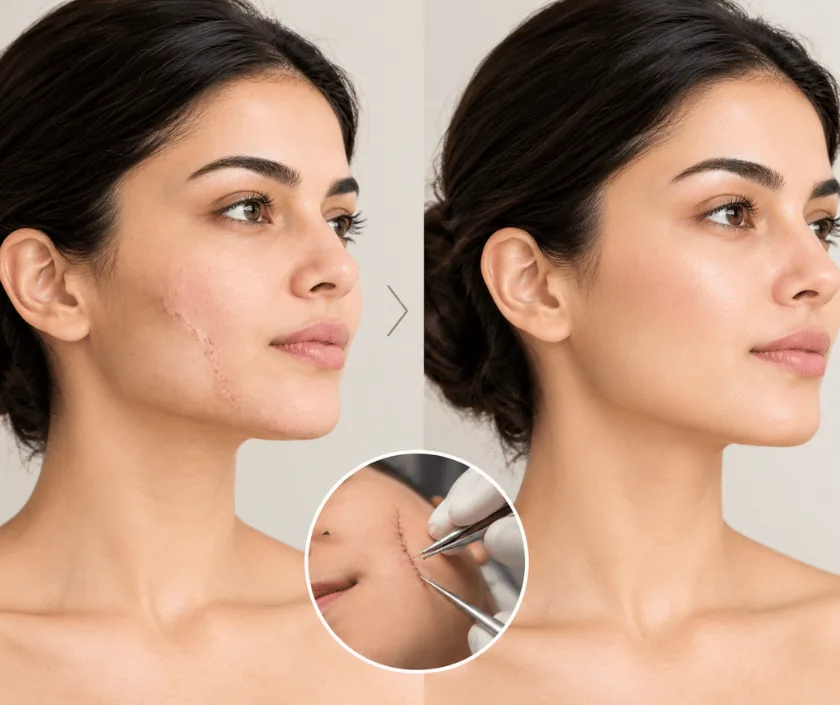
Cosmetic refinement is the stage that follows functional reconstruction. Once the wound is healed and the area works, smaller procedures can improve how it looks, including thinning a bulky flap, revising scars, adding fat for contour, adjusting borders and treating colour differences. It is optional, planned at your pace, and usually done in stages once tissue has matured.
Reconstruction has an order to it. The first operations restore cover, structure and function, because those protect the body and cannot wait. Appearance is deliberately left for later, since chasing it early can put the repair at risk. Many patients are never told a second phase exists, so they assume the slightly bulky flap or wide scar they were left with is the finished article.
Refinement addresses exactly that. Bulky tissue can be thinned, edges can be tucked in, scars can be revised or repositioned, hollows can be filled with fat grafting and colour differences can be softened with resurfacing or camouflage. Each step is small compared with the original surgery, and several can sometimes be combined in one sitting.
Timing carries most of the weight here. Tissue needs to mature, swelling needs to settle and scars need to soften before refinement gives a reliable result, which usually means waiting many months. Nothing is compulsory, and stopping once the area works and feels comfortable is an entirely reasonable choice.
This stage suits people whose reconstruction has healed and settled, and who have a specific aspect they would like improved.
The area is examined and compared with photographs from earlier stages. Tissue maturity, blood supply and thickness are assessed to confirm the timing is right.
You are asked which aspect bothers you most, since that is rarely obvious from the outside. One or two clear aims are chosen rather than a long list.
Options include thinning, scar revision, fat grafting, resurfacing and small local flaps. Simpler measures are preferred wherever they will achieve the goal.
Most refinements are day care, under local anaesthesia or sedation, with general anaesthesia kept for larger work. Several small steps can often be combined in one visit.
Healing is followed over months. If another step is worthwhile, it is planned once the tissue has settled from this one.
Mild swelling and soreness are usual. Dressings are kept dry and the area is rested, with simple pain relief generally sufficient.
Stitches come out or dissolve and most people return to normal routine. Fresh scars look pink at this point, which settles later.
Swelling has largely gone and the change becomes clear. Scar care with silicone and sun protection is in routine by now.
Scars pale and soften further. This is the fair point to judge the result and decide whether anything more is wanted.
Refinement makes a reconstructed area less noticeable, not identical to the skin around it. Colour, texture and sensation usually remain different, and scars are traded rather than removed. Improvement often comes in steps across more than one procedure. Many patients describe the gain as being able to stop thinking about the area, which is a meaningful outcome even when the difference looks modest to an outside eye.
Even small procedures in previously operated tissue carry risk, and these are worth weighing against how much the appearance troubles you.
The routine is straightforward, and it matters most in the first weeks while scars are forming.
A refinement stage exists in most reconstructive plans, and many patients simply are never told about it.
Colour, texture and sensation stay different. The goal is an area that draws less attention, not one that matches exactly.
How an area looks affects confidence and daily life. Raising it is reasonable and forms part of a full reconstructive plan.
Staged work usually gives better control, letting each step settle before the next is considered.
Elegance Clinic in Surat raises the refinement stage as part of the original plan, so patients know it exists rather than assuming the first result is the end of the road.

Refinement is priced by procedure, since the work ranges from a small scar revision under local anaesthesia to flap thinning in theatre. Combining several steps in one visit usually costs less than separate sittings. A written estimate is given for each stage after assessment. Insurance rarely covers work that is purely for appearance, and we explain where that line falls in your case.
These are the questions that come up most often in consultation. If yours is not here, send it on WhatsApp and the team will reply, usually the same day.
Ask your question →Cost follows the procedure, from a small scar revision under local anaesthesia to flap thinning in theatre. Combining steps in one visit usually costs less than separate sittings. A written estimate is given per stage, and insurance rarely covers work done purely for appearance.
It carries more chance of slow healing than surgery in untouched skin, because scarred tissue has a reduced blood supply. Careful timing, modest goals and stopping smoking all improve the odds. Each procedure is discussed with its own specific risks.
Most refinements are day care with a return to normal routine within one to two weeks. Swelling settles over about six weeks, while scars keep fading for months. Larger thinning procedures need a little longer.
Less noticeable is the realistic goal. Colour, texture and sensation usually remain different from surrounding skin, and scars are traded rather than erased. Many patients value simply being able to stop thinking about the area.
Anyone whose tissue is still swollen or red, whose scars are firm and active, or who has an unhealed wound or infection. Refinement in immature tissue often disappoints and can undo good work already achieved.
Usually many months, once swelling has settled and scars have softened. The exact point depends on the site and how healing has progressed, and it is judged at examination rather than by a fixed rule.
The area is examined and compared with earlier photographs, and you are asked what bothers you most. Options, staging and realistic gains are explained, followed by a written estimate. There is no obligation to proceed.
Seeing patients from across the city and beyond: read about the practice on the plastic surgeon in Surat page, or check what a written estimate covers on the costs and insurance page.
