PRP therapy concentrates platelets from a small sample of your own blood and applies them to a wound or scar. It is used as an addition to reconstructive care, not as a replacement for surgery, and the evidence is still developing.
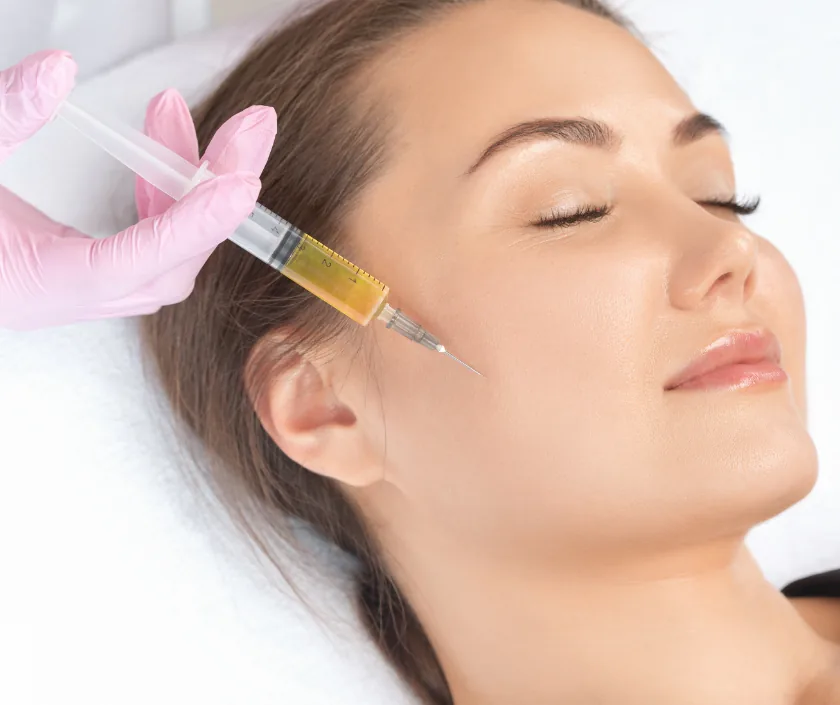
PRP stands for platelet rich plasma. A small sample of your blood is spun so the platelet rich portion can be separated and applied to a wound bed or injected into a scar. In reconstruction it is used as an adjunct alongside surgery and dressings. Research is ongoing, so it is offered where it may help rather than as a routine step.
Blood contains platelets, small cells that gather at an injury and release signals involved in repair. PRP therapy takes advantage of that. A sample of your blood is drawn, spun in a centrifuge and separated so the fraction richest in platelets can be collected. That fraction is then applied to a wound bed, layered under a graft or injected around a scar.
Interest in PRP comes from the idea that concentrating these signals may support healing in tissue that is struggling. In reconstructive practice it is used most often for slow healing wounds, ulcers with a poor base, and as an addition when a graft is placed on difficult ground. It sits beside surgery, dressings and infection control rather than in place of them.
Honesty about the evidence matters here. Studies exist across several conditions, but methods of preparation, volumes and treatment schedules vary widely between them, which makes results hard to compare. Some findings look encouraging while others show little difference. That is why PRP is offered as a considered addition, with clear discussion of what remains uncertain.
PRP is considered case by case, and it is only sensible when the basics of wound care are already in place. Any recommendation should come with a plain account of what it can and cannot add.
The wound or scar is examined, existing treatment is checked and the reasoning for adding PRP is explained. Questions about the strength of the evidence are answered before you agree.
A small amount of blood is drawn from your arm, much as it would be for a routine test. The sample is handled under sterile conditions from that point on.
Your sample is spun in a centrifuge so the platelet rich fraction separates from the rest. That fraction is collected and made ready for use within a short period.
Depending on the plan, the preparation is applied to the wound surface, placed under a graft during surgery or injected into and around a scar with a fine needle.
A dressing is applied and the area is reviewed at set intervals. Progress is measured against how the wound looked before, so any change can be judged fairly.
Mild soreness or aching at the treated area is common, and bruising can appear where blood was drawn. Most people carry on with normal daily activity.
The dressing routine continues as before. Your wound or scar is reviewed and photographed so change can be compared with the starting point.
If a course of sessions was planned, it is usually complete around now, and the response is assessed before deciding whether to continue.
Scar softening and wound healing are judged over months. PRP forms one part of the record, alongside surgery, dressings and general health.
PRP is best understood as a possible help rather than a decisive treatment. Some wounds show quicker granulation and closure, some scars soften, and some cases show no clear difference at all. Because preparation methods and schedules vary between centres, published results are difficult to compare. Any plan is reviewed after a set number of sessions, and if no benefit is visible, the honest step is to stop and reconsider.
PRP uses your own blood, which lowers some risks, though it is still a procedure with limits worth stating plainly.
The routine after a session is straightforward, and your usual wound care continues unchanged.
PRP concentrates platelets and the signals they release. It is not a stem cell therapy, and the two are often mixed up in advertising.
A wound that needs proper cover still needs an operation. PRP is used alongside surgical care, never instead of it.
Spin speed, volume and technique differ between centres, which is one reason results reported in studies vary so much.
Where PRP is used it is usually planned as a short course with review, and the plan changes if there is no response.
Elegance Clinic in Surat offers PRP only where it makes sense within a wider plan, and the conversation includes what the evidence does not yet show.

PRP is usually priced per session, and the number of sessions depends on the wound or scar being treated. Because it is an addition to your main treatment, the estimate sets it out separately from surgery and dressings so you can see exactly what you are paying for. A written estimate follows assessment, along with the review point at which we decide whether to continue.
These are the questions that come up most often in consultation. If yours is not here, send it on WhatsApp and the team will reply, usually the same day.
Ask your question →PRP is normally charged per session, and the total depends on how many sessions are planned. It is listed separately from surgery and dressings in the estimate so the added cost stays visible. A written estimate follows assessment, before any session is booked.
Because the preparation comes from your own blood, rejection is not a concern. The usual risks apply, mainly discomfort, bruising and a small chance of infection where the skin is broken. People with blood disorders need specialist advice before proceeding.
Most people return to normal activity the same day. Mild aching or bruising can last a day or two, and the existing dressing routine carries on unchanged. Heavy strain on the treated area is usually avoided for a short period.
Results vary by condition, and study quality differs, so a fair answer is that it may help in some situations and shows no clear benefit in others. Any course is reviewed at a set point, and treatment stops if nothing is changing.
It is avoided when there is active infection in the wound, which needs treating first. People with platelet or clotting disorders, and those on medicines affecting platelets, need specialist advice. Anyone expecting it to replace surgery is not a suitable candidate.
Usually after the basics are in order, meaning infection controlled, pressure relieved and nutrition addressed. Adding it before those steps rarely helps. In theatre it can also be applied under a graft at the time of surgery.
You should hear what PRP might add in your case, what the evidence does and does not show, how many sessions are proposed and when the plan will be reviewed. A written estimate is given before anything is arranged.
Seeing patients from across the city and beyond: read about the practice on the plastic surgeon in Surat page, or check what a written estimate covers on the costs and insurance page.
