A cheek wound is rarely only skin deep, because the nerve that moves the face and the duct that carries saliva both run through this area. Reconstruction therefore restores contour and cover while protecting what lies beneath.
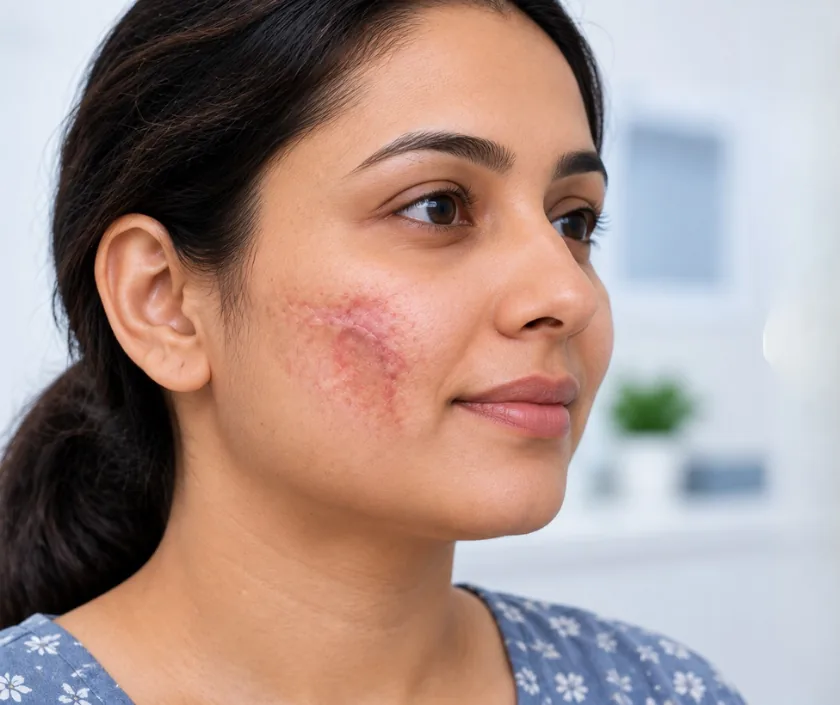
Cheek reconstruction replaces skin and soft tissue lost from the side of the face after injury, burn or removal of a growth. Because the cheek is broad and mobile, local flaps that borrow neighbouring skin usually give the best colour and contour. The plan protects the facial nerve and the salivary duct, and hides scars along natural creases.
The cheek is a broad, mobile sheet of skin sitting over fat and muscle and, in its upper part, over the bone of the cheekbone. Beneath it run branches of the nerve that moves the face and the duct that drains saliva from the gland in front of the ear. A deep cut, a crush injury or removal of a growth can involve any of these, which is why assessment goes well beyond the skin.
Where the wound is small, closure along the crease beside the nose or in front of the ear gives a discreet scar. Wider areas of loss need tissue moved from nearby: skin advanced from the front of the ear, rotated up from the neck, or transposed from the fold beside the nose. Each option is chosen for colour, thickness and where the resulting scar will sit.
Contour matters as much as cover here, since a flat or hollow patch catches the light and is noticed from across a room. If fat or muscle has been lost, reconstruction may include restoring bulk as well as skin. Facial nerve and duct injuries, when present, are repaired at the same sitting where conditions allow.
Cheek reconstruction suits anyone with a clean area of tissue loss, or a scar that distorts the eyelid or mouth. What is chosen depends on the size of the area, its depth and the quality of the surrounding skin.
Facial movement is tested and the wound is checked for saliva leak or nerve injury. The area of loss is measured, photographed and compared with the other cheek before any plan is drawn.
Options are marked on the skin, so that the final scar follows the crease beside the nose, the line in front of the ear or the border of the jaw. You see the plan before agreeing to it.
Under anaesthesia, unhealthy tissue is removed and the true size of the area becomes clear. Bleeding is controlled carefully, since a collection beneath a cheek flap can threaten it.
The flap is raised with its blood supply and eased into place without tension. Where the nerve or the duct has been injured, repair is carried out at the same sitting when conditions allow.
Light dressings and, at times, a small drain support the repair. Flap colour and swelling are watched over the first days, and a review programme is set before you go home.
Swelling and bruising are at their height, and the face may feel tight. The head is kept raised, soft food is easier, and the flap is checked regularly.
Stitches are usually removed during this period. Bruising fades, chewing becomes comfortable again, and the repair often looks fuller than it eventually will.
Most swelling has gone and the scar is red and firm. Scar care is under way, and most people have returned to work and to normal meals.
Contour and colour keep improving for a year or more. Any refinement, such as thinning a bulky flap or adjusting a scar, is planned only after this stage.
Most people finish with a cheek that looks even in shape and close in colour, with a scar that fades along a natural line. Exact symmetry is rarely achieved, since the reconstructed patch behaves a little differently from the skin around it. Swelling can take many months to settle fully. Sensation may be reduced over the flap, and a small refinement procedure is sometimes planned once everything has matured.
The cheek heals well as a rule, though the structures beneath the skin make a frank discussion of risk worthwhile.
Simple habits during the first weeks protect the repair and give the scar its best chance.
A graft placed on the cheek often heals as a patch that differs in colour and sits at a different level. Flaps take longer to plan, yet they blend far better.
Bruising of a nerve can cause weakness that appears later or recovers slowly. Movement is tested at each visit rather than assumed to be normal.
Cheek swelling settles slowly because lymph drainage takes time to reroute. Gradual improvement over many months is usual rather than a sign of a problem.
Fresh scars darken with sunlight all year round. Protection through the first year makes a visible difference to how the scar finally looks.
Cheek reconstruction at Elegance Clinic in Surat begins with a full assessment of facial movement and saliva flow, so that what lies beneath the skin is treated alongside the wound itself.

Cheek reconstruction after an injury, a burn or removal of a growth is reconstructive surgery, so most health insurance policies and many government schemes consider it once the cause is recorded. Cost depends on the size and depth of the area, whether a flap or a graft is used, whether nerve or duct repair is needed, and the length of stay. A written estimate is given before admission.
These are the questions that come up most often in consultation. If yours is not here, send it on WhatsApp and the team will reply, usually the same day.
Ask your question →Cost depends on the size and depth of the area, whether a graft or a flap is used, whether the facial nerve or salivary duct needs repair, and how long you stay in hospital. A written estimate is given before admission once the assessment is complete.
Reconstruction after trauma, a burn or removal of a growth counts as reconstructive rather than cosmetic, so mediclaim policies and government schemes generally consider it. Approval needs photographs, the diagnosis and hospital paperwork. Policy waiting periods and room rent limits still apply.
Branches of the facial nerve run through the cheek, so weakness is a recognised risk. Movement is tested before surgery and at each visit afterwards. Bruising of a nerve often recovers slowly, while a divided branch may be repaired during the same operation.
Bruising and swelling are heaviest in the first days and fade over the following weeks. Many people return to light routine within two weeks. Full settling of contour takes many months, so early appearance is not a fair guide to the result.
The aim is a cheek that looks even in shape and close in colour, not an exact mirror image. Reconstructed skin behaves differently and may stay slightly different in texture. A small refinement is sometimes planned once the tissue has matured.
Fresh wounds are treated once they are clean and swelling has eased. Scars that pull the eyelid or mouth are usually revised after the scar has matured, because operating on an active scar tends to give a less predictable result.
Facial movement is tested, the wound or scar is examined for duct and nerve involvement, and the area is measured and photographed. Flap and graft options are drawn on the skin and explained. You leave with a written plan, an estimate and a timeline.
Seeing patients from across the city and beyond: read about the practice on the plastic surgeon in Surat page, or check what a written estimate covers on the costs and insurance page.
