A cut on the face needs careful cleaning, layered closure and attention to fine detail. This page explains how facial laceration repair is planned at Elegance Clinic in Surat, what healing looks like and when a scar can be improved later.
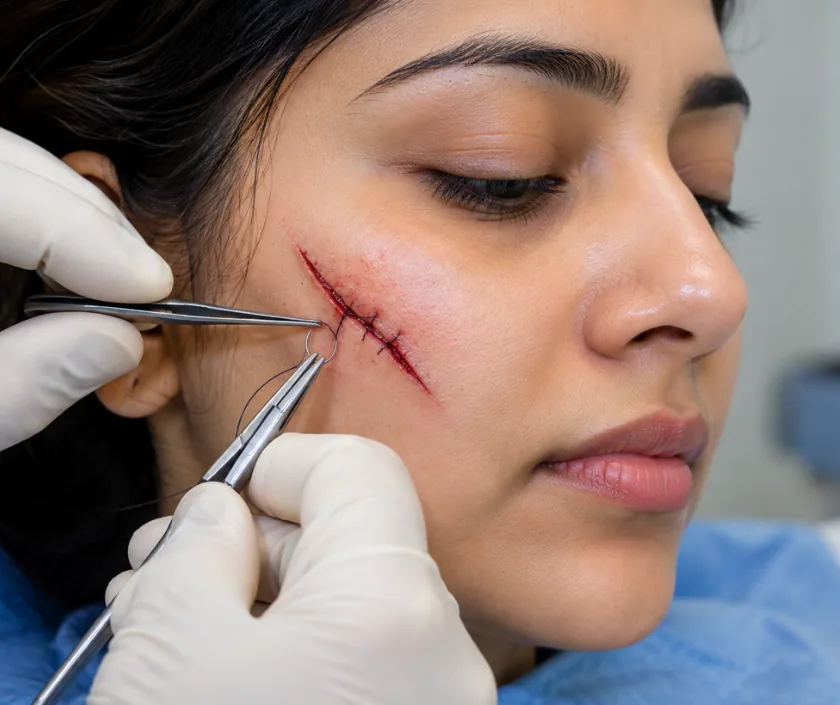
Facial laceration repair is surgery to clean and close a cut on the face so it heals with the least visible scar. The wound is washed out, ragged edges are tidied, and the tissue is closed in layers with fine sutures. Early, careful repair usually gives a better long term scar than a wound left to close on its own.
A facial laceration is a cut through the skin of the face, and sometimes through the muscle, nerve or salivary duct beneath it. The face has a rich blood supply, so these wounds often bleed freely and can look far worse than they are. Assessment starts with checking how deep the wound goes, whether a structure inside has been divided, and whether dirt, glass or grit is trapped in the tissue.
Repair is done under local anaesthetic in most cases, with sedation or a general anaesthetic for children and for very extensive injuries. The wound is washed out thoroughly, ragged edges are tidied, and closure is done in layers so the deep tissue takes the tension and the skin edges sit together without pull. Where a cut crosses a landmark such as the lip border or the eyebrow, those edges are lined up first so the landmark stays even. Some scars settle quietly on their own. Others can be improved later with scar revision once the tissue is soft and the redness has faded.
The wound is examined in good light to judge how deep it goes. It is then washed out thoroughly to remove grit, glass and dead tissue, because a clean wound tends to heal with a quieter scar.
Local anaesthetic numbs the area for most repairs. Children, and patients with wide or complicated wounds, may be offered sedation or a general anaesthetic so the repair can be done calmly and without rush.
If a nerve, muscle or salivary duct has been divided, that is repaired first under magnification. Restoring these layers matters more for movement and function than the look of the skin surface alone.
The deep layer is stitched so it carries the tension. Landmarks such as the lip border or eyebrow line are aligned next, then the skin is closed with fine sutures placed close together.
A light dressing protects the repair. Before you go home you are told when sutures come out, how to keep the area clean, and when scar care such as massage or silicone can begin.
Swelling and bruising are usually at their worst now. Keeping the head raised and using cold packs as advised helps settle them. The wound is kept clean and dry, and simple pain relief is often enough.
Sutures on the face are taken out early so they do not leave marks of their own. The scar looks pink and slightly raised at this stage, which is expected. Many people are back at school or office work.
The line often firms up and can look redder before it starts to fade. Scar massage, silicone gel or tape, and steady sun protection are usually begun once the wound has closed fully.
Colour and thickness settle slowly over many months. If a scar stays wide, raised or pulls on a nearby feature, scar revision or resurfacing can be discussed at a review visit.
Every operation carries some risk. These are talked through with you before the repair so you know what is normal healing and what needs a call.

The cost of facial laceration repair depends on how long and how deep the cut is, whether a nerve, muscle or duct also needs repair, the type of anaesthesia used, and whether the work is done in the clinic or in a full operation theatre. Repair after a road accident or assault is often supported by mediclaim, so bring your policy details. A written estimate is shared with you after the wound has been assessed, so the figure you see is the figure you plan for.
These are the questions that come up most often in consultation. If yours is not here, send it on WhatsApp and the team will reply, usually the same day.
Ask your question →The fee depends on the length and depth of the cut, the anaesthesia needed and whether deeper structures were injured. A written estimate is shared once the wound has been examined. If the injury followed an accident, mediclaim may cover part or all of the treatment.
The area is numbed first, so you feel pressure and movement rather than sharpness during the repair. Afterwards there is usually soreness and tightness for a few days, which simple pain relief handles well. Tell the team if pain grows instead of easing.
Sooner is better. Wounds closed early tend to heal cleanly and settle into a finer scar. Bites, dirty wounds and cuts with grit in them need urgent washing out. Even an older wound can be assessed, so do not assume it is too late.
Many people return within a few days once swelling has eased and the dressing is simple to manage. Jobs with dust, heavy lifting or contact sport usually need a longer gap. The team gives you a date based on where the wound sits.
Some mark remains, but a careful layered repair, early suture removal and steady scar care usually make it fine and hard to spot. Scars keep improving for many months. If one stays raised or wide, revision can be considered later.
Yes. Children are treated often, and the plan is shaped around their age and how settled they are. A short general anaesthetic or sedation is sometimes kinder than trying to repair a wound while a frightened child is moving.
The wound is examined in good light, feeling and facial movement are checked, and you are asked how the injury happened. You then hear the plan, the anaesthesia and the scar to expect, and receive a written estimate before anything is booked.
Seeing patients from across the city and beyond: read about the practice on the plastic surgeon in Surat page, or check what a written estimate covers on the costs and insurance page.
