An Estlander flap rebuilds a lip gap that reaches the corner of the mouth, using a wedge swung across from the opposite lip. Unlike an Abbe flap it finishes in one sitting, because the tissue pivots around the corner itself.
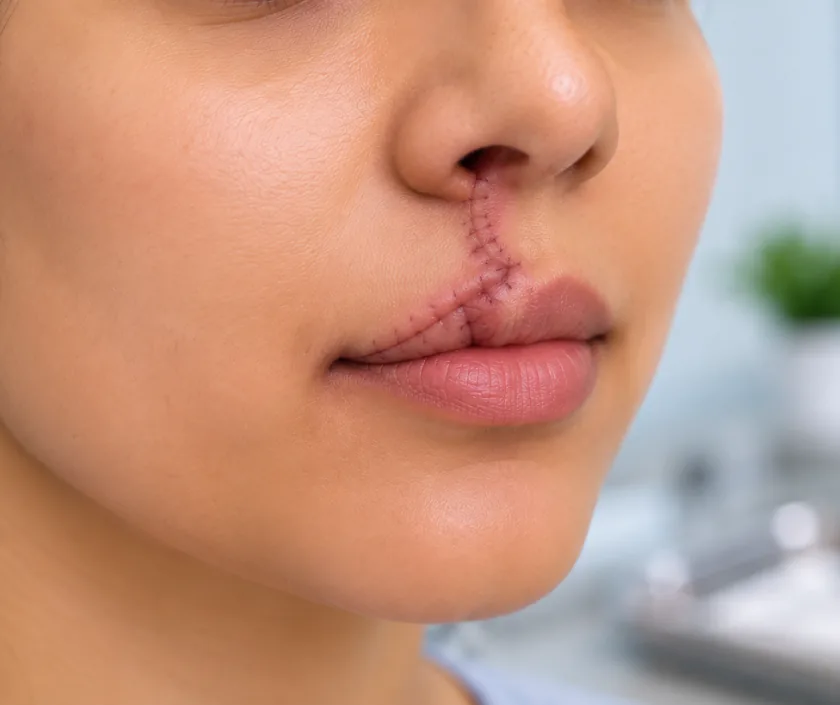
An Estlander flap is a cross lip flap used when the missing lip reaches the corner of the mouth. A wedge of the opposite lip, carrying skin, muscle and lining, pivots around that corner on its own artery and fills the gap in a single operation. Because of the pivot the corner ends up rounded, so a small reshaping procedure is often planned later.
Loss of lip at the corner of the mouth raises a problem that a central gap does not. Two lips meet there, and the ring of muscle that closes the mouth turns a sharp angle at that point. A wedge taken straight across, as in an Abbe flap, would leave the corner without support, so the mouth would droop and leak.
Pivoting solves this. A full thickness wedge of the opposite lip is raised, kept attached at the corner where its artery runs, and rotated into the gap. Skin, muscle and moist lining all travel together, which means the rebuilt lip keeps a working muscle layer rather than a patch of skin sitting over scar.
One trade off comes with it. Rotation around the corner leaves that corner rounded and set slightly inward, so the mouth may look smaller on the repaired side. Most surgeons expect this from the outset and plan a short procedure months later to reopen the corner and restore its shape.
Site of the gap decides the flap more than anything else. Estlander flaps are chosen when the corner of the mouth is part of the problem.
Width of the gap is measured and a wedge about half that width is marked on the opposite lip. Planning keeps the pivot point at the corner, where the lip artery runs.
Under anaesthesia the wedge is cut through skin, muscle and lining. Tissue at the corner is left undisturbed, so the artery inside it keeps feeding the flap.
That wedge swings around the corner and is stitched into the defect in layers. Lining is joined first, then muscle, then skin, so the lip works as one ring.
Whichever lip supplied the wedge is closed in the same layered fashion, with the colour border lined up carefully on both sides.
Shape of the corner is reviewed at follow up visits. When it stays rounded, a short later procedure reopens it, usually under local anaesthesia.
Swelling and bruising are at their worst. Cool fluids, soft food and regular pain relief make the first days easier, and speech sounds thick.
Stitches are removed or dissolve as swelling begins to settle. Mouth opening is limited but improving, and gentle rinses continue after meals.
Eating becomes far easier and most people return to normal work. Scars look red and feel firm, which is expected at this stage.
Scars soften and fade. Once the tissue is quiet, reshaping the corner of the mouth can be discussed if it remains rounded.
Mouth closure and control of saliva usually improve a great deal, which is what patients notice first. Appearance turns out good rather than symmetrical, since the corner tends to sit rounded and slightly narrowed on the repaired side. Scars fade slowly across many months. Feeling in the moved tissue returns in part. Many people go on to have a small procedure to sharpen the corner once healing has settled.
Talking through what can go wrong is part of consent, and these are the issues that come up most often with this flap.
Simple habits during the first few weeks protect the repair and give the corner its best chance of settling well.
Lip repair itself is done in one sitting, yet the corner often needs a short reshaping procedure later. Planning for that from the start avoids disappointment.
Function usually returns well. Symmetry is harder, and the repaired corner commonly sits rounder and a little tighter than the other side.
Grafts bring skin only. Lip needs muscle and moist lining as well, otherwise the mouth cannot close properly and food escapes.
Choice depends on where the gap sits. Corner defects need this design, while central gaps and very large losses call for different repairs.
Reconstruction of the mouth at Elegance Clinic in Surat is planned with function first, and the staged nature of corner repairs is explained before treatment starts rather than afterwards.

Charges depend on the size of the defect, whether a tumour is being removed at the same time, the anaesthesia used and the length of hospital stay. Later reshaping of the corner is usually a smaller procedure and is quoted separately. Reconstruction after injury or cancer is generally covered by mediclaim, and the team assists with paperwork. A written estimate follows assessment in clinic.
These are the questions that come up most often in consultation. If yours is not here, send it on WhatsApp and the team will reply, usually the same day.
Ask your question →Charges depend on the size of the defect, the anaesthesia, the hospital stay and whether a tumour is removed in the same operation. Later reshaping of the mouth corner is quoted separately. A written estimate is given after examination rather than over the phone.
Reconstruction after trauma, infection or cancer is usually admissible under mediclaim, since it restores how the mouth works. Approval needs clinical notes, photographs and a surgical plan. Policy conditions such as waiting periods and room rent caps continue to apply.
Lip itself is rebuilt in a single sitting. Rounding of the mouth corner is common afterwards, so a short second procedure to reopen it is often planned months later. That step is minor and usually done under local anaesthesia.
Swelling settles over the first two weeks and many people return to desk work within that time. Soft food is advised while the stitch lines heal. Scars stay firm and red for some months before softening, and mouth opening improves steadily.
Closure and control of liquid usually improve markedly. Exact symmetry is unlikely, because the repaired corner sits rounder and slightly narrower. Most people find the difference acceptable, and later reshaping can improve it once the tissue has settled.
It is designed for gaps at the corner of the mouth. Central defects and very large losses suit other repairs. Continuing tobacco use, uncontrolled diabetes and active infection all argue for delay until the situation is under control.
Bring any biopsy report, earlier operation notes, a list of medicines and photographs taken before the injury if you have them. Expect measurement of the defect, assessment of the opposite lip and a clear explanation of both stages.
Each technique below has its own page explaining how it works and when it is chosen.
Seeing patients from across the city and beyond: read about the practice on the plastic surgeon in Surat page, or check what a written estimate covers on the costs and insurance page.
