Not every wound has clean edges that simply meet again. When skin is crushed, torn into flaps or ground full of dirt, repair means cleaning and trimming the wound first, then closing it so that it heals and scars well.
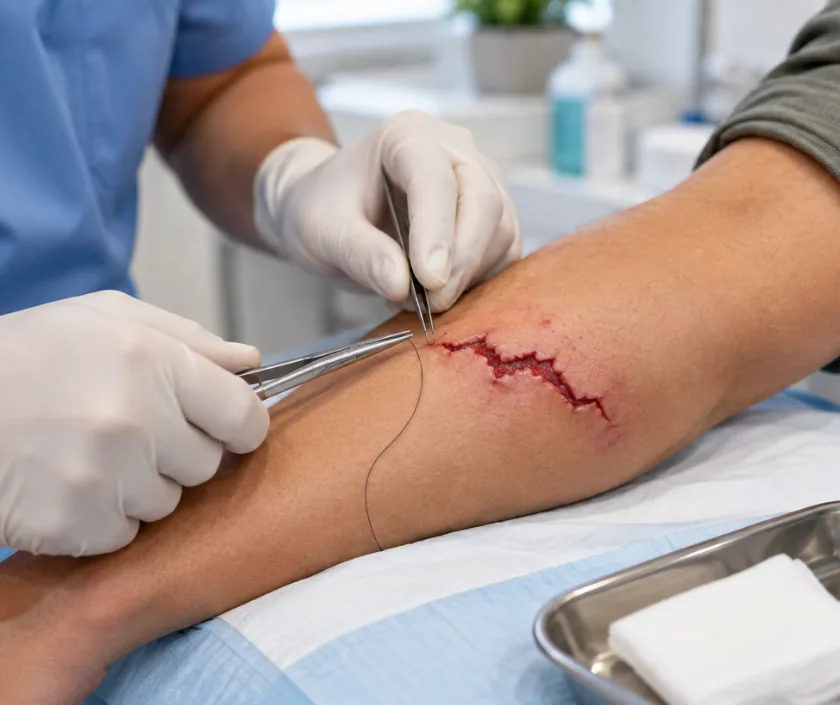
Ragged wound repair is surgery for a cut whose edges are torn, crushed or dirty rather than clean. The wound is washed thoroughly, dead and heavily bruised tissue is trimmed away, and the layers are then rebuilt so the skin meets without tension. Careful cleaning matters as much as the stitching, because contaminated tissue heals badly and scars more.
A clean cut from a blade leaves two straight edges that sit back together easily. A ragged wound is different. Skin may be torn into flaps, crushed against bone, scraped along a road surface or driven full of grit, glass and grease. Tissue at the margin is bruised, and some of it will not survive however neatly it is stitched.
Repair therefore begins with cleaning. The wound is washed out generously, foreign material is picked away, and the surgeon judges which tissue is healthy enough to keep. Very little is removed on the face, since every millimetre of facial skin counts, yet obviously dead tissue has to go. Edges are then trimmed so that they meet as neatly as the injury allows.
Closure is done in layers. Deeper stitches take the tension, fine stitches settle the skin, and the scar line is placed along a natural crease or wrinkle wherever possible. When a wound is heavily contaminated or tissue is missing, closure may be delayed or staged instead, with dressings for a few days before the wound is brought together.
Almost any fresh wound with damaged edges can be repaired, though timing and method depend on how dirty the wound is and how much tissue is missing. The aim is a wound that heals in one go, so immediate closure is weighed against a short planned delay.
The wound is examined for depth, foreign material and injury to nerves, ducts or bone. Tetanus protection is checked and photographs are taken, which also help later if an insurance claim is needed.
Most wounds are numbed with local anaesthesia. Children, anxious patients and large or deep injuries may be treated under sedation or general anaesthesia, so that cleaning can be as thorough as it needs to be.
The wound is irrigated with plenty of fluid to flush out grit and glass. Dead or badly crushed tissue is trimmed conservatively, keeping as much healthy skin as possible, especially on the face.
Muscle and deeper tissue are repaired first, so the skin is not left under tension. Edges are then aligned exactly, matching landmarks such as the eyebrow, the lip border or the hairline.
A protective dressing is applied and a review date is set. Bruised edges are checked within the first week, because tissue that looked healthy on the day can still declare itself later.
Swelling and bruising peak. The dressing is kept dry, pain is usually manageable with simple medicine, and any prescribed antibiotic course is completed as directed.
Stitches on the face are generally removed early to avoid extra marks, while stitches elsewhere stay longer. The scar looks red and raised at this stage, which is normal.
The wound is strong enough for most daily activity. Scar care with massage, silicone and sun protection is usually under way by now.
Redness fades slowly and the scar softens. Any revision surgery is considered only once the scar has matured, since early results can be misleading.
A well cleaned and carefully closed wound usually heals into a fine line, though it stays visible. Crushed edges scar more than clean cuts, and skin colour along the line may differ for a long while. Redness and firmness are expected for months before they settle. Where tissue was lost, a slight dent or pull can remain, and a scar revision is sometimes discussed once everything has matured.
Repair of a damaged wound carries the usual risks of surgery along with a few that come from the injury itself.
Most healing happens at home, so a few habits in the first weeks make a real difference to the final scar.
Stitching a dirty or crushed wound without cleaning it traps grit and bacteria inside. Washing and trimming come first, and closure is sometimes delayed on purpose.
Medicine cannot reach material buried in tissue. Washing the wound out mechanically does far more than any tablet, and antibiotics are an addition rather than a substitute.
On the face, stitches left too long leave their own marks. Timing is chosen for each site, so the wound is supported without adding extra scars.
Creams and silicone help a scar soften and fade, yet no product removes it. A ragged wound leaves a line that becomes less noticeable rather than absent.
Wound repair at Elegance Clinic in Surat is treated as reconstructive work rather than a quick stitch, with time given to cleaning, layered closure and a plan for the scar that follows.

Repairing a ragged wound is reconstructive treatment after an injury, so most health insurance policies and many government schemes consider it once the injury is documented. The final figure depends on the size and depth of the wound, whether local or general anaesthesia is used, and whether the repair is done in one stage or two. A written estimate is given before any planned admission.
These are the questions that come up most often in consultation. If yours is not here, send it on WhatsApp and the team will reply, usually the same day.
Ask your question →Cost depends on the size and depth of the wound, the type of anaesthesia needed and whether the repair is completed in one stage or two. Emergency treatment is priced differently from planned surgery. You are given a written estimate once the wound has been assessed.
Wound repair after an accident is reconstructive rather than cosmetic, so mediclaim policies and government schemes usually consider it. Approval needs an injury record, photographs and hospital paperwork. Policy waiting periods, room limits and reporting rules still apply, so inform your insurer early.
Not always. A wound full of grit, or one already several hours old, may be washed, dressed and closed a few days later instead. Waiting sounds worse yet often gives a cleaner result, because trapped bacteria are what make wounds break down.
Many people return to light routine within a week, once swelling settles and the dressing is simplified. Stitches on the face come out early, while other sites take longer. Heavy work, sport and swimming usually wait until the wound is fully sealed.
A crushed or torn wound always leaves a visible line, though careful closure keeps it narrow. Scars look red and firm for months before fading. Massage, silicone and sun protection help, and a small revision can be considered once the scar has matured.
Sooner is better. Washing and repair on the same day lower the risk of infection and give the best chance of a fine scar. Older wounds are still treatable, though they are more often dressed first and closed once the tissue is clean.
The wound is examined for depth, foreign material and damage to nerves or ducts, and photographs are taken for the record. Tetanus protection is checked. Options for immediate or delayed closure are explained, and you leave with a written plan, an estimate and a review date.
Seeing patients from across the city and beyond: read about the practice on the plastic surgeon in Surat page, or check what a written estimate covers on the costs and insurance page.
