Artificial dermis gives the body a scaffold to build a new dermal layer where a burn has destroyed the original. This page explains how these substitutes work, why treatment usually takes two stages and where they help most.
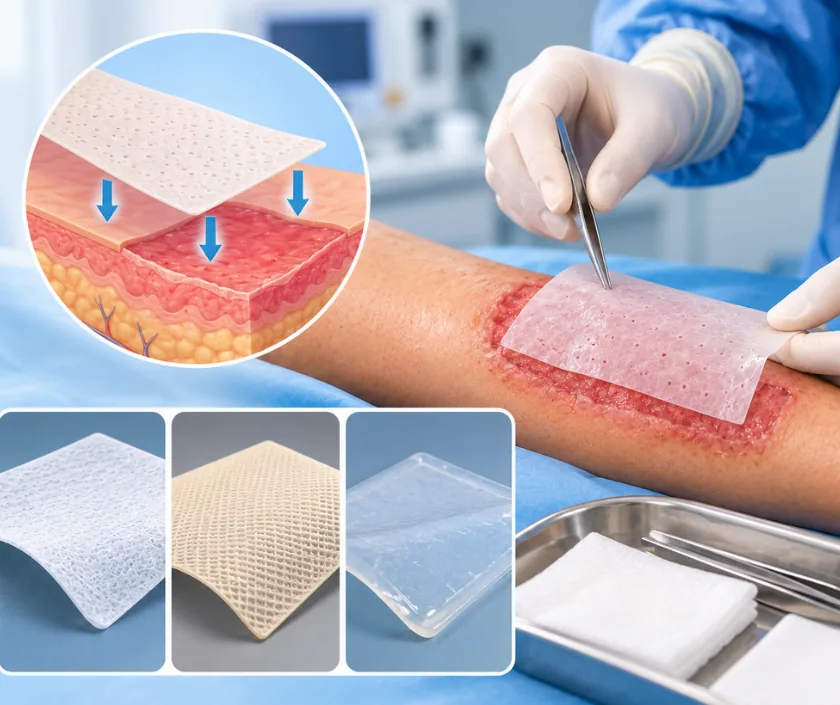
A skin substitute is a sheet of engineered material laid on a wound after dead tissue is removed. Body cells and small blood vessels grow into the scaffold over several weeks and build a new dermal layer. A thin graft is then placed on top to provide the outer skin, so treatment usually happens in two stages.
Deep burns destroy the dermis, the layer that gives skin its thickness, glide and stretch. A split thickness graft replaces the surface but carries only part of that layer with it, so healed areas can end up tight and thin. Skin substitutes were developed to address exactly that gap.
The material is a porous scaffold, usually built from collagen, with a protective outer sheet of silicone. Once the burn is excised the scaffold is laid on the clean bed and held in place. Over the following weeks the body sends cells and fine blood vessels into it, gradually replacing the scaffold with tissue of its own. Surgeons check the colour and character of that layer to judge when it is ready.
At the second stage the silicone is peeled away and a very thin graft is laid on the new surface. Because the graft is thin, the donor site is shallow and heals quickly, which is a real advantage when donor skin is scarce. The whole process takes longer than straightforward grafting and demands patience from everyone involved.
Substitutes suit selected wounds rather than every burn. The bed, the site and the willingness to accept two stages all shape the decision.
Burned tissue is removed until a clean, healthily bleeding surface is reached. Bleeding is settled thoroughly, since blood collecting under a template is one of the common reasons it fails.
The scaffold is cut to shape, laid on the bed and fixed so it stays in full contact. Dressings apply gentle even pressure, and splints hold nearby joints still.
Over the following weeks the layer gains a blood supply. Dressings are changed at planned intervals and the colour beneath the silicone is watched, since it tells the team how the process is going.
When the new layer looks ready, the silicone is peeled off and a very thin graft is taken and applied. The donor site is shallow, so it usually heals faster than after a standard graft.
Once the surface has healed, garments, silicone and stretching begin. Therapy matters here, because the point of using a substitute is to keep the area supple.
Rest and protection dominate. Dressings are checked for fluid or infection and the treated part is splinted. Any concerning change is reviewed early rather than at the next appointment.
The new layer matures. Some patients wait longer than others, and the second stage is booked when the surface looks right rather than on a fixed date.
A thin graft settles over the following weeks and the donor site usually heals quickly. Movement is reintroduced under supervision, and garments start once the surface is stable.
Areas treated this way often stay more supple than graft alone, though scar still matures slowly. Reviews continue, and further work is judged only after the tissue settles.
A substitute improves the quality of cover, and it does not restore untouched skin. Colour and texture still differ from surrounding areas, and the treated site needs the same garments, moisturiser and therapy as any burn. Two operations mean a longer path, and templates are sometimes lost to infection or fluid and have to be repeated. When it works well, the payoff is a softer, more mobile area.
This is a demanding technique that rewards careful preparation. Risks are set out plainly so the extra time involved is a decision rather than a surprise.
The waiting period between operations is when the result is won or lost. Small habits matter.
A thin graft is still needed on top. The template rebuilds the deeper layer rather than the outer surface.
Colour and texture still differ. The gain is in suppleness and movement rather than in an invisible result.
Substitutes suit particular wounds. For many burns a straightforward graft closes the wound faster and serves the patient better.
Infection or a collection of fluid can cost the whole layer, which is why inspections and protection continue throughout.
Elegance Clinic in Surat offers substitutes where they genuinely help rather than as a default, and the reasoning is explained alongside simpler options. The extra cost and the extra stage are stated in writing before anything is booked.

Substitutes add material cost to the usual charges for theatre, anaesthesia, dressings and stay, and two stages mean two admissions in most cases. Availability of a particular product can also affect timing and price. After assessment the office prepares a written estimate covering both stages, and the team explains where a simpler graft would cost less and what would be traded away.
These are the questions that come up most often in consultation. If yours is not here, send it on WhatsApp and the team will reply, usually the same day.
Ask your question →The material itself is manufactured and priced accordingly, and treatment usually needs two operations rather than one. Theatre time, dressings and a longer overall course add to that. An estimate covering both stages is prepared after assessment so the difference is clear before deciding.
Not in a simple sense, because it trades one set of problems for another. Less donor skin is needed, which helps in large burns, although the template can be lost to infection or fluid. Suitability is judged wound by wound.
Longer than straightforward grafting. The template needs several weeks to gain a blood supply before the second operation, and timing is decided by how the layer looks rather than by the calendar. Therapy and scar care then continue for months afterwards.
Movement is usually better than after a thin graft alone, because the rebuilt layer is more supple. Stretching, splinting and garments still matter, and results vary between patients. Areas across a joint need particular attention during the months when scar is active.
The affected part is removed, the wound is cleaned and dressings continue until the bed is healthy again. Treatment then either restarts with a fresh template or changes to conventional grafting. Early reporting of fever, smell or fluid makes a smaller loss more likely.
No. Substitutes suit selected wounds, particularly over joints, in areas needing padded cover, and where donor skin is scarce. For many burns a straightforward graft closes the wound sooner and gives a sound result at lower cost.
The wound is assessed for depth, site and bed quality, and donor skin availability is estimated. Options are compared openly, including simpler grafting. Where a substitute is chosen, both stages, the waiting period and the written estimate are explained before consent.
Each technique below has its own page explaining how it works and when it is chosen.
Seeing patients from across the city and beyond: read about the practice on the plastic surgeon in Surat page, or check what a written estimate covers on the costs and insurance page.
