Not every burn needs an operation. Superficial burns heal with dressings, and the skill lies in judging which wounds will close on their own and which will not. When a burn is deep, waiting rarely helps. Dead tissue holds infection, delays healing and leads to thicker scars. Removing it early and replacing the lost skin usually gives a better outcome than allowing a deep wound to close slowly by itself.
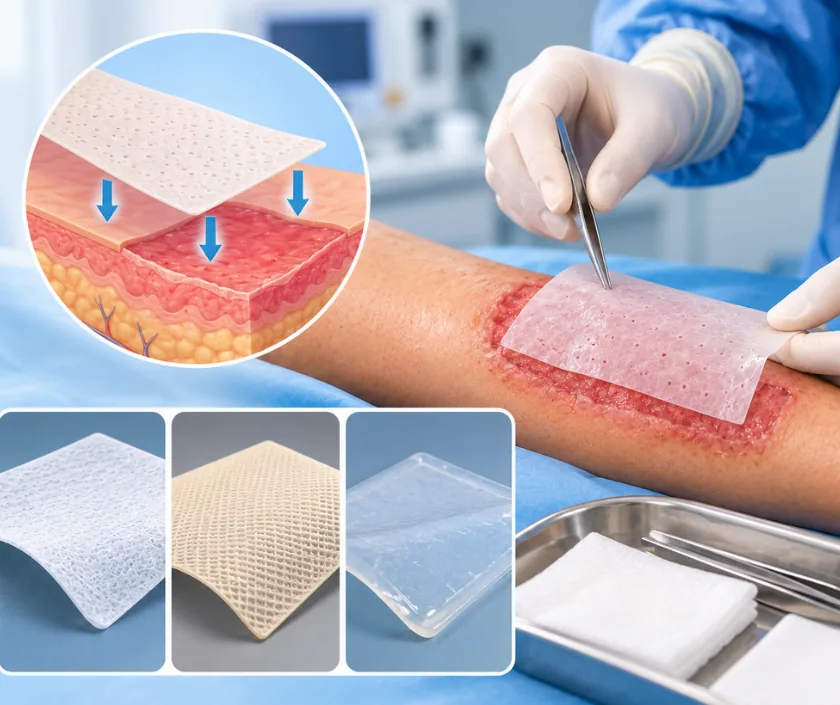
This page explains the main surgical options in burn care and where each one fits. Choices depend on how deep the burn is, how large an area it covers, which part of the body is involved and how well the patient is at the time. Surgery at Elegance Clinic in Surat is often staged, with early operations aimed at closing wounds and later ones aimed at releasing tightness and improving appearance. Both phases are discussed at the outset so expectations are clear from the start.
Burn surgery follows a ladder, from the simplest cover that will work to more involved reconstruction. Depth, site and timing decide the rung.
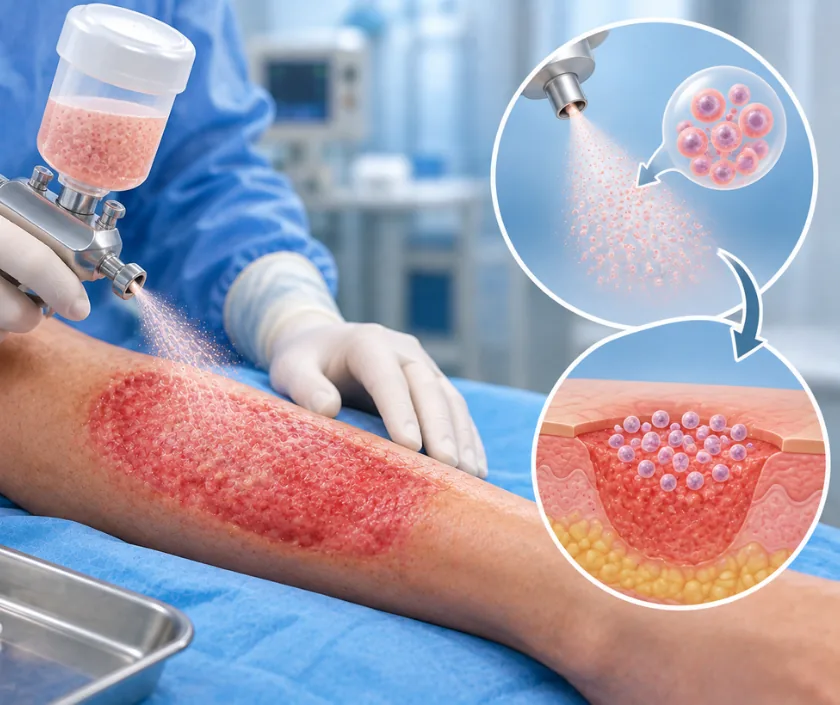
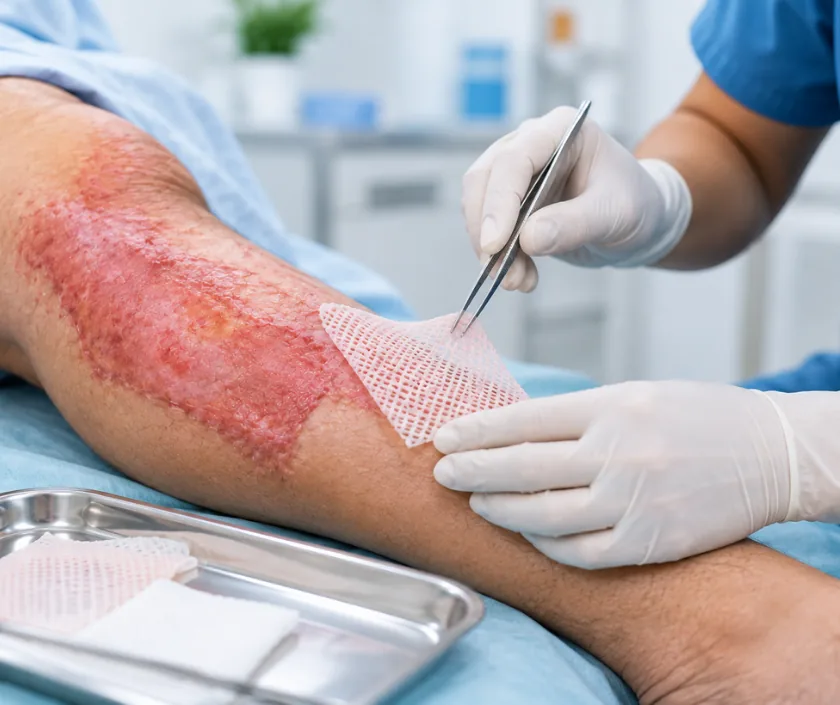
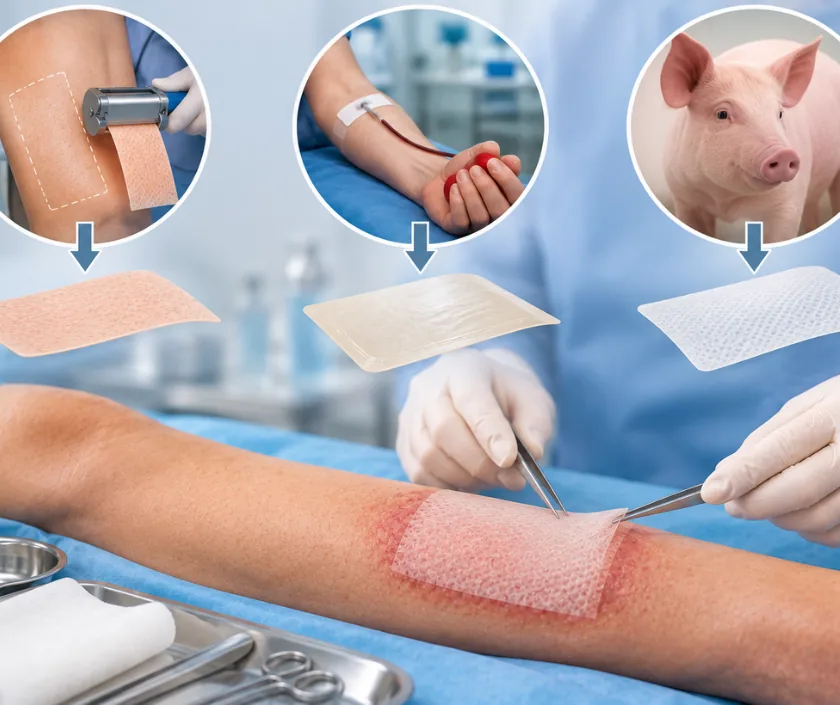
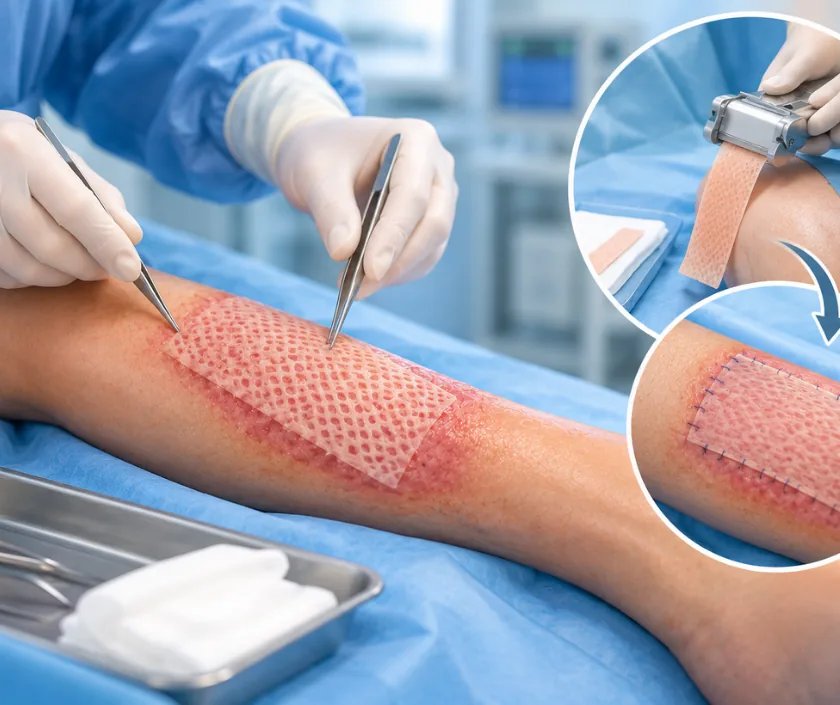
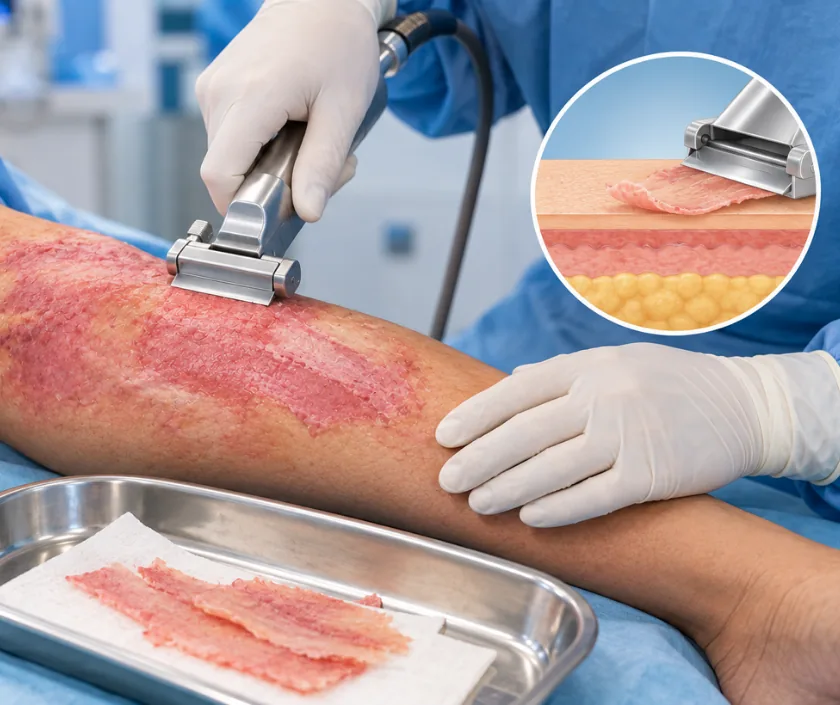
A split thickness donor site is essentially a graze. It weeps for a few days, then dries and heals under a dressing, often feeling more uncomfortable than the grafted area itself. Colour differences at the donor site can persist for many months.
When a large area needs cover from limited donor skin, the graft is passed through a mesher that makes small slits so it stretches further. Healing fills the gaps, but the diamond pattern often stays visible, so meshing is avoided on the face.
Releasing a tight scar usually waits until the scar has matured, unless a joint or eyelid is being pulled badly. Operating on an angry, actively thickening scar tends to give a poorer result, so patience between stages is deliberate rather than delay.
Between stages, dressings keep the wound moist, control bacteria and protect fragile new skin. Choices range from simple paraffin gauze to antimicrobial and negative pressure dressings. Changes are timed to reduce discomfort and to check the wound without disturbing healing.
Some burns should be assessed by a surgical team straight away rather than managed with dressings alone.
Straightforward answers to what patients and families ask before an operation is booked.
Ask your question →Cost reflects the area treated, the number of operations, intensive care needs, dressings and the type of cover used. A flap costs more than a graft. An estimate is prepared once the depth and area are known, and updated if staging changes.
Grafting is a well established operation, though risks remain. A graft can fail partly or fully, bleed underneath, or become infected. Donor sites can scar or change colour. Smoking, diabetes and poor nutrition all reduce the chance of a graft taking well.
The grafted area is usually left undisturbed for several days, then checked and redressed. Movement restarts gradually under therapy guidance. Hospital stay depends on the size of the burn, and dressings often continue at home for some weeks afterwards.
Grafted skin differs from surrounding skin in colour, texture and hair growth, and a border is usually visible. Scars soften over a year or more. Later procedures can improve contour and tightness, though the area will not look untouched.
Flaps suit deep wounds exposing bone, tendon or joints, and tight scars that grafts cannot fix. Suitability depends on general health, blood vessel quality and whether the person can manage the longer recovery. Scans of the vessels are sometimes needed first.
Deep burns are better treated early, because delay increases infection and scarring. Reconstructive surgery for tightness or appearance is different and is usually planned once scars have settled. A tight scar pulling an eyelid or the mouth is the main exception.
Depth and area are assessed, photographs are taken, and the likely number of stages is outlined. Donor areas are shown and marked. Realistic outcomes, scar behaviour and the rehabilitation that follows are all covered before any consent form is signed.
