A deep scalp burn destroys the hair follicles, leaving a smooth patch that grows nothing however long you wait. This page explains how bald scar is replaced with hair bearing scalp in Surat, what expansion involves and what it may cost.
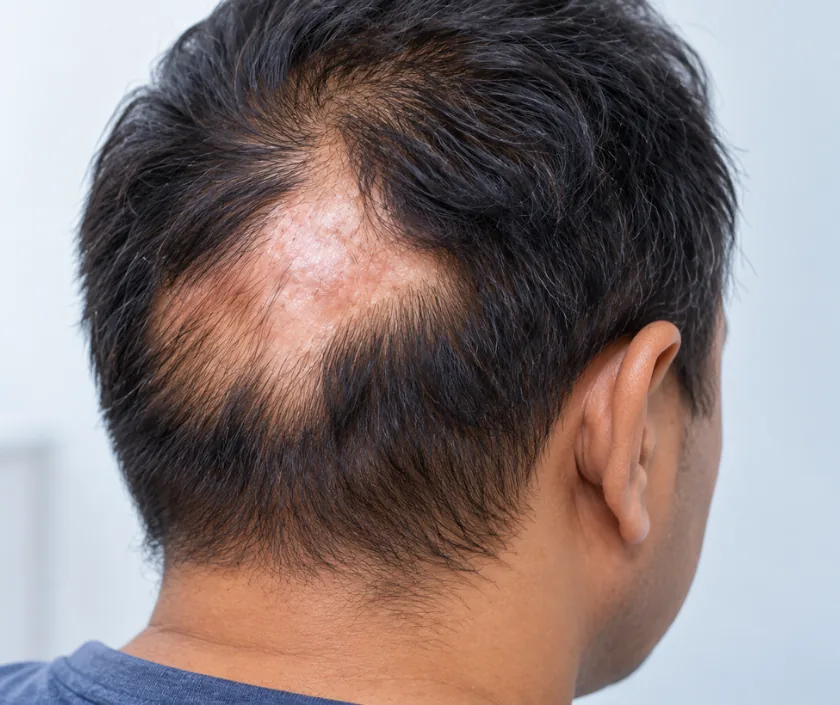
Burn alopecia is a patch of scalp that grows no hair, because the burn destroyed the follicles along with the skin. Reconstruction removes that bald scar and replaces it with hair bearing scalp, usually after a tissue expander has stretched the surrounding skin over several weeks. Small patches can sometimes be cut out and closed directly.
Scalp hair grows from follicles that sit in the deeper layer of skin. A burn destroying that layer takes the follicles with it, so the healed area stays smooth and bald however long you wait. Size, shape and position of the patch then decide what can be offered.
Small patches are often removed in one go and the edges brought together, sometimes over two sittings to avoid tension. Larger areas need more skin than the scalp can spare, so a silicone expander is placed under neighbouring hair bearing scalp. Saline is added through a small port each week until enough new skin has grown.
Once expansion is complete, a second operation removes the device, cuts out the bald scar and moves the stretched hair bearing scalp across to fill the gap. Hair then grows through the moved skin much as it did before, and the scar line usually hides between the hair shafts.
Reconstruction suits people with a stable bald scar and enough healthy hair bearing scalp nearby. Willingness to live with a visible bulge for some weeks is the biggest practical requirement.
Bald area and remaining hair are measured, and density around the scar is assessed. Photographs record the hairline. Together these decide whether direct excision or expansion is the better route for you.
Through a small cut at the edge of the scar, a silicone expander is slipped under healthy hair bearing scalp. A filling port sits under the skin nearby, and you usually go home within a day or two.
Saline is added through that port at each visit, a little at a time. Scalp stretches gradually and grows genuinely new skin. Most people describe a feeling of pressure for a few hours afterwards.
When enough tissue has grown, a second operation removes the expander, cuts out the bald scar and moves the stretched hair bearing scalp across. Drains and a light dressing are usually used.
Hair grows through the moved scalp over the following weeks. Should any bald area remain, a further round of expansion or a small excision can be planned later.
Some swelling and a tight feeling are usual after either operation. Pain relief and a light dressing are enough for most people. Hair washing waits until the team says so.
Stitches or clips come out at review. Filling visits begin about two weeks after the expander was placed, once the wound has settled.
Expansion is often well advanced by now. The bulge is obvious under the hair, and many people cover it with a cap or scarf when out.
After the second operation the scar softens and hair grows through it. Density is reviewed, and any residual bald area can be planned for later.
Most people finish with hair growing where a bald patch used to be, and a scar line that hides between the hair shafts. Density in the moved scalp is slightly lower than before, because the same follicles now cover a wider area. Very large patches may need two rounds of expansion, or may not be closed completely. Living with the expander is the part patients tend to find hardest.
Expansion is a reliable technique, though it asks patience of you. Problems are usually manageable when reported early.
Weeks with an expander go more smoothly with a few simple habits. Your team will add anything specific to your case.
Follicles destroyed by a deep burn are gone, so no oil, tablet or lotion can bring them back.
Grafts need blood supply, and dense scar often will not support them, which is why expansion is usually preferred.
It sits in a pocket just under the scalp, above the bone, and comes out at the second operation.
Wide patches often need two rounds of expansion, planned months apart.
Elegance Clinic explains the whole expansion journey, including the weeks with a visible bulge, before anyone agrees to it. Families from Surat and nearby districts are given filling appointments that fit around school and work.

Scalp reconstruction is quoted after assessment rather than from a fixed band, because plans change so much with the size of the bald patch. Direct excision of a small scar costs far less than two operations with an expander and weekly fillings in between. Our team gives a written estimate covering both admissions, the device and the follow up visits, then explains which parts an insurer is likely to consider.
These are the questions that come up most often in consultation. If yours is not here, send it on WhatsApp and the team will reply, usually the same day.
Ask your question →No. Follicles destroyed by a deep burn cannot regrow, which is why oils, tablets and lotions make no difference to a bald scar. Hair returns only when scalp that still carries follicles is moved across to replace the scarred area.
Expansion usually runs over a couple of months of weekly filling visits, between two short admissions. Small patches removed directly are finished in a single sitting. Your timetable is set out at the first consultation, so leave and travel can be planned.
A written estimate is prepared after assessment, because price depends on whether an expander is needed, how many operations are planned and how long expansion runs. Direct excision of a small patch costs much less. Insurance cover is discussed case by case before admission.
Yes, a bulge appears under the scalp and grows week by week, which most people cover with a cap, a scarf or a change of hairstyle. Knowing that in advance helps you choose the right months for treatment.
Filling sessions feel like pressure or tightness rather than sharp pain, and the feeling usually settles within a few hours. Simple tablets help. Tell the team when tightness is severe, since the amount added each week can be reduced.
Sometimes, where scar tissue is thin and has a reasonable blood supply. Dense burn scar often will not support grafts, so results can be patchy. Expansion moves skin with its own circulation, which is why it is preferred for larger areas.
Expansion needs healthy hair bearing scalp to stretch. Where very little remains, options narrow to partial correction, a hairpiece or scalp micropigmentation. Assessment measures the bald area against what is left before advice is given.
Each technique below has its own page explaining how it works and when it is chosen.
Rebuilding hair bearing skin uses grafting technique from hair restoration as well as reconstructive surgery. The same surgeon covers both, and the hair restoration side of the practice is set out on the sister site.
Seeing patients from across the city and beyond: read about the practice on the plastic surgeon in Surat page, or check what a written estimate covers on the costs and insurance page.
