Muscles sit inside tough sleeves that do not stretch. After a deep or electrical burn those compartments can swell until circulation inside them stops, and a fasciotomy opens the sleeve so blood can reach the muscle and nerve again.
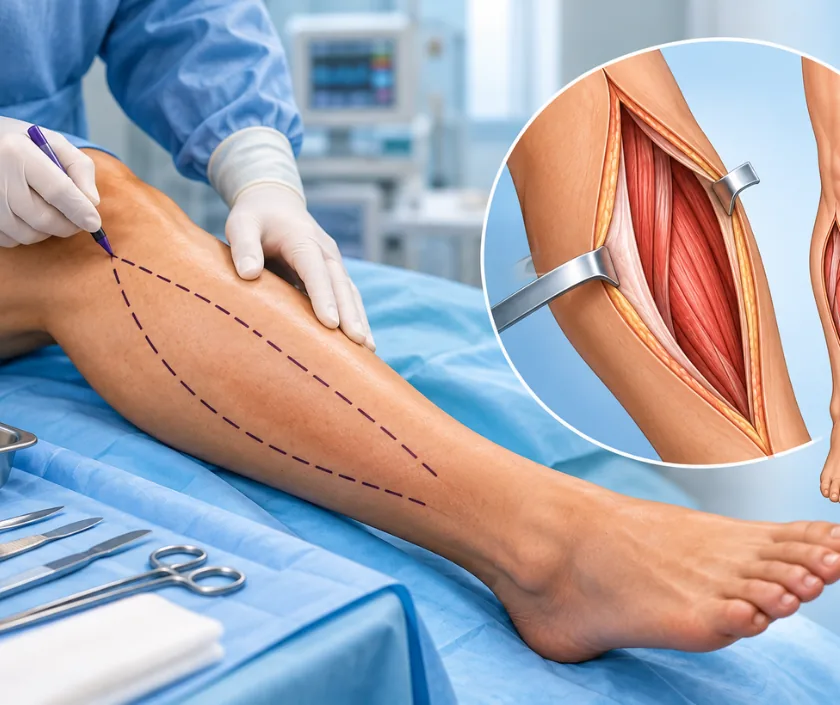
A fasciotomy is an operation that opens the fibrous sheath around a muscle group to relieve dangerously high pressure inside it. After deep burns, and especially electrical injury, muscle swells within a sleeve that cannot expand, which chokes off its own blood supply. Long incisions through skin and fascia release that pressure. Wounds are left open at first and closed or grafted later.
Every muscle group in the arm and leg sits inside a compartment lined by fascia, a tough fibrous sheet. Fascia gives the limb its shape and strength, but it has almost no give. When muscle inside swells after a burn, a crush injury or an electrical current passing through the limb, the pressure in that closed space climbs. Small vessels are squeezed shut, the muscle receives less blood, swells further, and the cycle tightens.
Symptoms follow a pattern. Pain becomes disproportionate to the injury and worsens when the muscles are gently stretched. Tingling and numbness appear. The compartment feels tense and woody to the touch. Pulses at the wrist or ankle may still be present, which is why relying on them alone is misleading in someone who cannot describe their symptoms.
The operation opens the skin and the underlying fascia along the length of each affected compartment. In a forearm or leg, several compartments are usually released through planned incisions. Muscle is inspected for viability, dead tissue is removed, and the wounds are covered with a dressing and left open. Once swelling settles, the wounds are closed directly or resurfaced with a skin graft.
A fasciotomy is a significant operation with lasting scars, so it is reserved for compartment pressure that is genuinely threatening muscle and nerve.
Examination is repeated over short intervals, looking at pain on passive stretch, tension in the compartment and any change in sensation. Where the patient cannot respond, compartment pressure may be measured directly with a needle device.
Consent is taken with the reasons and the expected scars explained. Clotting and kidney function are checked, fluids and pain relief are optimised, and the anaesthetist plans for a patient who may already be unwell.
Long incisions are made along established anatomical lines, and the fascia over each compartment is opened completely. Muscle colour, bleeding and contraction are assessed, since these show how much tissue has survived.
Clearly dead muscle is removed to reduce the load of breakdown products on the kidneys. Nerves and major vessels are protected and checked. Any associated fracture or vascular injury is addressed at the same sitting.
Wounds are left open under a dressing or a vacuum dressing, and a return to theatre is planned. Closure may be gradual, with the edges drawn together over several visits, or by skin graft.
The limb is elevated and monitored closely. Pain often eases once pressure is released. Kidney function and urine colour are watched because of muscle breakdown.
Repeat theatre visits are common for inspection and further removal of dead tissue. Physiotherapy begins gently to keep joints moving where it is safe.
Swelling settles and wounds are closed or grafted. Splints may be fitted to hold the hand or foot in a good position while healing.
Strength and sensation continue to improve slowly. Long scars soften with time, and some patients need later surgery for tightness or nerve symptoms.
Timely release usually saves muscle that would otherwise die, and pain often settles quickly afterwards. The operation cannot restore tissue already lost before surgery, and it leaves long scars that need attention for months. Strength, sensation and fine movement may take a long time to return, and some patients are left with weakness or stiffness. Recovery can vary widely depending on how much muscle survived.
Releasing a compartment is often the safer choice, but it is still major surgery on an injured limb, and the drawbacks deserve to be stated plainly.
Most of the work after discharge is about movement, skin care and watching for problems early.
Electrical injuries in particular damage deep muscle while leaving small entry and exit marks. Assessment relies on symptoms, examination and blood tests rather than appearance alone.
Pulses often remain present until very late, because the pressure that shuts small vessels is lower than the pressure needed to block a main artery.
Muscle tolerates raised pressure poorly. Delay is what causes lasting damage, so review is repeated over short intervals rather than left overnight.
Fasciotomy scars are long and often need grafting, so they stay noticeable. Massage, moisturiser and pressure garments improve texture over time.
Elegance Clinic in Surat handles electrical and deep burn injuries through the urgent phase and the reconstruction that follows, keeping the same team involved throughout.

Cost depends on how many compartments are released, whether repeated theatre visits are needed, and how the wounds are finally closed. Because a fasciotomy usually happens within a longer burn admission, it is quoted as part of the overall treatment plan rather than as a standalone figure.
A written estimate is prepared once the limb has been assessed, and it is revised if further surgery becomes necessary. Our team handles preauthorisation and keeps the family updated on the running account.
These are the questions that come up most often in consultation. If yours is not here, send it on WhatsApp and the team will reply, usually the same day.
Ask your question →A written estimate follows assessment, because the figure depends on how many compartments are opened, how many theatre visits are needed and whether skin grafting is required. It is quoted within the overall admission rather than as an isolated procedure charge.
Emergency surgery during a burn admission is normally treated as covered inpatient care under mediclaim policies. Approval still depends on sum insured, policy terms and room category, so documents are collected early and preauthorisation is filed as soon as possible.
It carries the usual risks of anaesthesia and surgery, along with bleeding, infection and possible nerve injury. Against that sits the harm of leaving raised compartment pressure alone, which is why the balance usually favours releasing early.
Closing skin over a swollen compartment would simply recreate the pressure being relieved. Leaving the wounds open lets swelling settle and allows the muscle to be inspected again, after which closure or grafting is planned.
Wounds usually close or are grafted within a couple of weeks, while strength and sensation improve over months. Physiotherapy continues well after discharge, and scar treatment carries on for a year or more in many cases.
Many patients regain good use, particularly when release happened before muscle was lost. Some are left with weakness, stiffness or altered sensation. Outcome depends mainly on how much tissue survived and how consistently therapy is followed.
Ask what signs are being monitored, what happens if pressure keeps rising, how many operations are likely and what the scars will look like. Bring records of the accident, previous illnesses and regular medicines.
Each technique below has its own page explaining how it works and when it is chosen.
Seeing patients from across the city and beyond: read about the practice on the plastic surgeon in Surat page, or check what a written estimate covers on the costs and insurance page.
