A large burn makes the body lose fluid quickly through damaged skin. Fluid resuscitation is the measured replacement of that fluid through a drip, adjusted hour by hour so the circulation, kidneys and healing wounds stay supported.
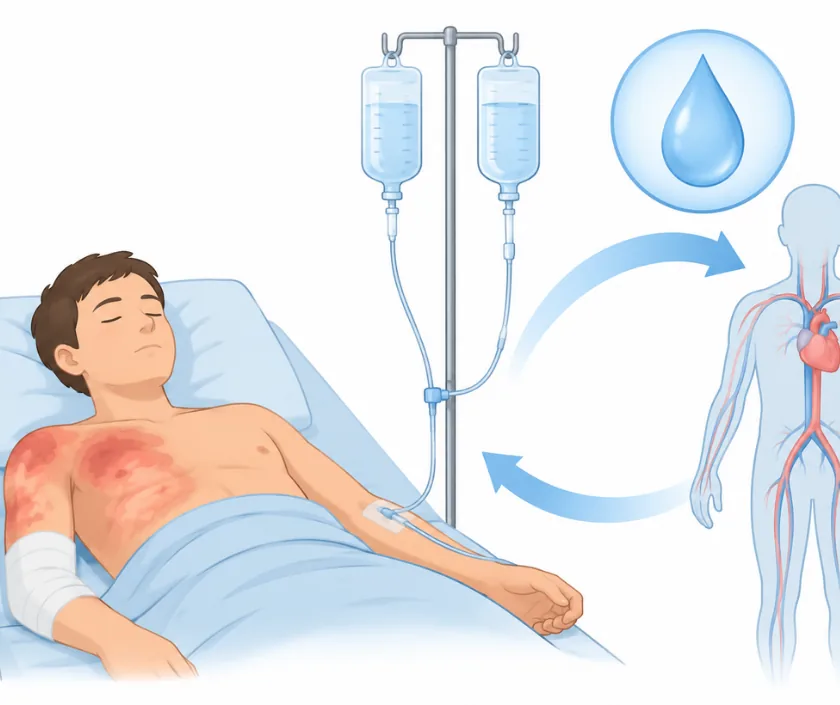
Fluid resuscitation means giving measured intravenous fluid in the early hours after a major burn, because damaged skin leaks fluid and blood pressure can fall. The team calculates a starting rate from burn size and body weight, then adjusts it while watching urine output, pulse and blood tests. Giving too little fluid and giving too much are both harmful, so the rate keeps changing.
Skin does more than cover the body. It holds fluid in. When a large area is burned, tiny blood vessels across the whole body become leaky, and water and salts move out of the circulation into the tissues. Blood pressure then falls, and organs such as the kidneys receive less blood than they need. Replacing that fluid early is one of the few things that genuinely changes how a major burn turns out.
Treatment begins with a large drip, ideally through healthy skin. A warmed salt solution is given at a rate first estimated from body weight and the percentage of body surface burned. That estimate is only a starting point. From then on the team titrates the rate against what the body shows: how much urine is passing, how fast the heart is beating, what the blood tests say about acid levels and kidney function.
Because burned skin also loses heat, patients are kept warm, and pain relief is given alongside the fluid. Children, older adults and people with heart or kidney disease need especially close attention, since their margin for error is narrower.
Not every burn needs a drip. The decision rests on how much of the body is affected, how deep the injury goes, and how the person looks on arrival.
The team checks breathing, circulation and the airway first, then maps the burn to estimate how much body surface is involved and how deep the injury goes. Weight is recorded because the fluid plan depends on it.
A wide drip is secured, blood is sent for haemoglobin, kidney function and acid levels, and a urinary catheter is placed so output can be measured accurately rather than guessed from nappies or bottles.
Warmed salt solution begins at a rate worked out from weight and burn size. Half of the first day allowance is generally planned for the earlier part of that period, counting from the time of injury and not from arrival.
Nursing staff record urine volume, pulse and blood pressure every hour. If output falls the rate goes up, and if the patient is becoming waterlogged the rate comes down. Blood tests are repeated through the day.
As the leak settles, fluid is reduced and feeding begins, often through a tube. Attention then shifts to wound cleaning, dressings, removal of dead tissue and planning for grafting.
The busiest phase. Fluid rates change often, pain relief is titrated, and the burn is cleaned and dressed once the circulation is stable.
Leakiness settles and swelling peaks, so the face and limbs may look puffy. Fluid is tapered and feeding is started early to support healing.
The drip is usually no longer the main issue. Dressing changes, removal of dead tissue and skin grafting take over, along with nutrition and physiotherapy.
Once wounds are closed, attention turns to scar management, pressure garments, joint movement and, where needed, later reconstruction.
Good fluid management gives a burn the best chance, but it does not undo the injury itself. Outcome still depends on how large and deep the burn is, whether the airway was involved, age and other illnesses. Many patients pass through the acute phase and go on to grafting and rehabilitation. Some need intensive care and repeated surgery. Recovery can vary a great deal between two people with burns that look similar.
Fluid therapy is essential after a large burn, yet it carries its own hazards, which is why the rate is reviewed so often rather than set and left.
By the time you go home the drip is long finished, but the effects of a major burn on fluid, nutrition and energy continue for a while.
Oral fluid cannot keep pace with the loss from a large burn, and vomiting is common early on. Measured intravenous fluid under monitoring is what is needed.
Excess fluid causes swelling in the lungs and limbs and can raise pressure inside the abdomen. The aim is enough, not maximum.
A formula only sets the starting rate. What the patient does over the following hours, especially urine output, decides the real rate.
Infection, nutrition and wound closure remain live issues for weeks, so monitoring continues well after fluid therapy ends.
Elegance Clinic in Surat works with burn patients through the acute phase and long into reconstruction, so families deal with one team rather than starting again at each stage.

Acute burn care is charged by the day rather than as a single package, because the amount of monitoring, fluid, medication and dressing material depends on how the patient responds. Intensive care for burns commonly falls in the band below, per week of stay.
Most health insurance and mediclaim policies treat emergency burn admission as covered inpatient care. Our team helps with preauthorisation and gives you a written estimate, with an updated statement as treatment progresses.
These are the questions that come up most often in consultation. If yours is not here, send it on WhatsApp and the team will reply, usually the same day.
Ask your question →It is not billed on its own. Fluid, monitoring, nursing and medication form part of the daily burn intensive care charge, which commonly falls between Rs 60,000 and Rs 1.8L per week. The final figure depends on burn size, length of stay and any surgery needed.
Emergency burn admission is usually treated as covered inpatient care under mediclaim policies. Cover still depends on your sum insured, waiting periods and room category. The billing team can start preauthorisation once identity and policy documents are shared, often on the day of admission.
Placing the drip causes brief discomfort, and pain relief is given alongside. The therapy itself is safe when monitored, though both underfilling and overfilling carry risks. That is exactly why urine output, pulse and blood tests are checked repeatedly through the day and night.
Most of the intensive fluid replacement happens over the first day or two, after which the rate is tapered as the leaking settles. Some patients continue on a maintenance drip for longer, particularly if they cannot eat or drink normally yet.
Urine output is the clearest bedside sign that organs are getting enough blood flow. A catheter lets nurses measure it accurately each hour, which is how the drip rate is adjusted. It is removed once the patient is stable and fluid needs have settled.
It does not prevent scars, but it does help. Keeping blood flow steady stops a shallow burn from deepening, and shallower wounds tend to heal with less scarring. Scar outcome also depends on depth, infection, grafting and later pressure garment therapy.
Bring any previous medical records, a list of regular medicines and insurance papers. Ask the nursing team for a daily update at a fixed time. Practical help with food, clothing and rest matters, since a burn admission can run for several weeks.
Each technique below has its own page explaining how it works and when it is chosen.
Seeing patients from across the city and beyond: read about the practice on the plastic surgeon in Surat page, or check what a written estimate covers on the costs and insurance page.
