One tight finger changes how a whole hand behaves, because the neighbouring fingers work around it. Finger contracture release restores skin along the digit, so the joints can straighten or bend and take part in grip again.
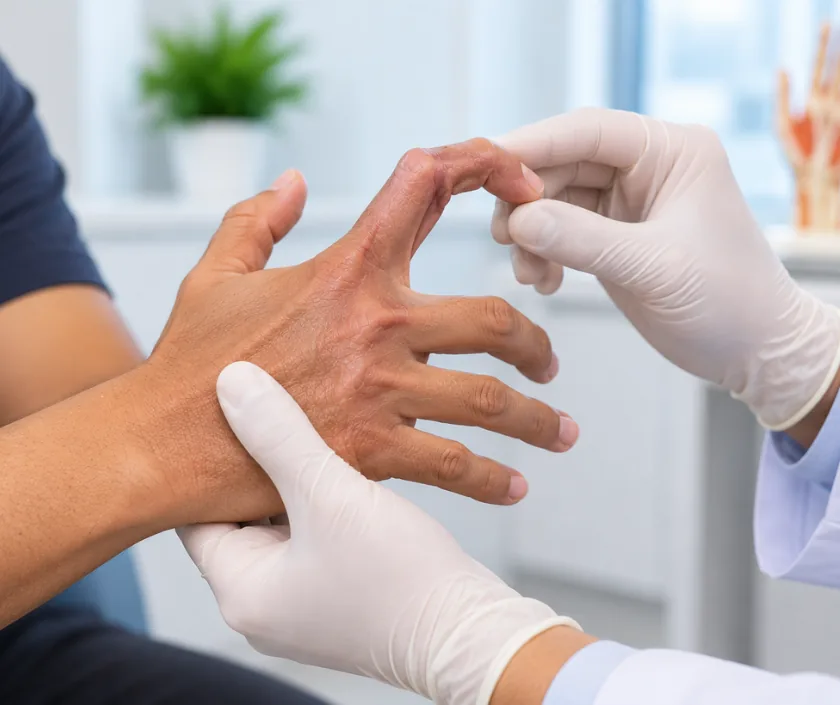
Finger contracture release divides the burn scar running along a finger, straightens the joint as far as the deeper tissues allow and covers the raw area with a thick skin graft. Small wires may hold the digit steady while healing takes place. Finger splints and hand therapy afterwards decide whether the correction lasts.
Fingers have very little spare skin. Each joint depends on a small amount of slack that slides as the digit bends and straightens, and burn scar removes exactly that slack. When the palm surface is burned, the finger curls in towards the hand and cannot be opened. Scar on the back of the digit does the reverse, dragging it into a straight or backward position where it refuses to bend.
Either pattern damages grip. Objects are dropped, a fist cannot close evenly, and the finger catches on pockets, sleeves and door handles. Nails may be deformed by the original burn, which makes cutting and cleaning them awkward. Joints that stay in one position for months grow stiff internally, so the problem soon extends beyond the skin.
Release therefore combines two jobs. Skin is opened along the tight side and replaced with a graft, then the joint is coaxed towards a working position without forcing structures that have shortened. Therapy afterwards teaches the finger to move again alongside its neighbours.
Release suits a finger held out of position by scar, where the joint itself still has some movement left.
Each joint is tested separately to see how much movement remains once skin tension is taken off. Sensation along both sides of the finger is recorded, because burn scar can involve the small nerves running there.
Scar is divided across the direction of pull, usually at the level of the joint that is most restricted. Flexor or extensor tendons lying immediately beneath are protected as the finger is eased into position.
Straightening stops at the point where the nerves and vessels along the digit begin to tighten. Pushing beyond that risks the blood supply, so any remaining correction is left to splinting over the following weeks.
A thick skin graft, commonly taken from the groin or the inner arm, resurfaces the open area. Fine wires sometimes hold the joint while the graft settles, and they are removed at a planned visit.
Once healing allows, the therapist starts tendon glide and joint exercises. Custom finger splints hold the corrected position between sessions, particularly at night, when scar contracts most strongly.
Hand rests raised on a pillow with the finger protected. Circulation at the fingertip is watched, and pain is usually manageable with simple medicine.
Dressings are opened to inspect the graft. Careful movement of the neighbouring fingers begins, while the treated digit remains supported.
Any wires are removed at the planned time and active exercises step up. Scar massage and pressure care start once the surface has fully closed.
Grafted skin softens gradually and grip continues to improve. Night splints often remain in use, and children are reviewed as the hand grows to catch early tightening.
Most fingers move considerably better after release, though a joint stiff for years may never regain its full arc. Grafted skin on a digit stays visibly different in colour and texture. Correction achieved on the table is only the starting point, because splints and exercises carry the finger the rest of the way. Some return of tightness is common, and repeat surgery is occasionally needed while a child grows.
A finger is small, and the structures inside it are close together, so a plain account of the risks matters.
Small daily habits keep a released finger straight, and skipping them is the usual reason the correction slips.
One digit out of line changes how the whole hand grips, so release is done for function rather than appearance.
Nerves and vessels inside a digit shorten with the scar. Forcing full correction risks the blood supply, so splints finish the job gradually.
Fine wires are used only while healing settles and are removed at a planned visit, usually with little discomfort.
Even long standing contractures often improve, though gains are smaller and therapy has to continue for longer.
Finger reconstruction at Elegance Clinic in Surat is planned digit by digit, with hand therapy arranged as part of the treatment rather than as an afterthought.

Finger contracture release is reconstructive work, so mediclaim policies and government schemes usually accept it when photographs and a functional note are submitted. Cost varies with the number of digits treated, the size of graft needed, whether wires are used, anaesthesia and the therapy planned afterwards. A written estimate covering all of this is given before admission.
These are the questions that come up most often in consultation. If yours is not here, send it on WhatsApp and the team will reply, usually the same day.
Ask your question →Treatment normally sits within Rs 45,000 to Rs 1.6L. Number of digits released, graft size, use of wires, type of anaesthesia and planned therapy sessions all move the figure. An itemised written estimate is prepared before the surgery date.
Cover is usually granted because a contracted digit reduces grip and daily independence. Photographs, a record of the movement lost and the surgical plan are normally requested. Standard waiting periods and policy sub limits continue to apply.
Yes, with careful technique, since nerves and vessels run along both sides of the digit. Straightening is stopped before those structures are stretched too far. Graft loss, stiffness and infection are the main risks, and early review handles them well.
Grafts usually settle over the first fortnight, and any wires come out at a planned visit. Gentle use returns during the following weeks. Splinting at night and daily exercises normally continue for months, because scar keeps tightening after the skin closes.
Improvement is usually clear, although a joint stiff for years may keep some bend. Skin on the digit will look grafted. Steady splint wear and therapy often add a little more movement over the months that follow.
Waiting can allow the joint and the growing bone to deform, so treatment is often advised once function is affected. Further release may still be needed later, since scar does not lengthen as the hand grows.
Each joint of the finger is tested, sensation is checked and the scar is examined with the hand opened. Photographs go into the file and support insurance. Graft options, the use of wires, splinting and therapy are then discussed in detail.
Each technique below has its own page explaining how it works and when it is chosen.
Seeing patients from across the city and beyond: read about the practice on the plastic surgeon in Surat page, or check what a written estimate covers on the costs and insurance page.
