The fold of skin between thumb and index finger has to open wide every time you pick something up. Burn scar closes that space, pulling the thumb against the palm, and release surgery is what reopens it.
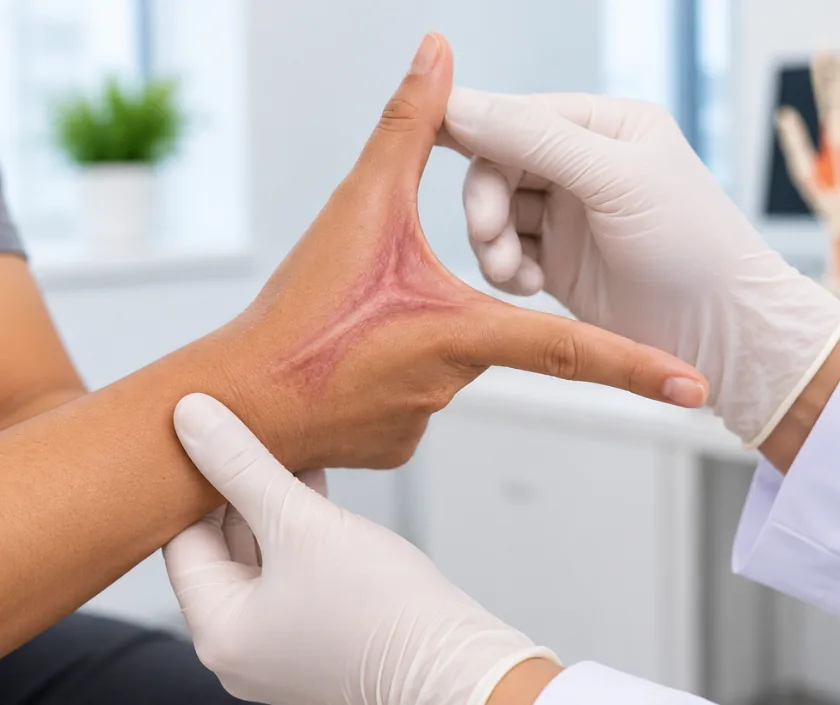
First web space release opens the burned fold between thumb and index finger, so the hand can spread wide enough to hold a glass, a bottle or a handle. Local skin is rearranged as Z shaped flaps, and a wider gap is covered with a thick graft. A web spacer splint and therapy then keep the thumb out where it belongs.
Grasp depends on the thumb standing away from the palm. That position is only possible when the web between thumb and index finger can widen freely, so any burn on the back of the hand or inside the palm threatens it. Scar in this fold shortens as it matures and quietly drags the thumb inward. Over time the space narrows until the hand can only grip flat, thin objects.
Patients describe the problem in everyday terms. Bottles slip, a steel glass cannot be held, a cricket bat or a tool handle no longer fits, and writing changes because the pen sits awkwardly. Pinch between thumb and index finger weakens as well, since the thumb cannot reach across properly.
Release restores the missing skin in the fold. Tight fascia and small muscles deep in the web may also need loosening if the thumb still refuses to move out. Once the space is open, the thumb is held in that wider position while the new skin heals, and therapy rebuilds grasp and pinch around the improved shape.
Surgery is offered when scar in the web, rather than a damaged joint, is what keeps the thumb pinned to the palm.
The thumb is stretched outwards and the tightest cord marked, while pinch and grasp are measured. Deciding between local flaps and a graft depends on how deep the web has become and on the quality of nearby skin.
Where a defined band exists, the surgeon designs Z shaped or four flap plasties across it. Interlocking the flaps borrows length from the sides of the fold and deepens the web without importing skin from elsewhere.
A thumb that still will not move out may need tight fascia and muscle attachments inside the web loosened. Nerves and vessels supplying the thumb are carefully preserved during that step.
Wide raw areas are covered with a thick graft, usually taken from the groin. Thicker grafts shrink less than thin ones, which matters in a fold that must stay open under daily use.
A fine wire sometimes keeps the thumb positioned for a short period, and a splint holds the web open once dressings settle. Hand therapy then works on grasp, pinch and scar softening.
Hand is elevated and rested in a bulky dressing. Colour and warmth of the thumb are checked, and simple pain relief is usually enough.
Dressings are reduced and healing reviewed. Gentle movement of the fingers begins, while the web itself stays supported in a spacer splint.
Grasp practice with wide objects starts, along with scar massage. Splint wear shifts towards nights and rest periods as the skin toughens.
Web depth is measured at review and compared with earlier notes. Splinting often carries on, particularly for children, whose webs narrow again as the hand lengthens.
Grasp usually improves clearly once the web is opened, and many people can hold everyday objects that were impossible before. Skin inside the fold will still show grafts or flap lines, and full width is not always achievable in a deeply burned hand. Consistent splint wear largely decides how much of the new space survives. Some narrowing over time is expected, so review appointments continue for a long period.
Problems are not common in a small area like the web, but they should still be understood before surgery.
Because the web wants to close as it heals, the splint and exercise routine are the heart of aftercare.
This fold controls grasp for the whole hand, and reopening it usually changes daily function more than its size suggests.
Passive pulling can help mild tightness, yet mature scar simply resists and may split rather than lengthen.
Healing scar contracts steadily for months. Splinting is what keeps the thumb out while that process settles.
Growing hands often need staged work, because scar does not enlarge as the bones lengthen through childhood.
Thumb and hand work at Elegance Clinic in Surat is planned around function, with splints and therapy organised before the operation is booked.

Because a narrow thumb web takes away grasp, this operation is treated as reconstructive surgery and generally qualifies for mediclaim cover. Charges reflect the type of skin cover chosen, whether deep release is required, anaesthesia, hospital stay and the splint fitted afterwards. Hand therapy sessions are quoted separately so that you can see the full picture before admission.
These are the questions that come up most often in consultation. If yours is not here, send it on WhatsApp and the team will reply, usually the same day.
Ask your question →Charges usually fall inside Rs 45,000 to Rs 1.6L. Whether local flaps or a graft are used, whether deep release is needed, anaesthesia and the splint all influence the figure. A written estimate is provided before you are admitted.
Insurers generally accept web release as reconstructive, since a closed web removes the ability to grasp. Photographs, a note on lost function and the surgical plan support the claim. Waiting periods and sub limits within your policy still apply as usual.
It is a controlled procedure, though small nerves and vessels supply the thumb and lie close to the release. Careful dissection protects them. Graft loss, infection and stiffness remain possible, and early reporting makes each far easier to treat.
Dressings usually settle within the first two weeks, after which gentle grasp practice begins. Comfortable everyday use often returns over the following month. Splint wear at night and regular therapy continue for months, because that is what keeps the web open.
Holding glasses, bottles and handles usually becomes possible again, although a deeply burned hand may not reach full width. Skin in the fold stays visibly grafted. Long term function depends largely on splinting and exercise after the operation.
Yes, and it is often advised when a closed web is stopping normal hand development. Growth tends to narrow the space again, so a second procedure later in childhood is sometimes required. Review continues until growth is complete.
The width of the web is measured, grasp and pinch are tested, and photographs are taken for records and insurance. Options such as local flaps or a graft are explained, along with the splint and therapy that follow. A written estimate is then prepared.
Each technique below has its own page explaining how it works and when it is chosen.
Seeing patients from across the city and beyond: read about the practice on the plastic surgeon in Surat page, or check what a written estimate covers on the costs and insurance page.
