Silicone sheets and gels are among the simplest treatments for a raised burn scar, and also among the most misused. This page explains how silicone is applied, how long it takes to help and where its limits lie.
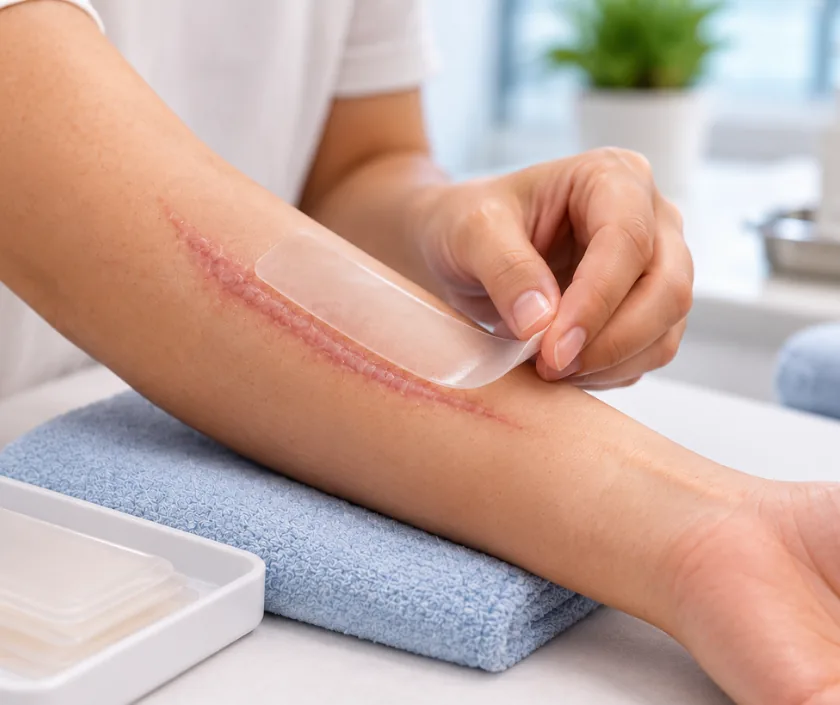
Silicone therapy means covering a healed scar with a soft silicone sheet or a thin silicone gel every day. The layer holds moisture in the scar and shields it, which often leaves a raised scar flatter, paler and less itchy over months. Daily use matters far more than the brand chosen.
Healed burn scars lose the outer barrier that normal skin uses to hold water. Dryness seems to keep the scar active, so it stays red, raised and itchy for longer. Covering the area with silicone restores a barrier, keeps the tissue hydrated and protects it from rubbing, and burn units have used this simple idea for many years.
Two forms are available. Sheets are soft, reusable strips that stick to the skin and are best on flat areas such as the chest, back or thigh. Gels are painted on in a very thin layer and dry into an invisible film, which suits the face, the neck, hands and anywhere clothing would peel a sheet away.
Neither form works quickly. Silicone is applied every day, built up gradually to long wearing hours, and continued for months while the scar matures. Sheets are washed and reused until they lose their grip, and treatment usually runs alongside pressure garments, moisturising and gentle massage rather than replacing them.
Silicone suits people with a healed scar that is still active, and who can build a small daily habit around applying it.
The scar is examined to confirm the skin has closed completely and there is no infection. Thickness, colour and itch are recorded, and photographs are usually taken so progress can be compared later.
Flat, covered areas usually suit a sheet, while the face, joints and hands do better with gel. Your climate, clothing and daily work all influence the choice, since a sheet that peels off helps nobody.
Application starts with a few hours a day so the skin adjusts, then increases week by week. Many patients end up wearing a sheet overnight and using gel under clothing during the day.
You are shown how to wash a sheet in mild soap, dry it and reuse it until it stops sticking. Gel is applied thinly, because a thick layer stays sticky and rubs off on clothes.
Scars are reassessed after a few months against the earlier photographs. Where change is slow, silicone may be combined with a pressure garment, or a different treatment such as laser can be discussed.
Skin is getting used to being covered. Wearing time is short at first and built up steadily, and the area is washed and dried at every break.
Itching and tightness often ease before anything looks different. Sheets are washed daily and replaced when they lose their grip.
Redness usually begins to fade and a raised scar may feel softer. Photographs taken at the start make this slow change easier to judge.
Scars continue to mature for a year or more. Use is tapered once the scar looks pale and flat, and treatment stops only after review.
Silicone improves comfort early and appearance slowly. Many patients notice less itch within weeks, while flattening and fading take months of steady daily use. No sheet or gel removes a scar or brings back normal skin colour, and a very thick, mature scar may need surgery or laser instead. Results can vary with the depth of the original burn.
Silicone is one of the gentler scar treatments, but skin kept under cover in a hot climate does need watching.
This treatment lives or dies on routine, so tie it to something you already do every day.
It does not. Cover and moisture calm an active scar, which then matures flatter and softer than it otherwise would.
Regular daily use matters far more than which product is chosen, provided it is medical grade silicone.
Skin must be fully closed first, because silicone on an open wound risks irritation and infection.
Scars mature over a year or more, and most plans run for several months at least.
Scar treatment at Elegance Clinic in Surat is reviewed with photographs rather than impressions, so families can see whether a plan is working. Dr. Ashutosh Shah discusses silicone alongside garments, therapy and surgery as one pathway.

Cost depends on the size of the scar, whether sheets or gel suit you better, and how many months of supply are needed. Sheets are reusable but wear out, and gel tubes run down faster on a large area. After the scar is assessed you receive a written estimate covering the expected supply, so you can plan for the whole course rather than a single purchase.
These are the questions that come up most often in consultation. If yours is not here, send it on WhatsApp and the team will reply, usually the same day.
Ask your question →The total depends on scar size, whether sheets or gel are used and how many months of supply you need. Because scars differ so much, a written estimate is given after assessment. Sheets are reusable, which usually makes them cheaper over a long course.
Medical grade silicone is well tolerated on children and on facial skin, and gel is usually chosen there because it is invisible once dry. Watch for redness or a rash under a sheet in hot weather, and take a short break each day.
Most plans build up from a few hours to long daily wear, often overnight with a sheet or through the day with gel. Skin needs a short break for washing and drying. Your schedule is written down and adjusted at review.
Comfort usually improves first, with less itch and tightness within a few weeks. Visible flattening and fading take months, and change is gradual enough that photographs are the only reliable way to judge it. Scars keep maturing for a year or more.
Older scars that are already pale and flat rarely change much with silicone. Where an old scar is still raised, red or itchy, a trial of a few months is reasonable. An assessment will tell you which group your scar falls into.
Application begins once the skin has closed completely, with no scab, no weeping and no infection. That point often arrives a few weeks after healing or grafting. Starting while the scar is still active and red gives the best chance of benefit.
Your scar is examined and compared with photographs from the previous visit. Itch, tightness and skin reactions are discussed. Where progress is slow, the plan may add a pressure garment or move on to another treatment, and the reasons are explained to you.
Each technique below has its own page explaining how it works and when it is chosen.
Seeing patients from across the city and beyond: read about the practice on the plastic surgeon in Surat page, or check what a written estimate covers on the costs and insurance page.
