Sarcomas in an arm or leg often sit close to nerves, vessels and bone. Reconstruction after removal aims to keep a limb that works, while the cancer team makes sure that clearing the tumour always comes first.
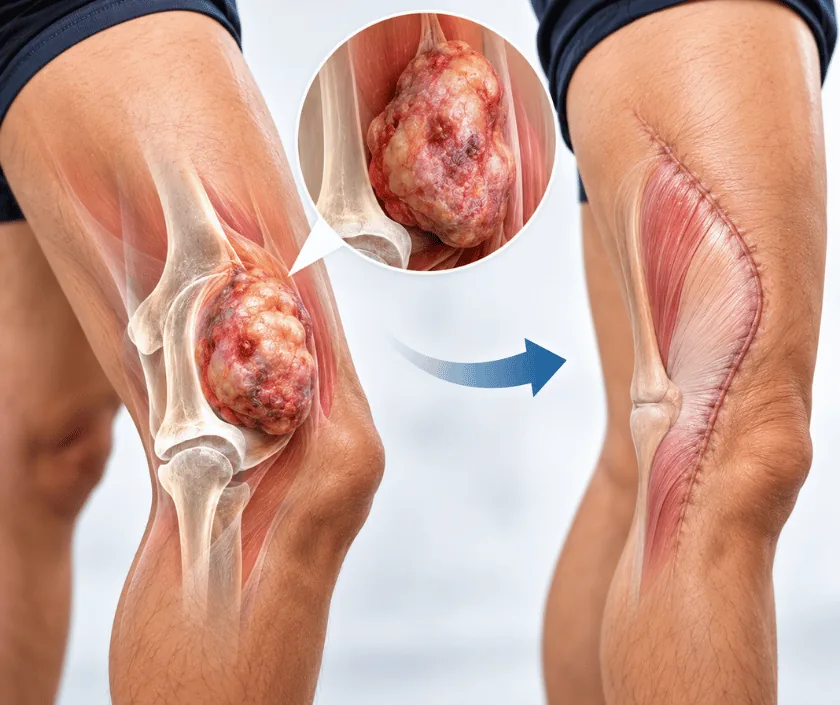
Limb sarcoma reconstruction restores skin, muscle, nerve or bone after a soft tissue tumour is removed from an arm or leg. Free flaps and local flaps cover exposed structures so the limb can move again. Whether the limb can be saved is decided by a team that includes the oncologist and the radiologist.
Soft tissue sarcomas grow between and within the muscles of the arm or leg. Many reach a fair size before they hurt, because there is room to expand quietly. Complete removal means taking the tumour inside a cuff of healthy tissue, which can include muscle, part of a nerve, a length of blood vessel or a piece of bone.
What follows depends on what had to go. A gap in muscle may be filled by neighbouring muscle, while exposed bone, tendon or a vessel graft needs a flap that carries its own blood supply. Free tissue from the thigh, back or abdomen is transferred and joined to vessels in the limb under a microscope. Nerve grafting and tendon transfer are added when movement would otherwise be lost.
Saving the limb is not always the right answer. When the tumour surrounds the main nerves and vessels, or when a rebuilt limb would be painful and useless, amputation with a good prosthesis may serve better. That judgement is made together with the oncologist, the radiologist and you.
Salvage is considered when the tumour can be cleared and the rebuilt limb is likely to be useful, and that balance is judged case by case.
Scans, biopsy and current function are reviewed with the oncologist and the radiologist. Salvage and amputation are both discussed openly with you, along with what each would mean for daily life.
The tumour, its cuff of healthy tissue and any structures it touches are mapped. Reconstruction is designed at the same time, because the flap has to match the gap that will be left.
The sarcoma comes out inside healthy tissue, sometimes together with muscle, nerve or a length of vessel. Clips may be placed to guide radiotherapy afterwards.
A local or free flap covers exposed bone, tendon and vessels. Nerve grafts, tendon transfers and vein grafts are added as needed, so the limb keeps as much function as possible.
Physiotherapy is set up before you leave hospital. Splints, aids and a graded exercise plan are arranged, since function returns through work rather than through time alone.
The limb is raised and the flap is checked frequently. Pain relief is generous enough to allow gentle movement of the nearby joints.
Dressings are changed and drains removed. Weight bearing or hand use begins under guidance, and physiotherapy sessions become regular.
Wounds are usually healed and exercise steps up. Radiotherapy often starts around now when it was planned for after surgery.
Strength and stamina keep building with continued therapy. Scans and clinical reviews watch for any return of the sarcoma.
A saved limb usually works well enough for daily life, though it seldom matches the other side for strength or fine control. Muscle that was removed does not grow back, so some weakness or a change in shape is expected. Recovery can vary, and physiotherapy over many months does more for the final result than the surgery alone.
Long operations on a limb carry a particular set of risks, and knowing them helps you weigh salvage against amputation.
Rehabilitation is the core of home care, and the wound rules exist to make that possible.
Cancer control is comparable in carefully selected patients. Choice depends on which structures the tumour involves and on how useful the rebuilt limb would be.
Many sarcomas stay free of pain for months. Size, depth and steady growth matter far more than tenderness when deciding to investigate.
Radiation lowers the chance of the tumour returning locally, though removal remains the central treatment when the sarcoma can be taken out.
Function follows rehabilitation. Muscle that was removed does not return, and strength is rebuilt through months of guided exercise.
Limb sarcoma work at Elegance Clinic in Surat is planned with the treating oncologist and the radiologist, so the choice between salvage and amputation is made together rather than in isolation.

Cost is driven by the size of the removal, whether a free flap is used, the need for nerve or vein grafts and the length of stay. Physiotherapy over the following months is an additional expense worth planning for. Cancer surgery is often covered by insurance, and a written estimate is shared before admission.
These are the questions that come up most often in consultation. If yours is not here, send it on WhatsApp and the team will reply, usually the same day.
Ask your question →Free flap reconstruction usually falls between Rs 1.8L and Rs 4.5L, and the figure is case based. Theatre time, grafts, intensive care and length of stay all move it, while physiotherapy is charged separately. A written estimate comes before admission.
A team decides together, including the operating surgeon, the medical oncologist and the radiologist, with you in the conversation. Imaging showing how the tumour relates to the main nerve and artery carries the most weight.
For carefully selected tumours, cancer control is comparable, which is why salvage is offered at all. When the tumour surrounds the main nerve and artery, amputation may give both better control and a more useful result.
Wounds usually heal within a few weeks, while strength and movement take months. Most people manage daily tasks by around three months, and physical work or sport often waits considerably longer than that.
Frequently yes, either before or after removal. Radiation lowers the chance of the sarcoma returning in the same place. Timing is agreed with the oncologist, since it affects how the wound heals.
That depends on how much muscle and nerve had to be removed. Some weakness is usual, and tendon transfers can restore key movements. Physiotherapy determines much of what is eventually regained.
Bring all scans on disc, the biopsy report, notes from any earlier surgery or radiation and a list of medicines. Do mention your work and daily activities, because they shape what the reconstruction needs to achieve.
Each technique below has its own page explaining how it works and when it is chosen.
Seeing patients from across the city and beyond: read about the practice on the plastic surgeon in Surat page, or check what a written estimate covers on the costs and insurance page.
