Osteosarcoma is a bone cancer that most often affects teenagers and young adults. Treatment combines chemotherapy with surgery, and limb salvage removes the affected bone while rebuilding the limb so that it can still be used.
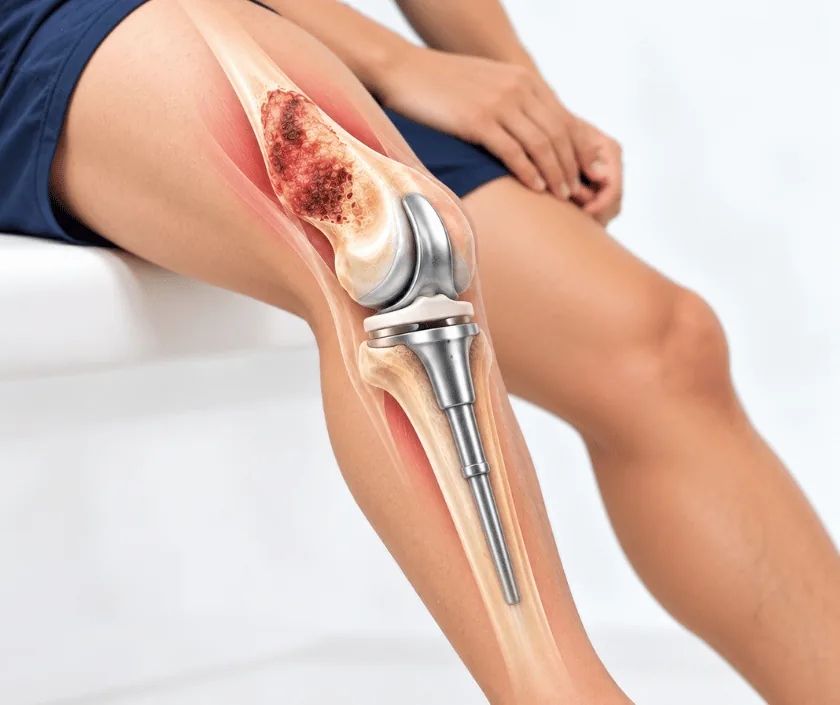
Osteosarcoma limb salvage removes the cancerous segment of bone with a margin of healthy tissue, then rebuilds the gap with an implant, a bone graft or a combination of both. Soft tissue cover from a flap protects that reconstruction. Chemotherapy usually runs before and after surgery, planned by the medical oncologist.
Osteosarcoma usually begins near the knee, the shoulder or the hip, in the growing ends of long bones. Pain that wakes a young person at night, together with swelling over the bone, is the pattern that most often leads to a scan. Diagnosis rests on imaging and a carefully placed biopsy, because the biopsy track has to be removed later along with the tumour.
Chemotherapy usually comes first, shrinking the tumour and treating cells that may already have travelled. Surgery follows once the response is assessed. The affected segment of bone is removed with a cuff of healthy tissue, and the gap is filled with a metal implant, a bone graft, or the treated bone put back after preparation.
Soft tissue matters as much as the bone itself. Muscle and skin are often thin over an implant, particularly around the knee, so a flap brings healthy cover with its own blood supply. Chemotherapy after surgery then continues once the wound has healed enough to tolerate it.
Salvage is offered when the tumour can be removed completely and the rebuilt limb is expected to work, and that judgement belongs to the whole team.
Imaging of the limb and the chest, blood tests and a carefully placed biopsy establish the diagnosis. That biopsy track is planned so it can be removed later along with the tumour.
Treatment usually begins with chemotherapy given by the medical oncologist. Response is assessed on repeat imaging, and that response influences both the timing and the extent of surgery.
The affected segment is taken out with a cuff of healthy tissue, together with the biopsy track. Frozen section checks may be used to confirm that the cut end of bone is clear.
A metal implant, a bone graft or a combination fills the defect. Length, joint movement and future growth all guide that choice, especially in a young patient.
Muscle is brought across, or a free flap is transferred and joined to nearby vessels under a microscope. Healthy cover protects the implant and lowers the risk of infection.
The limb is raised and supported, and pain is controlled to allow early gentle movement. Flap and circulation checks happen at regular intervals.
Drains and dressings are managed while physiotherapy starts. Weight bearing follows the plan set by the operating team, often with crutches or a frame.
Wounds are usually healed and therapy progresses. Chemotherapy after surgery generally resumes once the wound is judged sound.
Function keeps improving with continued therapy. Regular scans check the limb and the chest, and the implant is reviewed for wear or loosening.
Most young people who complete limb salvage walk or use the arm again, though the limb works differently from before. Running and contact sport are usually limited, and an implant may need revision after some years. Recovery can vary, and the result depends as much on therapy and on the response to chemotherapy as on the operation.
Implants, chemotherapy and a long operation each add their own risks, so the discussion beforehand covers all three.
Care at home runs alongside cancer treatment, so watching for infection and keeping up therapy both matter.
Many young people have limb salvage instead. Choice depends on where the tumour sits and on whether the main nerve and artery can be spared.
Treatment before and after surgery is part of the plan, since it addresses cells that may have travelled before the operation took place.
Metal wears and can loosen over the years. Further surgery is expected at some stage, particularly when the implant sits in a growing child.
Walking and swimming are usually encouraged, though running, jumping and contact sport put loads on an implant that it was never built to take.
Osteosarcoma care at Elegance Clinic in Surat is delivered alongside the medical oncologist and the orthopaedic oncology team, so chemotherapy, removal and reconstruction follow one shared timetable.

Implants are the largest single item, and custom made devices for growing children cost more than standard ones. Theatre time, the flap, intensive care and the length of stay add to the total, while chemotherapy is billed by the treating oncology unit. A written estimate is shared before admission.
These are the questions that come up most often in consultation. If yours is not here, send it on WhatsApp and the team will reply, usually the same day.
Ask your question →Free flap reconstruction usually falls between Rs 1.8L and Rs 4.5L, and the figure is case based. Implants are billed separately and can be the largest item, especially custom made devices. Chemotherapy costs come from the oncology unit.
For suitable tumours, cancer control is comparable, which is why salvage is offered. When the main nerve and artery are surrounded by tumour, amputation may give a better and more reliable outcome.
The decision is shared between the operating surgeon, the medical oncologist and the radiologist, together with the patient and family. Imaging after chemotherapy carries a great deal of weight in that discussion.
Wounds heal within a few weeks, while walking and strength take months of therapy. Chemotherapy continues through part of that period, so progress tends to come in stages rather than steadily.
Often yes, at some point. Metal wears and can loosen, and a growing child may need lengthening procedures. Regular reviews watch for this, so a change can be planned rather than rushed.
Swimming, cycling and walking are usually encouraged. Running, jumping and contact sport are generally discouraged, because those loads shorten the life of an implant and raise the risk of fracture.
Bring all scans on disc, the biopsy report, the chemotherapy record and a list of medicines. Details of school or work and of daily activities help, since they shape what the rebuilt limb needs to do.
Each technique below has its own page explaining how it works and when it is chosen.
Seeing patients from across the city and beyond: read about the practice on the plastic surgeon in Surat page, or check what a written estimate covers on the costs and insurance page.
