When part of the tongue is removed for cancer, rebuilding it protects speech and swallowing. This page explains how tongue reconstruction is planned at Elegance Clinic in Surat, the flap choices involved, and what the months after surgery ask of you.
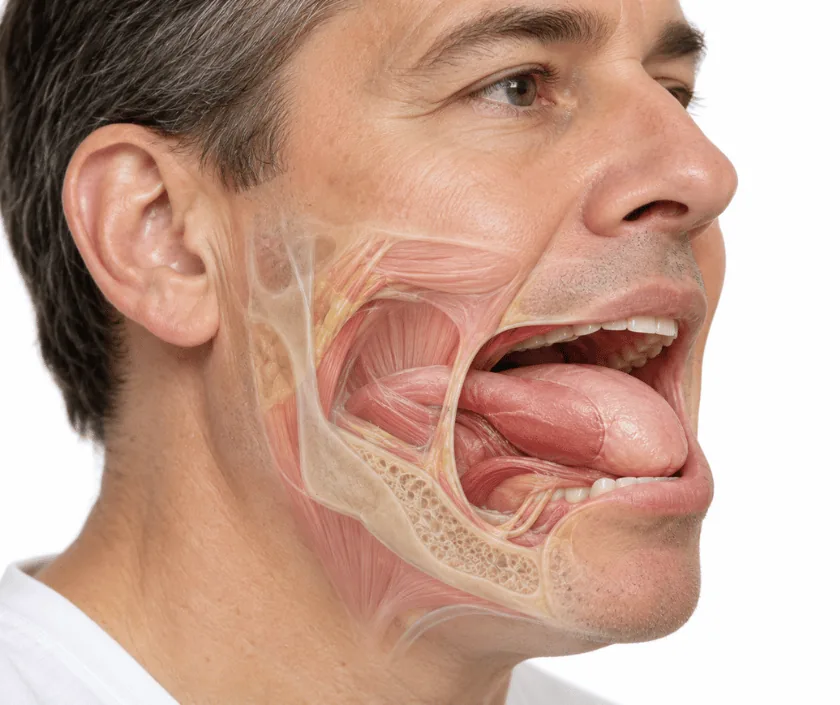
Tongue reconstruction rebuilds the tongue after part of it is removed for cancer. Tissue is borrowed from the forearm, thigh or nearby neck and shaped to replace what was taken, so the tongue can still move, shape sounds and push food back for swallowing. The reconstruction is usually done in the same operation as the cancer removal.
Oral cancer treatment often means removing part or all of the tongue, and the gap left behind decides how well a person speaks and swallows afterwards. Closing that gap by simply stitching the edges together tethers the tongue and stiffens it. Reconstruction instead brings in new soft tissue so the remaining tongue keeps its bulk and can still move freely against the palate and teeth. The plan is made together with the cancer surgeon, since the size of the defect is only known once the tumour is out and margins are checked.
For smaller defects, a thin free flap from the forearm gives supple tissue that folds and moves well. Larger removals, including those taking most of the tongue, need bulkier tissue from the thigh so the new tongue reaches the palate. Where a free flap is not suitable, a regional flap swung up from the chest or neck can be used instead. Free flaps rely on microsurgery, where tiny blood vessels are joined under a microscope so the transferred tissue stays alive in its new position.
Scans, biopsy findings and dental status are reviewed with the cancer team. The likely size of the defect, the flap that suits it and the possible need for a temporary breathing tube are discussed with you and your family.
The tumour is removed with a margin of healthy tissue, and neck glands are addressed in the same sitting when needed. Only once margins are confirmed is the true size of the reconstruction known.
A second team raises tissue from the forearm or thigh, with its own artery and vein. The donor site is chosen for tissue quality and for how little it will trouble you later.
The flap is shaped to match the missing part of the tongue and settled into place. Its vessels are joined to vessels in the neck under a microscope, restoring blood flow to the transferred tissue.
The flap is watched closely in the first days, when blood flow problems are most likely. Feeding through a tube and help from a speech and swallowing therapist begin while healing is underway.
You are cared for closely while the flap settles. Feeding is through a tube at first, speech is limited, and a temporary breathing tube is often in place. Nurses check the flap regularly through the day and night.
Any breathing tube is usually removed as swelling falls, and swallowing trials begin with the therapist. Most people go home in this period, taking soft food and building strength gradually.
Speech and swallowing therapy continues and often makes the biggest difference now. Additional treatment such as radiotherapy may start, which can bring dryness and soreness for a while.
The flap softens and speech usually becomes clearer with practice. Diet widens for many people, though some foods stay difficult. Regular cancer follow up visits continue alongside therapy.
This is major surgery, and being clear about what can happen helps you and your family prepare. Every point below is discussed before consent.

Cost depends on the size of the defect, whether a free flap or a regional flap is used, the length of theatre time, intensive care needs and how long you stay in hospital. Neck gland surgery done at the same time also changes the figure. Cancer surgery is usually admissible under mediclaim and many government schemes, and the team helps with pre authorisation. A written estimate is prepared once the surgical plan is settled.
These are the questions that come up most often in consultation. If yours is not here, send it on WhatsApp and the team will reply, usually the same day.
Ask your question →Free flap reconstruction usually falls between Rs 1.8L and Rs 4.5L, shaped by theatre time, intensive care and hospital stay. Regional flap surgery is quoted after assessment. Cancer treatment is often covered by mediclaim or a government scheme, and pre authorisation help is available.
Speech usually changes for a time and improves with therapy over months. Many people are understood well in everyday conversation. How much returns depends on how much tongue was removed, the flap used, and how consistently therapy is followed.
Feeding is through a tube at first while the flap and the mouth heal. Swallowing trials usually begin in the second or third week with a therapist, then soft food is introduced. Some people take longer and continue tube feeding for a while.
In most cases yes. Rebuilding in the same operation avoids a second anaesthetic, protects the shape of the tongue from the start, and allows any further treatment such as radiotherapy to begin on schedule.
The donor area is closed and often needs a skin graft, leaving a scar that fades over time. Some tightness or altered feeling is common. Hand or leg function usually recovers well, and physiotherapy is arranged when helpful.
Oral cancer should be treated without delay, so surgery is generally planned within a few weeks of diagnosis and staging. Waiting allows a tumour to grow and can make both the removal and the reconstruction more demanding.
Your scans, biopsy report and general health are reviewed, and the mouth and neck are examined. Flap options, the likely hospital stay, feeding and speech support, and further treatment are explained, and a written estimate is shared.
Each technique below has its own page explaining how it works and when it is chosen.
Seeing patients from across the city and beyond: read about the practice on the plastic surgeon in Surat page, or check what a written estimate covers on the costs and insurance page.
