An artery or vein lying open in a wound is the one situation of this kind that can turn dangerous within hours. A dried vessel wall may give way and bleed, so cover is arranged urgently rather than planned at leisure.
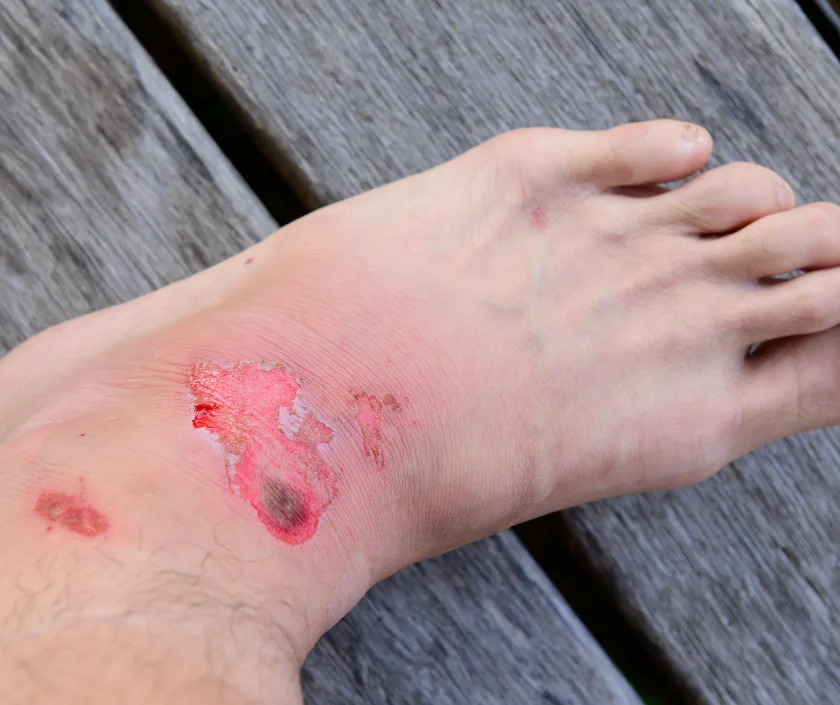
When an artery or vein is exposed in a wound, the wall dries, weakens and can tear, which may cause sudden heavy bleeding. Dressings do not solve this, because a vessel needs to be wrapped in living tissue to stay healthy. Treatment is urgent and usually means moving muscle or another flap over the vessel.
Blood vessels look tough, and in a healthy body they are. Their strength comes from an outer coat that carries tiny feeding vessels of its own. Strip the surrounding tissue away and that coat sits in open air, where it dries. A dried wall loses its elasticity, and the pressure inside the vessel does the rest.
That is why this problem is handled differently from exposed tendon or exposed bone. Both of those cost function when they are neglected. An exposed artery can cost far more than function, because it may tear suddenly and bleed heavily. Wounds in the groin, the neck and the armpit deserve particular care, since large vessels lie close to the surface in those areas.
Treatment therefore has two aims at once. The vessel has to be covered with living tissue, usually a muscle flap that can wrap around it, and any infection nearby has to be brought under control, because infection weakens the wall further. In some cases a vascular surgeon repairs, bypasses or ties off the vessel first, and reconstruction follows during the same admission.
Cover is offered to almost anyone with an exposed vessel, because the alternative is dangerous. The real question is which operation, and in what order.
Bleeding risk is judged first. Pulses, blood counts and often a scan of the vessels are arranged the same day, and blood is cross matched in case it is needed.
Dressings are kept moist and pressure over the vessel is avoided. If the wound has bled, a vascular surgeon may repair, bypass or tie off the vessel before anything else.
Infected and dead tissue around the vessel is removed in theatre. Samples are sent to the laboratory so that antibiotics can be targeted rather than guessed.
Muscle is usually the tissue of choice, because it moulds around a vessel and carries a rich blood supply. A free flap is used when nothing suitable lies nearby.
The flap and the limb are watched closely in the early days. Once bleeding risk has passed, movement and rehabilitation increase in stages.
You are monitored closely, with regular checks of the flap, the pulses and the dressing. Bed rest is usual, and the area is protected from any pressure.
Dressings are reduced as the flap settles. Blood counts are repeated and antibiotics adjusted once culture results arrive. Sitting and gentle walking usually begin.
Most patients are mobile and the flap has softened. Scans are sometimes arranged to check flow through a repaired or bypassed vessel.
The area continues to soften and flatten. Later care focuses on circulation, blood pressure and the condition that caused the wound in the first place.
The first measure of success here is simple. The vessel is covered, bleeding risk falls and the wound closes. Appearance comes second, and muscle flaps often look bulky before they shrink over months. Where a vessel had to be tied off or bypassed, circulation beyond it may remain reduced, and that is monitored. Recovery can vary with the site, the infection and general health.
This is demanding surgery in an area that is often infected, and the risks are explained plainly beforehand.
Once you are discharged, the priority is protecting the covered area and noticing early any sign that the vessel is under strain.
Pressure controls bleeding only briefly. A dried vessel wall needs living tissue over it, and that means surgery.
Bleeding from an exposed vessel often gives little warning, which is why cover is arranged urgently.
Grafts have no blood supply of their own and cannot protect a vessel wall. Muscle or another flap is used.
Medicines help control infection, yet they do not restore a drying vessel wall or close the wound.
Elegance Clinic in Surat treats an exposed vessel as an urgent problem, so assessment, vascular opinion and reconstruction are coordinated quickly rather than spread across separate referrals.

Because these cases are urgent, the estimate is prepared as soon as the situation allows, sometimes after a first operation to control bleeding. Cost depends on whether vascular repair is needed, which flap is used and how long monitoring continues. A written estimate lists surgery, anaesthesia, intensive monitoring where required, blood products and follow up. Emergency reconstruction is covered by many policies, and the paperwork is started early so that treatment is not delayed.
These are the questions that come up most often in consultation. If yours is not here, send it on WhatsApp and the team will reply, usually the same day.
Ask your question →Cost depends on whether the vessel needs repair or bypass, which flap is used and how much monitoring follows. Because these cases are urgent, a written estimate is prepared as soon as the situation allows and updated if the plan changes.
Yes, waiting is the main risk here. A vessel left open dries out, and the wall can tear without warning. Assessment on the same day gives the team time to plan cover before that happens.
Usually several days, because the flap and the vessel both need close observation. Stay can vary with infection, blood counts and whether a vascular repair was carried out at the same sitting.
The wound closes and bleeding risk falls, which is the main aim. The covered area is often bulky at first and softens across months. Where a vessel was tied off, circulation beyond it may stay reduced and is monitored.
If the vessel has already torn, controlling bleeding comes first and cover follows. Where an infected vascular graft is failing, removal may be needed rather than cover. Very poor circulation or uncontrolled infection also changes the plan.
No. Antibiotics help control infection around the vessel, yet they cannot restore a wall that has dried out or close the wound. Surgery to bring living tissue over the vessel remains the main treatment.
Bring earlier operation notes, any vascular scan reports, culture results and your current medicines, including blood thinners. Tell the team straight away if there has been any fresh bleeding, since that changes how quickly you are seen.
Each technique below has its own page explaining how it works and when it is chosen.
Seeing patients from across the city and beyond: read about the practice on the plastic surgeon in Surat page, or check what a written estimate covers on the costs and insurance page.
