Osteomyelitis is infection inside the bone. Treating it means removing the infected bone completely and then filling and covering the space left behind, so the area regains a blood supply that antibiotics can use.
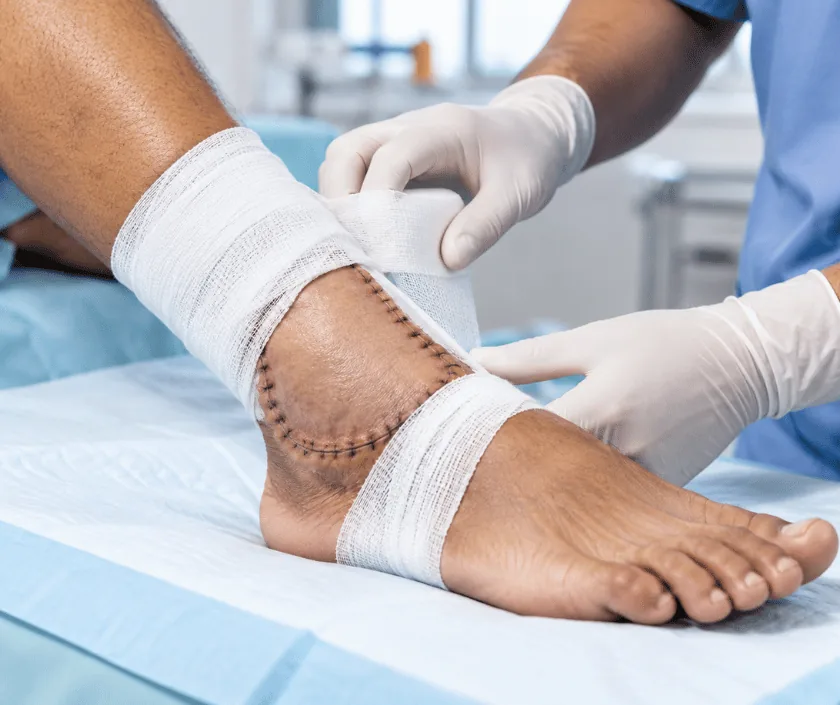
Osteomyelitis is an infection within the bone itself. Because dead bone has no blood flow, antibiotics cannot reach the bacteria hiding inside it, so tablets and drips alone rarely settle the problem. Treatment means removing the infected bone in theatre, filling the space, and covering the area with living tissue that carries its own circulation.
Bone is living tissue with a blood supply running through it. Infection damages that supply, and the affected section dies. A dead fragment, called a sequestrum, then sits in the middle of the bone with no circulation at all. Antibiotics travel in blood, so they simply cannot reach bacteria sheltering inside it.
This explains a pattern many patients recognise. Tablets settle the discharge for a few weeks, the opening closes, and then months later the same spot drains again. Nothing has actually been resolved, because the reservoir of infection was never removed. Meanwhile the bone around it slowly thickens and the skin above becomes thin and scarred.
Modern treatment therefore borrows from tumour surgery. Infected bone is removed back to healthy, bleeding bone, however much that means taking. The space left behind is filled, sometimes with antibiotic carrying beads or cement, later with bone graft or a bone carrying flap. Finally the area is covered with well supplied soft tissue, usually a muscle flap, so that circulation reaches the region again and antibiotics can do their work.
The plan depends on how much bone must be removed and on what is left behind. Some patients need a single operation, others a long staged reconstruction.
Scans, blood tests and often a bone sample confirm the diagnosis and show how far infection extends. Deep samples matter far more than a swab taken from the surface.
In theatre the dead bone is removed until healthy bone bleeds at the edges. This step decides most of the outcome, so it is not done sparingly.
The cavity may be filled with antibiotic carrying beads or cement, which release medicine locally while the area settles and the wound is protected.
A muscle or free flap is brought over the area to restore blood supply, since bone under thin scarred skin becomes infected again easily.
Later, once infection has settled, the gap may be filled with bone graft, a bone carrying flap or gradual lengthening of the remaining bone.
The limb is rested and elevated. Antibiotics run through a drip while laboratory results are awaited. Pain is controlled and the flap is checked regularly.
Dressings become simpler and antibiotics may change to tablets. Physiotherapy begins within the limits your surgeon sets for the bone.
Scans check how the bone is responding. Walking with support is common by now, although weight bearing depends entirely on how much bone was removed.
Later stages, such as bone grafting or lengthening, are carried out once infection has stayed quiet. Reviews continue for a long period afterwards.
Many patients get a quiet limb and a closed wound, which is the honest goal here. Even so, infection deep in bone can return years later, so reviews continue and any new discharge is taken seriously. Function depends on how much bone was removed and on how well the limb is rehabilitated. Results can vary widely between patients and are discussed case by case.
This is major reconstruction, often across several operations, and the risks deserve a frank conversation.
Between stages the work at home is mainly about protecting the limb, finishing the antibiotics and reporting early any sign of return.
Antibiotics travel in blood, and dead bone has none. Surgery to remove that bone is what usually settles it.
A closed sinus often means infection is quiet rather than absent, and it commonly drains again later.
Many limbs can be saved with staged removal, cover and reconstruction, and that is assessed before any such discussion.
Treatment is usually staged across months, with removal, cover and later bone reconstruction as separate steps.
At Elegance Clinic in Surat, bone infection is managed as a planned sequence with orthopaedic, microbiology and plastic surgical input, so each stage has a stated purpose and a timeline you can see.

Because treatment is staged, the estimate is built stage by stage. It covers surgery to remove the infected bone, materials such as antibiotic carrying beads, the flap, the hospital stay, laboratory tests and the long course of antibiotics. Later reconstruction of the bone is estimated separately once infection has settled. A written estimate is prepared after assessment, and insurance cover is checked in advance since these admissions are often lengthy.
These are the questions that come up most often in consultation. If yours is not here, send it on WhatsApp and the team will reply, usually the same day.
Ask your question →Because treatment is staged, cost is estimated stage by stage. Removal of infected bone, the flap, materials, hospital stay and antibiotics are listed separately, and later bone reconstruction is priced when infection has settled and the plan is confirmed.
Very often, yes. Antibiotics travel in blood, and infected dead bone has no blood supply, so medicines alone rarely settle it. Early infection caught quickly is sometimes an exception, which is why prompt assessment matters.
Usually several days to a couple of weeks for the first stage, depending on the flap and on how the infection responds. Antibiotics may continue at home afterwards, with regular blood tests and clinic reviews.
It can, sometimes years later, which is why reviews continue long after the wound closes. Removing all the infected bone at the first operation gives the best chance of a long quiet period.
Amputation is considered only when the limb would not be useful or when blood supply cannot be restored. Many limbs are saved with staged removal, flap cover and later bone reconstruction, and the options are explained fully first.
As soon as the diagnosis is reasonably clear. Delay allows more bone to die, which means more has to be removed later. Deep samples are taken early so antibiotics are chosen accurately rather than by guesswork.
The limb is examined, previous scans and operation notes are reviewed and blood tests are arranged. You then hear how many stages are likely, what each involves and what the written estimate covers before anything is booked.
Each technique below has its own page explaining how it works and when it is chosen.
Seeing patients from across the city and beyond: read about the practice on the plastic surgeon in Surat page, or check what a written estimate covers on the costs and insurance page.
