VAC therapy applies gentle, controlled suction to a wound through a sealed foam dressing. It draws out fluid, pulls the wound edges towards each other and helps healthy tissue grow, so a stalled wound can be prepared for closure.
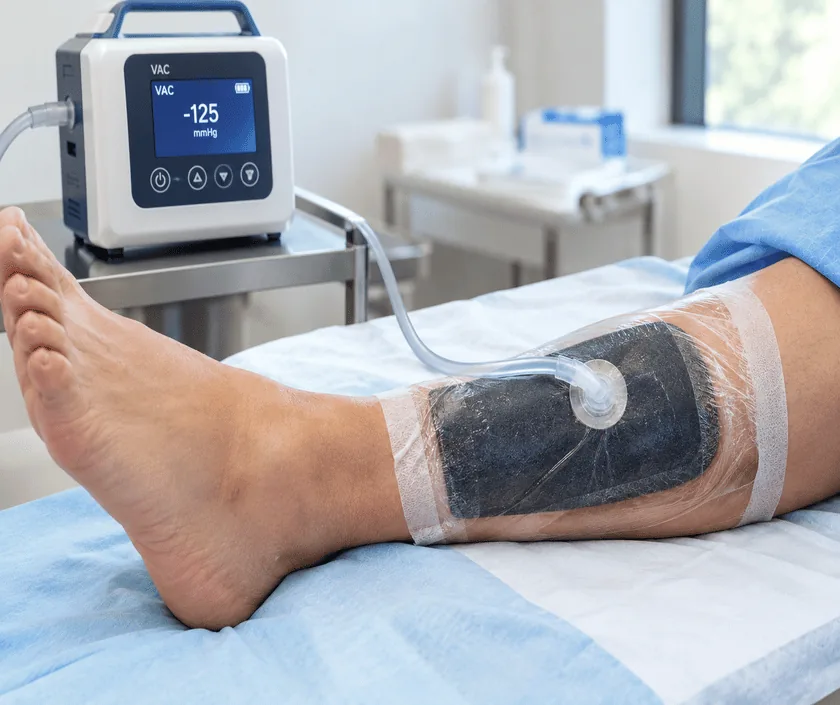
VAC therapy, also called negative pressure wound therapy or NPWT, seals a wound under a film dressing and applies steady suction through a pump. The suction removes fluid, reduces swelling and encourages new tissue to fill the gap. It is used to prepare a wound for grafting or flap surgery, not usually as the final step.
A wound that keeps producing fluid struggles to heal. VAC therapy tackles that directly. Soft foam is cut to the shape of the wound, laid inside it and covered with a clear film that makes an airtight seal. A small tube connects the foam to a pump, and the pump holds a steady low pressure inside the dressing.
Three things happen once the seal is working. Fluid and debris are drawn away into a canister, so tissue around the wound is less swollen and blood reaches it more easily. Meanwhile the foam gently pulls the wound edges towards each other, so the open area often reduces over days. New tissue, called granulation tissue, tends to grow faster because the cells are held under mild tension.
What this therapy does not do is close the wound for you. In most cases it prepares a clean bed with a good blood supply, and closure then happens with stitches, a skin graft or a flap. Think of it as the step that makes the final operation smaller and safer.
Suction helps some wounds a great deal and does very little for others. The decision follows an examination of the wound bed and of the blood supply to the limb.
The wound is measured, photographed and examined for dead tissue, infection and blood supply. Blood tests and a scan may be arranged if bone or deeper tissue could be involved.
Unhealthy tissue is removed in theatre or at the bedside, depending on how much there is. A clean base matters far more than the pump itself.
Foam is shaped to the wound, a film seals the skin around it and a tube is connected to the pump. Suction starts only once the seal has been checked.
The dressing is usually changed every few days. Each change is also a chance to measure progress, take photographs and adjust the plan.
Once the bed looks healthy and fluid loss has settled, the wound is closed with stitches, a skin graft or a flap.
The pump runs continuously and makes a soft noise. Some pulling is normal. Pain relief is given before dressing changes, and the wound is checked daily.
Fluid in the canister usually reduces. Meanwhile the wound often looks redder and firmer, which is a good sign. Many patients walk with support during this period.
By this stage the wound has usually been closed by surgery or is well on the way. The pump is stopped once it is no longer adding anything.
Scar or graft tissue settles and softens. Ongoing care focuses on the reason the wound formed, such as sugar control, pressure relief or vein disease.
Most wounds look healthier on suction, and many shrink noticeably over a few weeks. That said, this therapy does not fix the reason a wound formed. If blood flow is poor, pressure is not relieved or sugar stays uncontrolled, progress stalls. Recovery can vary widely from person to person, and some wounds still need a flap. Your surgeon should tell you at each review whether the therapy is earning its place.
Suction is generally well tolerated, though it is not without problems. These are the ones discussed before treatment starts.
Some patients go home with the pump running. A few simple habits keep it working and keep you safe.
Suction prepares the wound. Closure almost always needs stitches, a graft or a flap.
Most of the time the dressing feels like a steady pull. Medicines are given before changes so that it stays manageable.
Many patients go home with a portable pump and return only for planned dressing changes.
Pressure settings are chosen for the tissue involved. Higher is not better and can cause pain or bleeding.
At Elegance Clinic in Surat, negative pressure therapy is used as one step inside a written plan rather than as an open ended treatment. You are told at the outset what the pump is meant to achieve and when it will stop.

Cost depends on how long the pump runs, how many dressing changes are needed and whether surgery follows. After the wound is examined you receive a written estimate that lists therapy, consumables, theatre time if required and follow up visits. Insurance cover varies by policy, and our team helps with preauthorisation paperwork wherever the policy allows it.
These are the questions that come up most often in consultation. If yours is not here, send it on WhatsApp and the team will reply, usually the same day.
Ask your question →Cost depends on the number of days the pump runs, the dressings used and whether an operation follows. A written estimate is prepared after the wound is examined, and it lists each item separately so that nothing comes as a surprise later.
It suits most clean wounds, but not all. Exposed arteries, untreated infection, dead tissue that has not been removed and wounds containing cancer are situations where suction is avoided. Every wound is examined carefully before any pump is started.
That varies with the size of the wound and how well it responds. Some wounds are ready for closure after a couple of weeks, while others need longer. Progress is reviewed at every dressing change, and therapy stops once it stops helping.
Small wounds sometimes do. Most larger ones need a stitch line, a skin graft or a flap once the base looks healthy. Think of the pump as preparation that makes the final operation smaller rather than as the closure itself.
Many patients can. Portable units run on battery, and you return for planned dressing changes. Before discharge you are shown how to charge the unit, what the alarms mean and which changes in the canister need a phone call.
Most people describe a steady pulling feeling rather than sharp pain. Dressing changes are the uncomfortable part, so medicines are given beforehand and the foam is loosened slowly. Tell the team early if discomfort is rising between visits.
Bring any previous wound photographs, discharge summaries, culture reports and the list of medicines you take. If you have diabetes, recent sugar readings help. The wound is examined and dressed at that visit, and the plan is explained before anything is booked.
Each technique below has its own page explaining how it works and when it is chosen.
Seeing patients from across the city and beyond: read about the practice on the plastic surgeon in Surat page, or check what a written estimate covers on the costs and insurance page.
