A bilateral cleft lip means the upper lip is open on both sides of the centre. This page explains how the repair is planned in Surat, what happens before and during surgery, how babies recover and what it may cost.
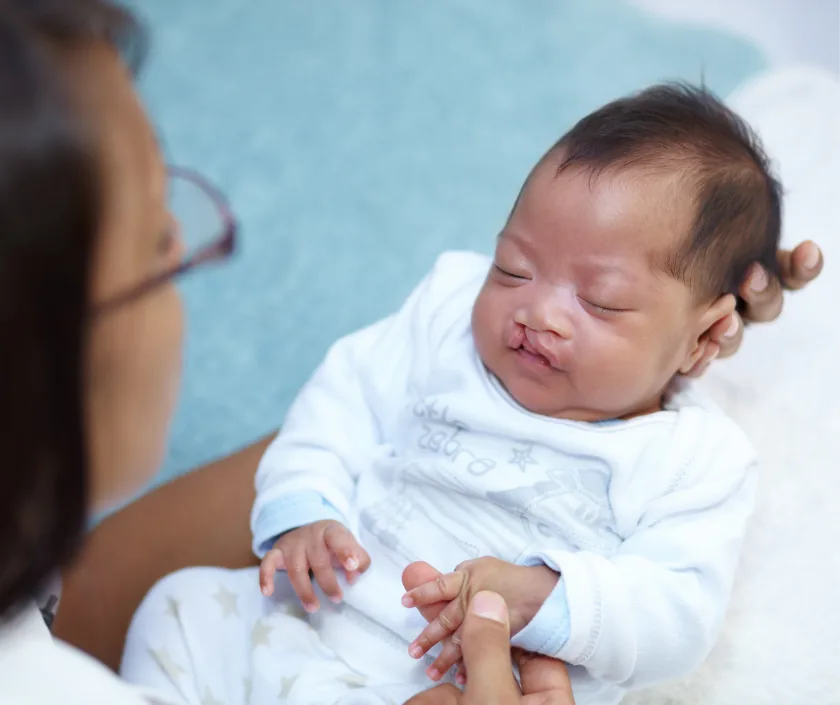
Bilateral cleft lip repair closes gaps on both sides of the upper lip in one planned operation. The small central segment of lip is shaped, muscle is joined across the midline and the flattened nostrils are lifted. Surgeons usually operate in early infancy once weight gain is steady. Taping or moulding plates may be used first to bring the parts closer.
In a bilateral cleft lip both sides of the upper lip are open, so the central block of lip and gum sits forward and is joined to the nose rather than to the rest of the lip. That central piece is called the prolabium. It carries no muscle of its own, and the tissue below the nose is often short, which is why the nostrils look wide and flat.
Repair brings the three parts of the lip together in one sitting. Muscle is freed from the wrong position on each side and joined across the middle, so the lip can move and purse as one. The floor of each nostril is closed, the wide nasal base is narrowed and the lower cartilages are lifted to give the tip more shape.
Preparation matters here more than in a cleft on one side alone. Some babies wear a moulding plate or have the lip taped for several weeks first, which brings the segments closer and makes the repair less tight. Growth then changes the result slowly, and a refinement of the lip or nose is often planned in later childhood.
Timing depends on the baby weight, general health and how wide the gaps are. Some babies have preparatory moulding first to narrow the gaps.
Your baby is weighed and feeding is watched over several visits. Blood tests and a paediatric opinion follow. A date is fixed only when growth is steady and the anaesthetic team is satisfied.
Many babies wear a small plate or have tape applied for some weeks. Both bring the wide segments closer together and lift the nose, so the repair sits under less tension.
Precise marks are placed on the central segment and on each side. Muscle is lifted away from the cleft edge so it can be joined across the middle rather than left pulling outwards.
Skin, muscle and lining are stitched in layers on both sides at the same sitting. The floor of each nostril is closed and the wide nasal base is drawn inwards.
Lower nasal cartilages are lifted to add height to the tip. Your baby wakes in a monitored area, and feeding restarts with a soft teat or spoon once settled.
Pain relief and fluids are given in hospital. Feeding starts with a soft teat, spoon or cup rather than the breast. Soft arm splints may be used so hands stay away from the lip.
Most babies are home by now. The wound is cleaned gently as advised, crusts are left alone, and feeds continue in the softer way until review.
Healing is checked and normal feeding is usually allowed again. Scar massage and sun protection are explained. The nose is looked at as swelling settles.
The scar softens and fades slowly across many months. Speech, hearing and dental checks continue, and a lip or nose refinement can be discussed in later childhood.
The lip will be joined, will move well and will look much closer to usual, but a scar line stays on each side and the lip may look a little tight in the middle. The columella is often short in bilateral clefts, so the nose usually needs further work in later childhood. Speech is helped by the palate repair rather than the lip repair. Most families see the shape settle over the first year as swelling fades and the scars soften.
Lip repair on both sides follows a planned team pathway and most babies heal well. Even so, honest information about what can go wrong helps parents spot trouble early.
The lip needs protecting from rubbing and stretching while the stitches settle.
Speech comes mainly from the palate and from therapy. Many children with a bilateral cleft speak clearly with the right support.
The scar becomes pale and soft over the first year or two, but a line remains. Massage and sun protection help it settle.
A cleft usually forms very early in pregnancy from a mix of factors, and in most families no single cause is found.
Lip repair is the first step. Palate repair, speech reviews, dental work and often nose surgery follow over the years.
Parents of a newborn need calm information and a feeding plan first, and that is where we start rather than with a surgery date.

Price depends on the width of the clefts, whether moulding treatment is used first, the weight and general health of the baby, anaesthetic time and how many nights are needed in hospital. Families treated under PM JAY usually pay little or nothing, and staff help with the paperwork. A written estimate is shared after your baby is examined, so the figure is clear before admission.
These are the questions that come up most often in consultation. If yours is not here, send it on WhatsApp and the team will reply, usually the same day.
Ask your question →The published band for cleft lip repair runs from about Rs 35,000 to Rs 70,000. Where a case sits in that range depends on cleft width, anaesthetic time and hospital stay. Many families are covered under PM JAY, so ask about the scheme at the first visit.
Closing both sides together is standard practice and avoids a second anaesthetic. Surgery is booked only when weight gain is steady and blood tests are satisfactory. A paediatric anaesthetic team looks after your baby, and monitoring stays close for the first hours after waking.
Most babies go home within one to two days. Feeding uses a soft teat, spoon or cup for a few weeks while the lip heals, and a review is arranged at about six weeks. Swelling settles gradually over that period.
A repair on both sides aims for a balanced lip with a muscle that works as one. Small differences in height or nostril shape are common, because the starting tissue is limited. Many children have a refinement of the lip or nose in later childhood.
Repair is usually planned in early infancy, once feeding is going well and weight is climbing steadily. Wide clefts may be taped or moulded for some weeks beforehand, which delays surgery a little. Growth and general health guide the date more than age alone.
Older children, teenagers and adults are still helped by repair on both sides. Tissue is firmer and the nose usually needs more work, so the plan looks different. An assessment sets out what can realistically be achieved at that age.
Your baby is examined, the width of each cleft is measured and feeding and weight are reviewed. Photographs are taken for the record. You will hear whether moulding is advised, how the stages are arranged and what the estimate and scheme cover would be.
Seeing patients from across the city and beyond: read about the practice on the plastic surgeon in Surat page, or check what a written estimate covers on the costs and insurance page.
