A branchial cyst is a soft swelling in the side of the neck that a child is born with, even if it is noticed years later. This page explains why it forms, when removal is advised and what recovery looks like.
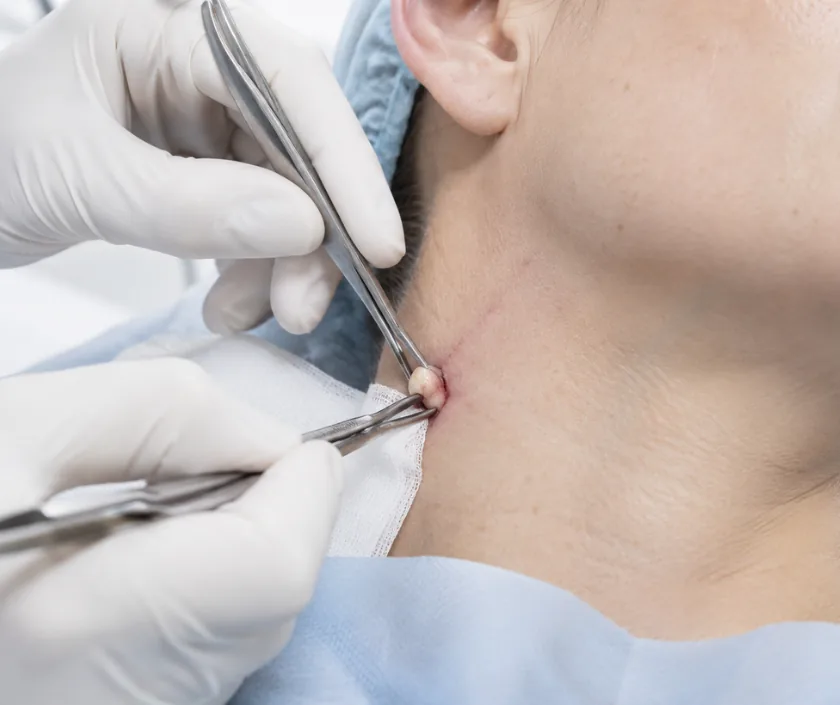
Branchial cyst excision is an operation to remove a fluid filled sac in the side of the neck that formed before birth. It is done under general anaesthesia through a small crease line cut. Removal is usually advised because the cyst tends to grow and can become infected. Most children and adults go home the same day or after one night.
In the early weeks of pregnancy the neck forms from a set of folds called branchial arches. Sometimes a small pocket of tissue between two of these folds does not close over. That pocket can fill with fluid and become a branchial cyst. It sits in the side of the neck, usually along the front edge of the big neck muscle, and it may stay quiet for years.
Parents often notice the lump for the first time after a cold or a sore throat, because the lining of the cyst reacts and the swelling grows. It may settle again with antibiotics, then come back with the next infection. A cyst that has been inflamed several times becomes scarred, which makes later surgery harder and the scar less tidy.
At Elegance Clinic in Surat the neck is examined and an ultrasound is usually arranged to confirm what the lump is and how deep it runs. Removing the whole lining is the point of the operation, because any lining left behind can refill. In adults, a new neck lump is also checked to rule out other causes before surgery is planned.
A scan is usually done first to confirm what the lump is and to show how deep it runs before any operation is planned.
The neck is examined and an ultrasound, and sometimes a scan or a needle sample, shows the size and depth of the cyst. Surgery is planned once any active infection has settled.
The operation is done under general anaesthesia so the child feels nothing during it. The cut is marked inside a natural skin crease of the neck so the scar sits in a line that hides well.
A short incision is made and the surgeon works around the wall of the cyst, keeping it whole. Nearby nerves and blood vessels are identified and protected as the cyst is separated from them.
If a narrow tract runs upward from the cyst, it is followed and removed with it. Leaving part of the lining behind is the main reason a cyst returns, so the aim is to take all of it.
The space is checked for bleeding, a small drain is placed if needed, and the skin is closed with fine stitches. A light dressing goes on and the tissue removed is sent for testing.
Some neck soreness and stiffness are normal. Simple pain relief usually covers it. Any drain is removed before going home or at the first review, and the dressing is kept dry.
Stitches are checked or removed at the wound review. Children can usually return to school once they feel comfortable. Gentle neck movement is encouraged, heavy play is not.
The wound has settled and normal sport can restart once the surgeon agrees. The scar often looks pink and firm at this stage, which is an expected part of healing.
The scar continues to fade and soften over many months. Return of the cyst is uncommon when the whole lining was removed, but any new swelling in the same area should be shown to the surgeon.
Complete removal usually settles the problem for good, and the scar is placed in a neck crease so it fades into a fine line. If the cyst has been infected many times it can stick to nearby nerves and vessels, which makes the operation longer and raises the chance that a small piece is left and refills. Some children have temporary numbness near the scar. Most go home within a day or two.
Branchial cyst excision is a well established operation, and problems are not common. Knowing what can happen helps you spot it early.
Neck wounds heal quickly, but the scar does best with gentle handling for several weeks.
Antibiotics settle an infection in the cyst, but the sac itself stays and usually fills again.
Draining gives short relief. The lining is still there and it refills, often with more scarring than before.
Each infection adds scarring and makes later removal harder, so a quiet neck is the better time to operate.
Most are not, but any lump that persists deserves proper assessment rather than guessing.
Families value a clear diagnosis before surgery is offered, and a scar placed with care because it sits where people look.

The price of neck lump surgery depends on the size and depth of the cyst, whether it has been inflamed before and how much scarring is present, the type of anaesthesia, the length of hospital stay, scans and the sample sent for testing. A written estimate is given after the assessment so you know the full figure before booking, and the team will tell you which parts your policy is likely to cover.
These are the questions that come up most often in consultation. If yours is not here, send it on WhatsApp and the team will reply, usually the same day.
Ask your question →There is no single figure, because cost depends on the size of the cyst, earlier infections, anaesthesia, hospital stay and tests. A written estimate is prepared after the neck has been examined and the scan reviewed, so the full amount is clear before any date is booked.
It is a routine neck operation done under general anaesthesia by a team used to treating children. Every operation carries some risk, and these are explained plainly at the consultation. A check before the date confirms the child is well enough for anaesthesia.
Most people go home the same day or the next morning. Neck soreness settles within a few days, and school or desk work is usually possible in about a week. Sport and rough play wait until the wound has fully healed.
The cut is placed inside a natural crease of the neck, which helps it blend in. Scars look pink and firm for the first few months, then fade and soften. Scar care advice is given at the wound review.
Return is uncommon when the whole lining and any tract are taken out in one piece. Risk is higher if the cyst was inflamed or drained several times before, because scarring makes clean removal harder. Any new swelling should be reviewed.
Removing a quiet cyst is usually easier than removing one that has been inflamed repeatedly, so surgery is often advised before that happens. If the lump is infected at present, it is treated first and the operation is planned once things have settled.
The neck is examined, the history of the swelling is discussed and an ultrasound is arranged if one has not been done. Options, the likely scar, anaesthesia and recovery are explained, and a written estimate follows so the family can decide without pressure.
Seeing patients from across the city and beyond: read about the practice on the plastic surgeon in Surat page, or check what a written estimate covers on the costs and insurance page.
