A branchial sinus is a tiny opening low in the side of the neck that leaks clear fluid, and a fistula is the same tract running all the way to the throat. This page explains why it happens and how the tract is removed.
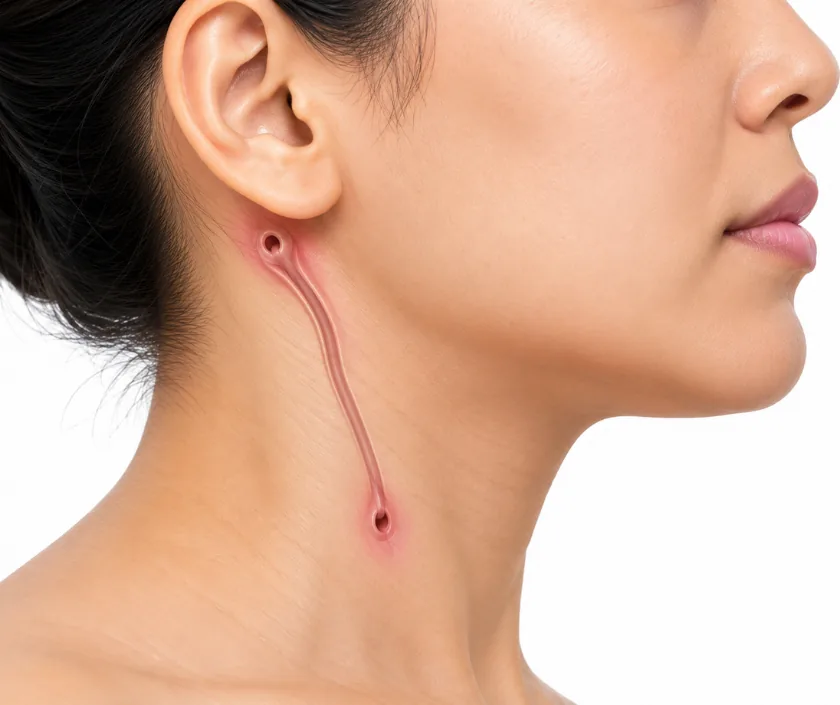
A branchial sinus or fistula is a narrow tract left over from the way the neck forms before birth. It shows as a pinhole in the lower neck that weeps clear or sticky fluid. Treatment is surgery to remove the whole tract under general anaesthesia, usually as a day case, because the opening does not close on its own.
The neck of an unborn baby is built from folds called branchial arches. When two of those folds fail to fuse, a narrow channel is left behind. If it opens only on the skin it is called a sinus. If it runs from the skin through the neck and opens inside the throat it is called a fistula.
Parents usually notice a pinhole low down on the side of the neck, often just in front of the big neck muscle. Clear or milky fluid may bead at the opening, sometimes wetting the collar. The skin around it can become red and sore, and the tract can flare with infection.
Because the channel is lined with the same tissue that produces the fluid, it keeps weeping and does not seal by itself. Surgery to remove the full length of the tract is the treatment that settles it. At Elegance Clinic in Surat the tract is assessed with examination and, when helpful, imaging before a plan is made with the family.
The opening, the amount of discharge and any past infections are all noted, and a scan is sometimes used to show how far the tunnel runs before surgery.
The opening is examined and its position noted. Imaging may be used to show how far the tract runs and whether it reaches the throat. Surgery is planned when there is no active infection.
The operation is done under general anaesthesia. A small ellipse of skin around the opening is marked, and the incision is placed in a neck crease so the healed line settles discreetly.
The tract is separated from the surrounding tissue and followed upward step by step. Nerves and blood vessels crossing its path are identified and kept safe as the dissection continues.
When the tract runs high into the neck, a second short cut higher up allows the upper end to be reached safely. This stepladder approach avoids one long scar down the neck.
The whole tract is taken out and its upper end tied off. The wounds are closed with fine stitches under the skin and a light dressing is applied before the child wakes.
Mild neck discomfort and a little swelling are expected. Simple pain relief is usually enough. The dressing stays dry and your child can eat and drink normally once fully awake.
The wound is reviewed and stitches dealt with. School is usually possible within a week. Swimming and rough play are held back until the skin has knitted together.
The scar has settled into a fine line that is still pink. Normal sport can resume once the surgeon is happy. Massage and sun protection help the scar mature.
The line continues to fade and the discharge should have stopped for good. If any moisture or a small lump appears along the old tract, it should be shown to the team.
When the whole tract is removed the problem usually settles for good. The scar sits in a neck crease and fades to a fine line over the first year. A long tract may need a second small cut higher up the neck to follow it safely, which means two small scars rather than one. If the tract has been infected repeatedly, a small piece can be left behind and the opening may return. Numbness near the scar is common at first.
This is a small but careful operation, because the tract passes close to important structures. Most children heal without trouble.
The wound is small but the neck moves constantly, so gentle handling helps the scar settle well.
These tunnels are lined with the same kind of tissue as skin, so they stay open and keep producing fluid.
Antibiotics settle an infection in the tunnel but they cannot remove the tunnel itself.
The leak and the repeated infections are the main reason to treat it, and each infection adds scarring.
Closing the skin traps fluid inside. The tract has to be traced and taken out along its whole length.
Families value being told clearly why a small opening needs a careful operation, and having the tract traced properly the first time.

What you pay depends on how long the tract is, whether one or two incisions are needed, earlier infections and scarring, the anaesthesia time, day care or an overnight stay and any imaging. A written estimate is shared after the assessment, along with guidance on what a mediclaim policy or a government scheme may cover for your child.
These are the questions that come up most often in consultation. If yours is not here, send it on WhatsApp and the team will reply, usually the same day.
Ask your question →Cost varies with the length of the tract, whether a second incision is needed, anaesthesia time and hospital stay. A written estimate is given once the neck has been examined, so the family knows the figure in advance and can check it against their insurance cover.
The operation is done under general anaesthesia with a team experienced in treating children. Risks are explained openly before you decide. A health check before the date confirms your child is fit for anaesthesia, and the tract is removed with care around nearby nerves.
Most children go home the same day and feel much better within two or three days. School is usually possible in about a week, once the dressing is off and the child is comfortable. Sport and swimming wait a little longer.
When the full length of the tract is removed, the weeping usually stops for good, because the tissue producing the fluid has gone. If a small remnant is left behind, moisture can return and a further procedure may be needed.
There is no single age that suits every child. Many surgeons prefer to operate once the child is old enough for anaesthesia to be straightforward and before repeated infections cause scarring. The timing is agreed with the family after assessment.
A sinus or fistula does not close by itself, and each infection makes the tissue more scarred and the surgery harder. Waiting is reasonable only for a short while, for example while an infection is treated, rather than as a long term plan.
The neck is examined, the pattern of discharge is discussed and imaging is arranged if it will help planning. The steps of surgery, the likely scar, anaesthesia and recovery are explained, and a written estimate follows so you can decide calmly.
Seeing patients from across the city and beyond: read about the practice on the plastic surgeon in Surat page, or check what a written estimate covers on the costs and insurance page.
