Club foot is a foot that turns inwards and downwards from birth. This page explains why casting and bracing come first, when reconstructive surgery is considered for a stiff or returning deformity, and what recovery involves.
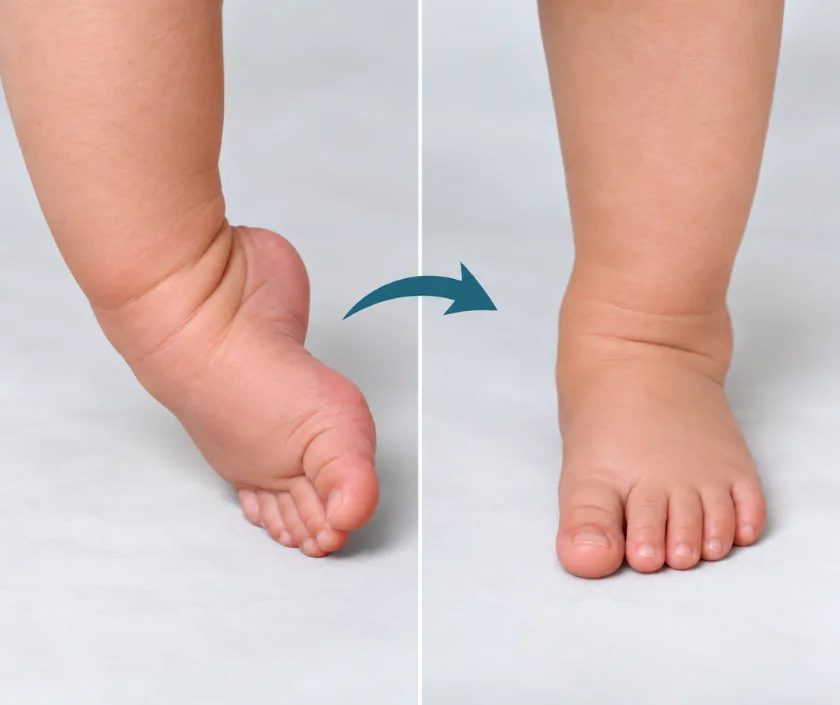
Most club feet are treated first without surgery. An orthopaedic team corrects the shape with a series of plaster casts, often with a small release of the heel cord, and then a brace holds the correction while the child grows. Reconstructive surgery is kept for feet that stay stiff or slip back later.
Club foot, also called talipes, means a baby is born with the foot turned inwards and pointing down. The bones, joints and soft tissues at the back and inner side of the foot are tight. It is not painful in a newborn, and it is not caused by anything a parent did during pregnancy.
Treatment almost always begins without an operation. A series of gentle plaster casts is applied over some weeks to bring the foot round step by step. Many children also need a small procedure to release the tight heel cord. A boots and bar brace is then worn, at night and during naps, for several years while the foot grows.
Reconstructive surgery has a smaller but real place. It is considered when a foot stays stiff despite casting, when the deformity returns as the child grows, or when a child comes late and has walked on the outer border of the foot for years. Surgery may release tight tissue, move a tendon or, in older children, reshape bone. The aim is a foot that is flat on the ground, fits a shoe and walks comfortably.
Casting and bracing come first and correct many feet on their own. Surgery is for the part of the deformity that casting could not correct, or for a foot that has relapsed.
The foot is examined for stiffness, the child is checked for other conditions and past treatment is reviewed. Where casting has not been completed, an orthopaedic opinion is taken before any operation is discussed.
Gentle weekly casts turn the foot round in stages, often with a small heel cord release. A brace then holds the position while the child grows. Most children need nothing more than this.
When a foot stays stiff, tight tissue at the back and inner side of the ankle is released under general anaesthesia. The foot is then held in a cast while it settles.
If the foot keeps turning in as the child walks, a tendon on the inner side may be moved to the outer side of the foot, so the pull across the ankle is balanced.
In a child whose bones have set in the wrong shape, a wedge of bone may be removed or repositioned, and wires or a plate hold the correction while it heals.
The leg is in a cast and is kept raised. Pain relief is given regularly, and toes are checked for colour, warmth and swelling. Most children go home within a day or two.
The cast stays on while soft tissue heals, and may be changed at review. Walking is limited or not allowed at all, depending on what was done.
The cast comes off and a brace or special shoe is fitted. Walking builds up slowly, and physiotherapy helps the ankle move and the calf regain strength.
The foot is reviewed as the child grows, because deformity can return during growth spurts. Wearing the brace as advised is the single biggest factor in holding the correction.
Most children get a foot that stands flat, fits a normal shoe and lets them play and run. The treated foot often stays a little smaller and the calf slimmer than the other side, and some stiffness is usual after a release. Relapse can still happen while a child is growing, which is why bracing and review carry on for years. A smaller second procedure is sometimes needed later.
Foot surgery in children is done often and most feet improve. Knowing what can go wrong helps you spot a problem early and get advice quickly.
The foot stays in a cast for several weeks, and then the brace and exercises take over.
It is not. Gentle casting by an orthopaedic team comes first, and many feet correct with no operation at all.
The brace is what holds the correction. Stopping early is the commonest reason a foot turns inwards again.
It develops before birth for reasons not fully understood, and it is not caused by anything a parent did.
Feet keep growing, so some children need a further small procedure during childhood even after a good result.
Families come to us for a clear answer about whether the foot still needs surgery, and for care that works alongside the orthopaedic team already treating the child.

What treatment costs depends on how much has already been done, whether the child needs casting alone or an operation, the type of release or bone work planned, the length of hospital stay and the braces or special shoes used afterwards. Reviews and cast changes over the following months form part of the picture too. A written estimate is given after your child is examined, and cover under a government scheme or a health policy is checked at the same visit.
These are the questions that come up most often in consultation. If yours is not here, send it on WhatsApp and the team will reply, usually the same day.
Ask your question →There is no single published band, because casting, bracing and surgery differ so much from child to child. A written estimate is prepared once the foot has been examined and the plan is clear. Scheme and insurance cover is checked at the same visit.
An operation is planned only when the child is growing well and the anaesthetic team is satisfied. Blood tests and a general check come first. Monitoring is close afterwards, and the toes are watched carefully for colour and swelling inside the cast.
A cast is usually worn for some weeks, then a brace or special shoe follows. Walking builds up gradually over the following month or two, helped by physiotherapy. Full comfort in ordinary shoes can take several months.
Many children walk, run and play without difficulty, and wear ordinary shoes. The treated foot is often a little smaller and the calf thinner than the other side. What matters most is a foot that sits flat on the ground and stays comfortable.
No. Most feet correct with a series of casts and a brace, guided by an orthopaedic team, and never need reconstructive surgery. An operation is considered when a foot stays stiff, when the deformity returns, or when a child comes for help late.
Casting works best when it begins in the first weeks of life, so seek advice as soon as the shape is noticed. Older children are still helped, though a stiffer foot may need more surgery. It is rarely too late to ask.
The foot is examined for stiffness and shape, walking is watched if the child is old enough, and any earlier casts or surgery are reviewed. An X ray may be advised for older children. You leave with a written plan and estimate.
Seeing patients from across the city and beyond: read about the practice on the plastic surgeon in Surat page, or check what a written estimate covers on the costs and insurance page.
