Polydactyly of the foot means a child is born with an extra toe. This page explains which extra toes need treatment, how the foot is reshaped so that shoes fit comfortably, and what recovery looks like.
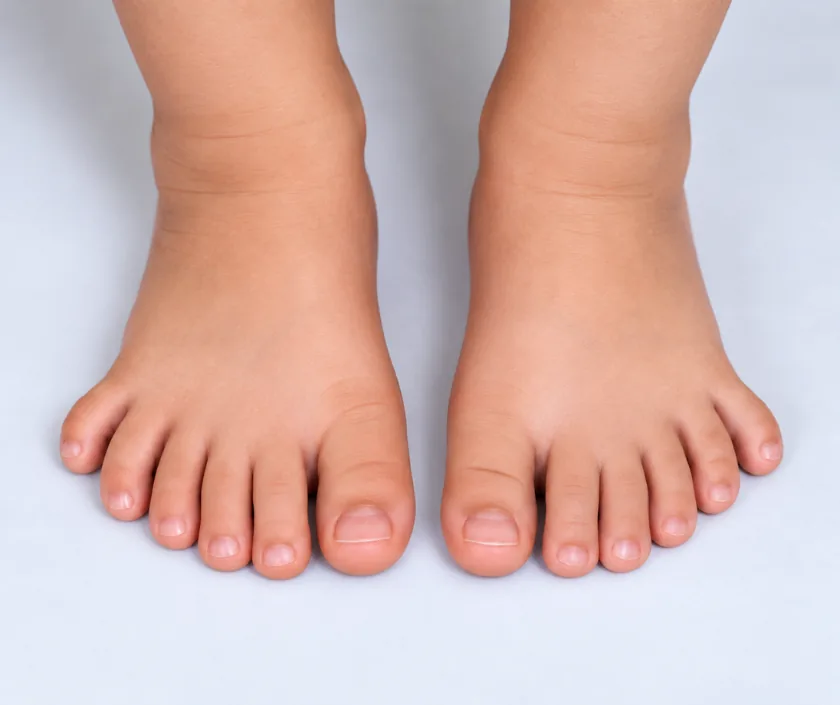
An extra toe is one of the more common differences a baby can be born with. Some are small tags of skin, while others have their own bone and joint. Treatment removes the toe that contributes least, then rebuilds the ligament, nail and bone edge, so the foot is a good shape for walking and shoes.
Polydactyly means more digits than usual. In the foot the extra toe most often sits on the outer side, next to the little toe, and it may be a soft tag, a full toe with bone, or a wide toe that is partly split. It forms as the foot develops before birth and often runs in families.
The reason to treat is usually width. A foot with six toes is broader than a shoe last, so shoes rub, skin gets sore and children can be reluctant to wear closed footwear. An extra toe on the inner side, next to the big toe, also changes how weight passes through the foot as a child walks.
Surgery removes the less well formed toe and repairs what is left behind. That means more than taking the toe off. The ligament on the side of the foot is reattached, any wide or bent bone is trimmed or straightened, and the nail and skin are shaped so the border of the foot looks and feels even. Treatment is usually planned before a child starts walking in shoes, though older children and adults are treated too.
Most children with an extra toe benefit from removal, but the timing and the technique depend on what the bones show.
The foot is examined and an X ray shows which toe has the better bone and joint. In a young baby the bones are still soft, so the picture is read alongside how the toes look and move.
The toe that contributes least to shape and function is the one removed. That is not always the outer toe, and the reasoning is explained to you before the day of surgery.
Under general anaesthesia the toe is taken through a planned incision, keeping enough skin to close the border of the foot neatly and without tension.
The ligament and tendon on that side are reattached to the remaining toe, and any wide or angled bone at the base is trimmed, so the toe sits straight.
A soft dressing, and sometimes a light plaster, protects the foot. Most children go home the same day or after one night, with the foot kept raised.
The foot is kept up to limit swelling. Babies are usually comfortable with simple pain relief. Crawling and standing are limited while the dressing stays dry and undisturbed.
The dressing comes off at review and the wound is checked. Stitches are usually dissolving. Normal bathing is allowed once the wound is dry and healed.
Walking, running and shoes are usually back to normal. The scar is still firm and pink, and a moisturiser massaged in gently helps it settle.
The border of the foot is reviewed as your child grows. A bone that drifts, or a bump at the base of the toe, occasionally needs a small further procedure.
Most children walk normally and wear ordinary shoes once healing is complete. A scar along the side of the foot remains and can feel firm for several months. Where bone or a joint was shared, the neighbouring toe may stay a little wider, shorter or tilted, and a small angle can return as the foot grows. A second smaller procedure in later childhood is occasionally offered. Sport and running are not usually limited.
Removing an extra toe is a common and well understood operation. Most feet heal quickly, and knowing the possible problems makes them easier to spot.
Feet swell and dressings get tested, so plan for a quiet couple of weeks with the foot up.
Thread tying can leave a tender lump or a piece of bone behind, so most extra toes are better removed properly.
Most children walk and run normally once the foot has healed and shoes fit.
Repair is usually planned before shoes and walking turn it into a daily problem.
It can run in families, but it often appears with no family history at all.
Parents want the foot to look and work normally in a school shoe, and that is the standard we plan towards.

The estimate depends on whether the extra toe is a soft tag or a full toe with bone and joint, whether one foot or both are treated, the anaesthetic time and whether an overnight stay is planned. X rays and review visits are counted as well. Because these vary from child to child, the figure is put in writing after the foot is examined, and any scheme or policy cover is checked at that visit.
These are the questions that come up most often in consultation. If yours is not here, send it on WhatsApp and the team will reply, usually the same day.
Ask your question →There is no single published band. A soft skin tag needs far less than a full toe with its own bone and joint, and treating both feet changes the figure again. Once the foot and the X rays have been reviewed, a written estimate is prepared.
Not always, though most are treated, because a broad foot makes shoes rub and the skin sore. A tiny tag may be left alone if it causes no trouble. The decision weighs shoe fitting, walking and how the toe is likely to grow.
The operation is short and is done under general anaesthesia with a team used to small children. A general check and blood tests come first. Most babies go home the same day or after one night, with close monitoring until they are awake and feeding.
Many surgeons prefer to treat before a child is walking in shoes, once the baby is growing well and is safe for anaesthesia. Waiting is reasonable when the toe causes no trouble. Older children and adults can still be treated.
The dressing stays on for about two weeks, and the wound is usually healed by three weeks. Walking and shoes are normally back to usual by around six weeks. Swelling and scar firmness take a few months more to settle.
The foot is narrower and fits shoes far better, with a scar along the treated border. That remaining toe may be slightly wider or a little crooked, and the nail can look different if the two toes shared one.
The foot is examined, shoes and walking are discussed and an X ray is usually arranged to see the bones. You will hear which toe would be removed and why, what the scar will be like, and the cost in writing.
Seeing patients from across the city and beyond: read about the practice on the plastic surgeon in Surat page, or check what a written estimate covers on the costs and insurance page.
