Congenital trigger thumb is a thumb that stays bent at the tip in a young child. This page explains why it happens, when watching is reasonable, what a release operation involves in Surat and what it may cost.
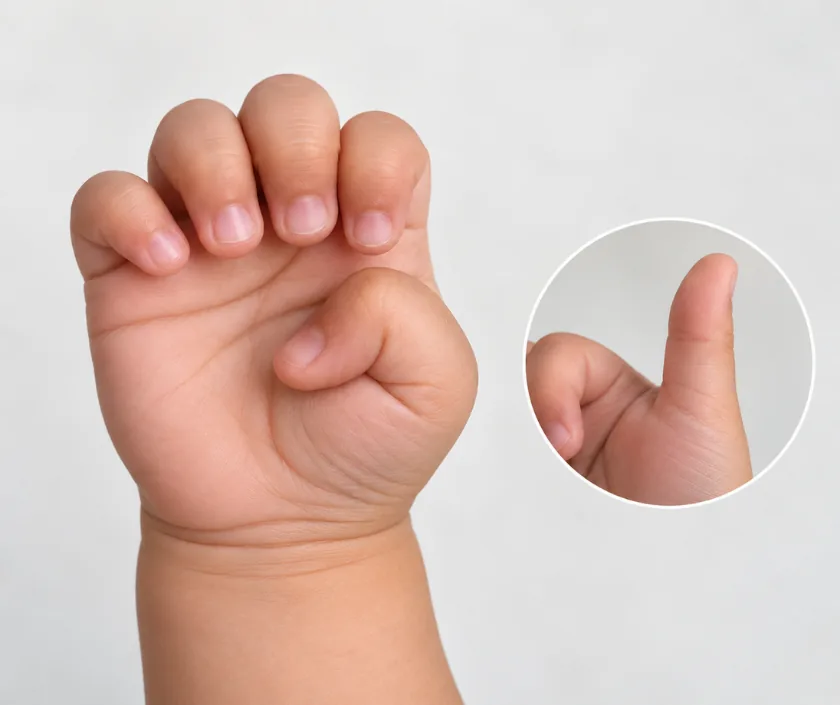
Congenital trigger thumb is a thumb that stays bent at the tip because a thickened tendon cannot glide through its tunnel. Parents often feel a small firm lump at the base of the thumb. Some thumbs loosen on their own in the first years, so a period of watching is reasonable. A short release operation is offered when the bend stays.
In congenital trigger thumb the tendon that bends the thumb becomes thickened where it passes under a tight band of tissue at the base. The tendon can no longer glide, so the tip of the thumb stays curled down. Parents usually notice that the thumb will not straighten, and a firm lump can be felt in the palm at the base of the thumb.
The name is a little misleading. Unlike the clicking trigger finger seen in adults, a young thumb is usually stuck rather than snapping in and out. Many are noticed in the first two years rather than at birth, and both thumbs are affected in some children.
A number of thumbs loosen without any treatment, so a period of watching with gentle stretching is often sensible. When the thumb is still stuck after that time, or when it is first noticed in an older child, a short operation releases the tight band so the tendon can slide again. Children usually go back to free use of the hand soon afterwards.
Many young children are watched for a while first. The operation is straightforward and is offered when the thumb stays locked.
The thumb is examined and the lump at the base is felt. X rays are rarely needed. The joint above is checked, so that other reasons for a bent thumb are not missed.
When a child is young, gentle stretching with review over some months is often advised first, because a number of thumbs free themselves without any operation at all.
Under general anaesthesia, a small cut in the crease at the base of the thumb allows the tight band over the tendon to be divided. The tendon is then seen to glide freely.
The skin is closed with fine stitches that usually dissolve, and a soft dressing is applied. The operation is short and most children go home the same day.
A soft dressing stays in place and the hand is kept clean and dry. Children often start using the thumb quickly, and simple pain relief is usually enough.
The dressing comes off and the small wound is checked. Bathing and normal play usually resume, and the thumb tip is often straightening already.
Movement is reviewed. Any stiffness left at the tip usually settles with ordinary use, and a hand therapist can add exercises when it does not.
The scar sits in a crease and becomes easy to miss. Return of the triggering is uncommon, and further review is arranged only if the thumb tightens again.
Most thumbs straighten quickly once the tunnel is opened, and children return to normal use within a few weeks. If the thumb has been bent for a long time, the end joint can stay slightly stiff and take months of ordinary use to loosen, and occasionally a little bend remains. The small scar fades but does not vanish. Return of the problem is uncommon after a proper release, though we check the thumb at follow up.
Trigger thumb release is a short and familiar operation in children, and problems are unusual. It is still fair to know what they are.
A soft dressing stays on for a short time, and after that ordinary play does most of the work.
It is almost always a tendon that cannot slide through its tunnel. Bones are not usually involved at all.
A splint helps a little in some young children, but a thumb that stays locked usually needs a small release.
Most children do not seem bothered by it. They simply adapt and use the thumb in the bent position.
It is a short procedure through a small crease incision, and children usually go home the same day.
Families come to us for a straightforward answer about whether to wait or to operate, and for hand surgery scaled to a small child.

The estimate depends on whether one or both thumbs are treated, the anaesthetic time, the type of theatre used and the length of stay. A dressing change and one or two reviews are usually included. Because a young child needs a general anaesthetic even for a short procedure, anaesthesia forms a fair share of the total. A written estimate follows examination, so the figure is clear before the date is fixed.
These are the questions that come up most often in consultation. If yours is not here, send it on WhatsApp and the team will reply, usually the same day.
Ask your question →A written estimate is given after the thumb is examined. It depends on whether one or both thumbs are treated, the anaesthetic time and the theatre used, and it includes dressing changes and early reviews. Scheme or insurance cover is checked at the same visit.
The release is short and is done under general anaesthesia after an anaesthetic review. Nerves run close to the tendon, so the tissue is opened carefully with magnification. Most children go home a few hours later and use the hand within days.
A soft dressing stays on for about one to two weeks. Many children begin using the thumb within days and return to nursery or school quickly. Any stiffness at the tip usually eases over the following weeks with ordinary play.
Most thumbs straighten well once the tight band is released. A thumb that has been bent for a long time may take longer to regain the last part of movement, and a few children keep a slight bend at the tip.
No. Some thumbs in young children loosen on their own over a year or two, so watching with gentle stretching is a reasonable first plan. Surgery is offered when the thumb stays stuck, when the child is older, or when the bend is fixed.
There is no single answer. Many teams watch a young child for a period of months while stretching is tried, then advise release if nothing changes. An older child is usually offered surgery sooner, since loosening on its own becomes less likely with time.
The thumb is examined, the lump is felt and movement at each joint is recorded. Other reasons for a bent thumb are ruled out. You will hear whether watching is reasonable for your child, what a release involves and what the written estimate covers.
Seeing patients from across the city and beyond: read about the practice on the plastic surgeon in Surat page, or check what a written estimate covers on the costs and insurance page.
