Clinodactyly is a finger that curves sideways, most often the little finger. This page explains why the curve happens, when a child needs only review, what correction involves in Surat and what it may cost.
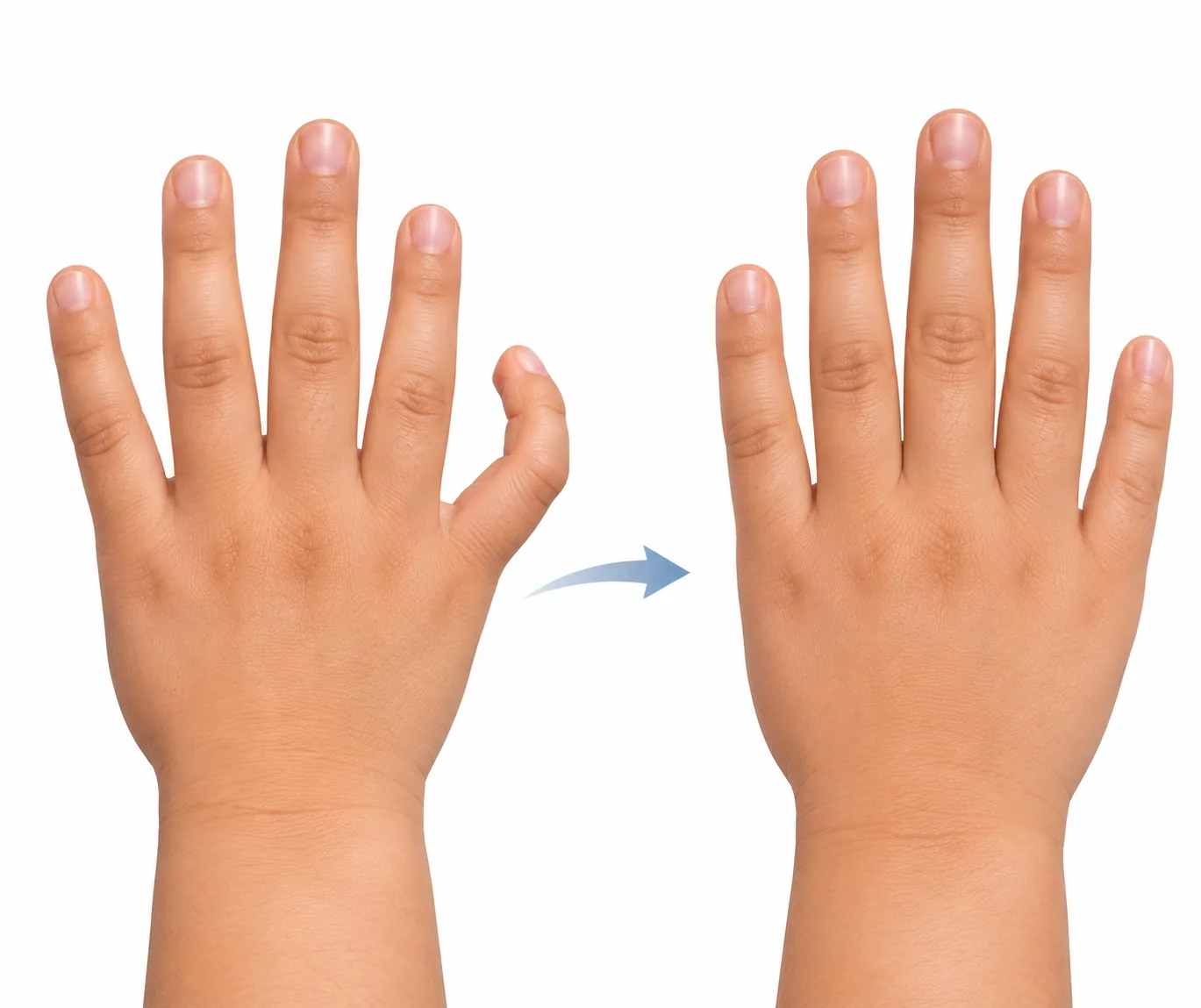
Clinodactyly means a finger leans sideways, most often the little finger tilting towards the ring finger. It happens because one of the small bones in the finger grows unevenly. Many children need no operation, since the curve is mild and the hand works well. Correction is considered when the bend is marked, is increasing, or gets in the way of grip.
Clinodactyly describes a finger that bends sideways rather than growing straight. The little finger is affected most often and leans in towards the ring finger. The cause lies in one of the small bones of the finger, where the growth plate is shaped like a bracket rather than a straight line, so one side of the bone grows faster than the other.
Many children have a mild curve that never causes trouble. The finger looks slightly bent, grip is normal, and nothing is needed beyond reassurance and occasional review. Splinting and stretching do not straighten the bone, because the shape comes from the growth plate rather than from tight skin or a tight tendon.
Surgery is discussed when the bend is marked, when it is increasing as the child grows, or when the finger crosses over its neighbour and gets in the way. In a younger child the abnormal part of the growth plate can be released so the bone grows more evenly. Once growth is nearly finished, cutting and reshaping the bone gives a more predictable result. Splinting and hand therapy follow either route.
Surgery is offered to a small number of children whose curve is clearly affecting how the hand looks or works. For many children, review over time is the kinder plan.
The finger is examined and X rays show the shape of the bone and its growth plate. The angle is measured, and earlier images are compared to see whether the curve is changing.
In a younger child the abnormal bracket of growth plate can be released so the bone grows more evenly. Once growth is nearly finished, reshaping the bone gives a steadier result.
Your child sleeps under general anaesthesia and the procedure is usually short. A soft tourniquet keeps the field clear so the small bone and joint can be handled gently.
A wedge of bone is removed or added to bring the finger into line. Fine wires hold the bone while it heals, and the joints on either side are left as free as they can be.
A light plaster or splint protects the finger. A wire usually stays for a few weeks and is taken out in clinic once X rays show that the bone has joined.
The hand is kept raised in a splint or plaster. Discomfort is usually mild and settles with simple pain relief. Most children go home on the day of surgery.
The dressing is changed and the wound is checked. Movement of the neighbouring fingers is encouraged so the hand does not stiffen while the finger is protected.
X rays are taken and any wire is removed once the bone has joined. A hand therapist starts gentle exercises and may fit a night splint to hold the correction.
Movement and grip keep improving. Reviews continue while the child grows, because a bend can slowly return when there is still growth left in the finger.
Most children end up with a straighter finger that sits closer to the others and moves well enough for everyday tasks. A small amount of curve often remains, and that is normal rather than a sign something went wrong. The finger may stay slightly shorter, or a little stiff at one joint. Because children keep growing, some curve can return, so we review the hand over several years.
Correction is a small operation and most children recover quickly. The finger is delicate though, so a few problems are worth knowing about.
The hand is protected for a few weeks, after which gentle movement matters more than rest.
A splint keeps a joint comfortable, but it cannot reshape a wedge shaped bone, so it does not correct the curve.
It is not caused by anything a parent did. The bone simply formed in a slightly different shape before birth.
Timing depends on how the bone has grown. Waiting for the right stage often gives a steadier result than rushing.
Fingers keep growing through childhood, so we check the hand at intervals in case the curve creeps back.
Parents come to us for a calm explanation of whether their child needs surgery at all, and for an honest view of what an operation can and cannot change.

Cost depends on which method is chosen, whether bone graft and wires are used, the anaesthetic time and whether more than one finger is treated. Splints and hand therapy sessions are counted separately, and a wire removal visit may be added. Because a mild curve may need only review while a marked bend needs bone surgery, a written estimate is prepared after examination and X rays.
These are the questions that come up most often in consultation. If yours is not here, send it on WhatsApp and the team will reply, usually the same day.
Ask your question →A written estimate is prepared after the finger is examined and X rays are reviewed, since a growth plate release and a bone reshaping differ in theatre time and materials. The estimate lists surgeon, anaesthesia, theatre and any wires used. Insurance cover is discussed at the same visit.
The procedure is short and is done under general anaesthesia after an anaesthetic review. Working on a small finger calls for care, because the joint and growth plate sit close together. Most children go home the same day and need only simple pain relief.
A splint or plaster is worn for about four to six weeks while the bone heals. Wires come out in clinic once X rays look right. School and gentle play usually restart within a week or two, with the hand protected.
Most fingers end up far straighter and sit better during grip. A slight bend often remains, and some curve can return while the child is still growing. The aim is a finger that works comfortably rather than an exact match with the other hand.
No. Many children have a mild curve that causes no trouble with writing, sport or daily tasks, and review alone is the right plan. Surgery is considered when the bend is marked, is increasing, or makes the finger cross its neighbour.
Timing depends on how much growth is left. Releasing the abnormal growth plate suits younger children, because the finger can then grow straighter on its own. Reshaping the bone is usually planned closer to the end of growth, when the correction holds better.
The finger is measured, grip is watched and X rays are taken. Older photographs or earlier images help show whether the bend is changing. You will hear which option suits your child, what splinting and therapy involve and what the written estimate covers.
Each technique below has its own page explaining how it works and when it is chosen.
Seeing patients from across the city and beyond: read about the practice on the plastic surgeon in Surat page, or check what a written estimate covers on the costs and insurance page.
