Differences of sex development, often shortened to DSD, describe conditions where the genital or reproductive organs form differently before birth. This page explains how a team assesses a child, how decisions are shared with the family and what care includes.
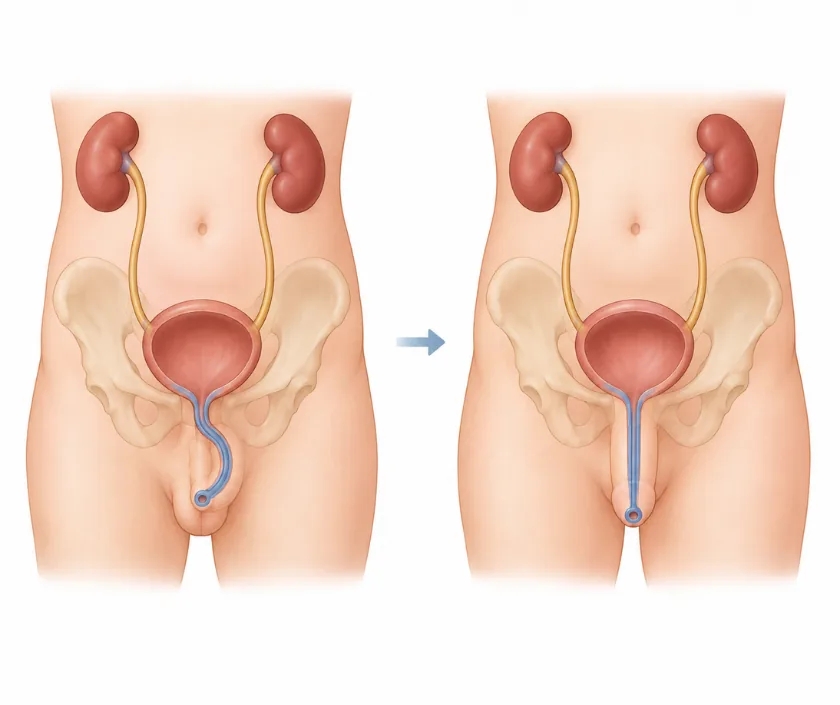
Differences of sex development are congenital conditions in which the reproductive or genital organs form differently. Assessment is done by a team that includes a paediatrician, a hormone specialist, a surgeon, a geneticist and a psychologist. Tests come before any decision. Surgery is not always needed, and where it is considered, timing and choice are discussed with the family rather than assumed.
Differences of sex development cover a wide group of conditions. Some are noticed soon after birth, when the genital appearance is not clearly typical. Others come to light in childhood or around puberty, when growth, periods or body changes do not follow the expected pattern. Each condition has its own cause and its own outlook.
Assessment is never done by one doctor alone. A team usually includes a paediatrician, a hormone specialist, a paediatric surgeon or urologist, a geneticist, a gynaecologist and a psychologist. Tests may include blood hormone levels, chromosome and gene studies, an ultrasound scan and sometimes a look inside under anaesthesia. Salt balance and general health are checked first, because a few conditions need medical treatment promptly.
Only once that picture is complete are options discussed. Some children need no operation at all. Others need surgery for function, for example so that urine can pass freely. Where an operation is optional, many teams and families choose to wait so the child can take part in the decision. Psychological support is offered to the child and the parents throughout.
There is no standard operation here. What is offered, and when, is worked out by the team together with the family once the tests are complete.
The first task is to make sure the baby is medically safe. Salt balance, blood sugar and hormone levels are checked, because a few conditions need treatment within days. Nothing about surgery is decided at this stage.
A paediatrician, a hormone specialist, a surgeon, a geneticist and a psychologist review the child together. Chromosome studies, scans and, where needed, a look inside under anaesthesia build the full picture.
The team meets the family, explains what the tests show in plain language and answers questions. Written information is given, and a second opinion is welcomed rather than discouraged.
Options are discussed with the parents, and with the child directly when age allows. Some families choose surgery, some choose to wait, and some need none. Timing is agreed rather than assumed.
Where an operation is agreed, it is done under general anaesthesia by a surgeon experienced in this work. The aim is safe function and comfort, and the plan is often staged over time.
After any operation a soft dressing, and sometimes a small tube to drain urine, are used. Pain relief is given, and the child is watched until feeding and passing urine have settled.
Wounds heal and dressings come off. Nappies or loose clothing are easier than tight ones. School or playgroup usually restarts once the child is comfortable.
A review checks healing and function. Hormone treatment, where it is needed, continues under the specialist and is adjusted as the child grows.
Care continues for years. Growth, puberty and emotional well being are reviewed, and further discussions happen as the young person becomes able to take part fully.
What a family can expect depends entirely on the diagnosis, so general promises are of no use here. Where surgery is done for a health reason it usually achieves that aim, and further procedures are sometimes needed as a child grows. Where a decision concerns appearance, many teams now advise waiting so the young person can share in the choice. Review, hormone care and psychological support continue into adult services.
Any operation carries risk, and decisions here also carry weight beyond the surgery itself. Both are discussed openly before anything is agreed.
Practical care after any procedure is given to you in writing, and the wider support around the family matters just as much.
Apart from genuine medical emergencies there is time. Tests come first and unhurried discussion follows.
Many children need no surgery at all. Medical care, hormone treatment and support are often the whole plan.
Honesty suited to the age of the child, guided by the psychology team, is far easier than finding out later.
Decisions are made with the family, and where a choice can wait, the young person is included in it.
Families come to us for care that begins with assessment by a full team, unhurried discussion, and support that continues long after any procedure.

Cost varies widely, because care ranges from tests and hormone treatment alone through to staged operations. Chromosome and gene studies, scans, examination under anaesthesia, theatre time, hospital stay and long term specialist review all add to the picture. Many families are covered in part by government schemes or health policies. A written estimate is prepared after assessment, and the team explains which parts are likely to be covered.
These are the questions that come up most often in consultation. If yours is not here, send it on WhatsApp and the team will reply, usually the same day.
Ask your question →No single price applies, since care ranges from tests and medicines through to staged surgery. Genetic studies, scans, theatre time and review visits all count. A written estimate is prepared after assessment, and the team will explain which parts government schemes or health policies may cover.
Decisions are shared. A team that includes a paediatrician, a hormone specialist, a surgeon, a geneticist and a psychologist gives the medical picture, and the family decides with them. Where the child is old enough, that young person takes part in the discussion directly.
Not usually. Some conditions need prompt medical treatment, but many operations are optional in timing. Families increasingly choose to wait so the child can take part in the decision. What is urgent and what can wait is set out clearly before anything is booked.
That depends on which operation is done. Most children are comfortable within a week or two, with dressings and sometimes a small drainage tube in the early days. Reviews continue for months, and further stages are planned only once healing is complete.
The aim is safe function, comfort and healthy growth. Outcomes vary between conditions, so general figures mean little. Your team will describe what is realistic for the specific diagnosis, and will say honestly where a further procedure may be needed later.
Yes. A psychologist or counsellor joins from the first meeting, for parents and for the child as understanding grows. Help with school questions, privacy and talking to relatives is available, and it continues alongside medical review for as long as it is wanted.
The history and pregnancy details are taken, the child is examined gently, and blood and chromosome tests plus a scan are arranged. Findings are explained at a later meeting with time for questions. Nothing is decided at the first visit.
Seeing patients from across the city and beyond: read about the practice on the plastic surgeon in Surat page, or check what a written estimate covers on the costs and insurance page.
