An eyelid coloboma is a gap or notch in the eyelid that a child is born with. Because the lid protects the surface of the eye, closing the gap is about eye health as much as appearance.
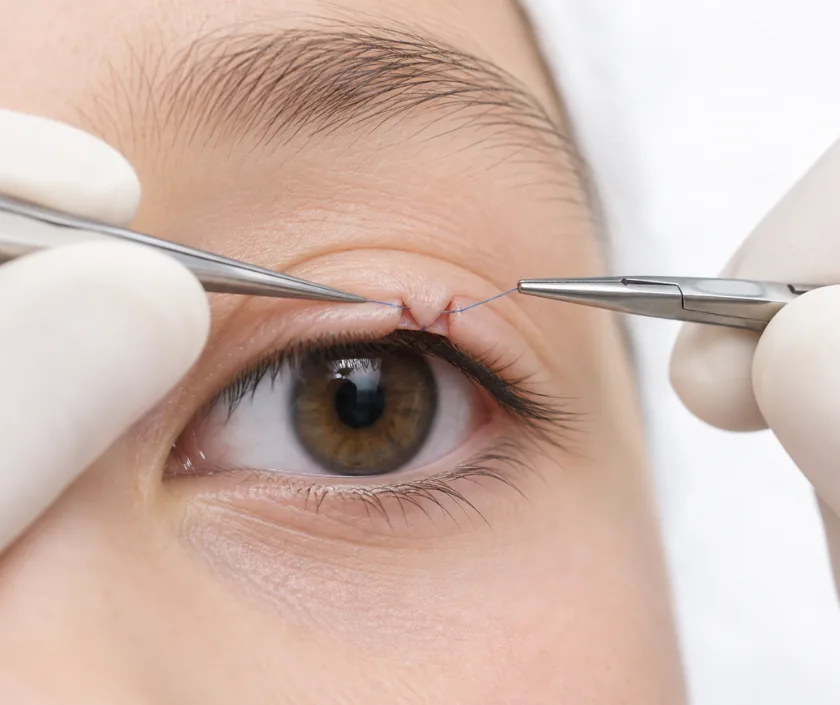
Eyelid coloboma repair closes a gap in the upper or lower lid so the eye can be covered and kept moist. Small gaps are closed directly in layers. Larger ones need tissue brought in from the nearby lid or cheek. Urgency depends on how exposed the surface of the eye is when the child blinks and sleeps.
The eyelid forms in the womb from tissue that grows across and joins in the middle. A coloboma is a gap where that joining did not complete, leaving a notch that can range from a shallow dip to a large section of missing lid. Upper lid gaps are often linked with other facial differences, while lower lid gaps are commonly seen in conditions affecting the cheek bones.
The lid does more than frame the eye. Each blink spreads tear film across the surface and clears dust. Where a gap stops the lid closing, the exposed area dries out, and a dry surface can become sore, cloudy or scarred. Lubricating ointment is usually started straight away, before any operation is planned.
Repair rebuilds the lid in layers, so the inner lining, the supporting plate and the skin all come together in the right order and the lid margin runs smoothly. Small gaps close directly. Larger ones need tissue borrowed from the other lid, the cheek or the inside of the mouth, and are often treated in stages.
The decision rests on how well the eye is protected. Appearance matters, but the health of the eye surface comes first.
Lubricating ointment and drops are started to keep the exposed surface moist. An eye specialist checks the cornea and vision before any operation is planned.
The width of the missing lid is measured against the whole lid, and the tissue available nearby is assessed. This decides whether direct closure or a flap is needed.
For a small gap, the edges are freshened and joined in layers under general anaesthesia, lining first, then the supporting plate, then skin, so the margin lines up exactly.
For a wide gap, tissue is moved from the neighbouring lid or the cheek, and lining may be taken from the inside of the mouth to rebuild the back surface.
Ointment, drops and sometimes a light dressing follow. The eye surface is rechecked at every visit, and further stages are planned as your child grows.
Swelling and bruising around the eye are usual. Ointment keeps the surface moist and pain relief is given. Most children go home the same day or the next morning.
Stitches are checked or removed. Rubbing the eye, dusty play and swimming are avoided. Many children return to school towards the end of this period.
The lid margin looks tidier as swelling settles. Vision and the eye surface are rechecked, and scar care is usually started around this time.
Scars soften and the lid position settles. Where the gap was wide, a further stage may be planned once the tissue has relaxed and the child has grown.
The eyelid usually looks and works far better than before, though a fine scar along the lid edge stays visible on close inspection. Lash growth can be patchy where the gap was. Large defects sometimes need more than one stage, and a small notch can reappear as the face grows. Night time ointment is often still needed for a while. An eye specialist should keep reviewing vision, since the eye behind the lid matters most.
Repair protects the eye and improves the outline of the lid. Some issues are worth knowing about, particularly when the gap was wide.
The first two weeks decide how the lid edge settles, so the small daily routines are worth doing carefully.
The eyelid does not fill in by itself, and a growing face can make the gap look more obvious.
The lid protects the surface of the eye, so an untreated gap can dry the cornea and affect sight.
Timing depends on how well the eye is protected, and some children need repair much earlier than that.
Parents tell us they want someone to explain what the eye actually needs, and in what order, before any date is fixed.

Cost depends on the size of the gap, whether the lid is closed directly or rebuilt with a flap and graft, whether lining is taken from the mouth, the anaesthetic time and the planned hospital stay. Joint reviews with an eye specialist and any second stage are quoted separately. A written estimate is shared after your child has been examined, so the family can plan ahead.
These are the questions that come up most often in consultation. If yours is not here, send it on WhatsApp and the team will reply, usually the same day.
Ask your question →No single band applies, because a small notch and a large rebuilt lid are very different operations. Grafts, anaesthetic time and hospital stay all change the figure. A written estimate is given after the examination.
It is done under general anaesthesia once the anaesthetic team is satisfied. The main risks are bleeding, infection, scarring and an uneven lid margin. Protecting the surface of the eye during healing is a central part of the aftercare.
Urgency depends on how exposed the eye is. When the surface is drying despite ointment, repair is arranged early to protect sight. Where the eye stays healthy, surgery can be planned at a calmer time.
It can be, if the exposed surface becomes dry, scarred or the eye is not used normally. Regular checks with an eye specialist, along with drops and ointment, are used to reduce that risk before and after surgery.
Most children go home the same day or after one night. Swelling settles over one to two weeks and school restarts around then. The lid margin keeps refining for several months as scars soften.
The gap is closed and the lid can protect the eye, which is the main gain. A faint step in the margin or a small difference in lash line often remains, especially where a large section had to be rebuilt.
The lid and the surface of the eye are examined, the gap is measured and photographs are taken. An eye specialist reviews vision. You hear how the lid would be rebuilt, in how many stages, and what it would cost in writing.
Each technique below has its own page explaining how it works and when it is chosen.
Seeing patients from across the city and beyond: read about the practice on the plastic surgeon in Surat page, or check what a written estimate covers on the costs and insurance page.
