An epicanthal fold is a curve of skin at the inner corner of the eye that partly covers it. This page explains when a fold needs treatment, how it is corrected and what parents should expect afterwards.
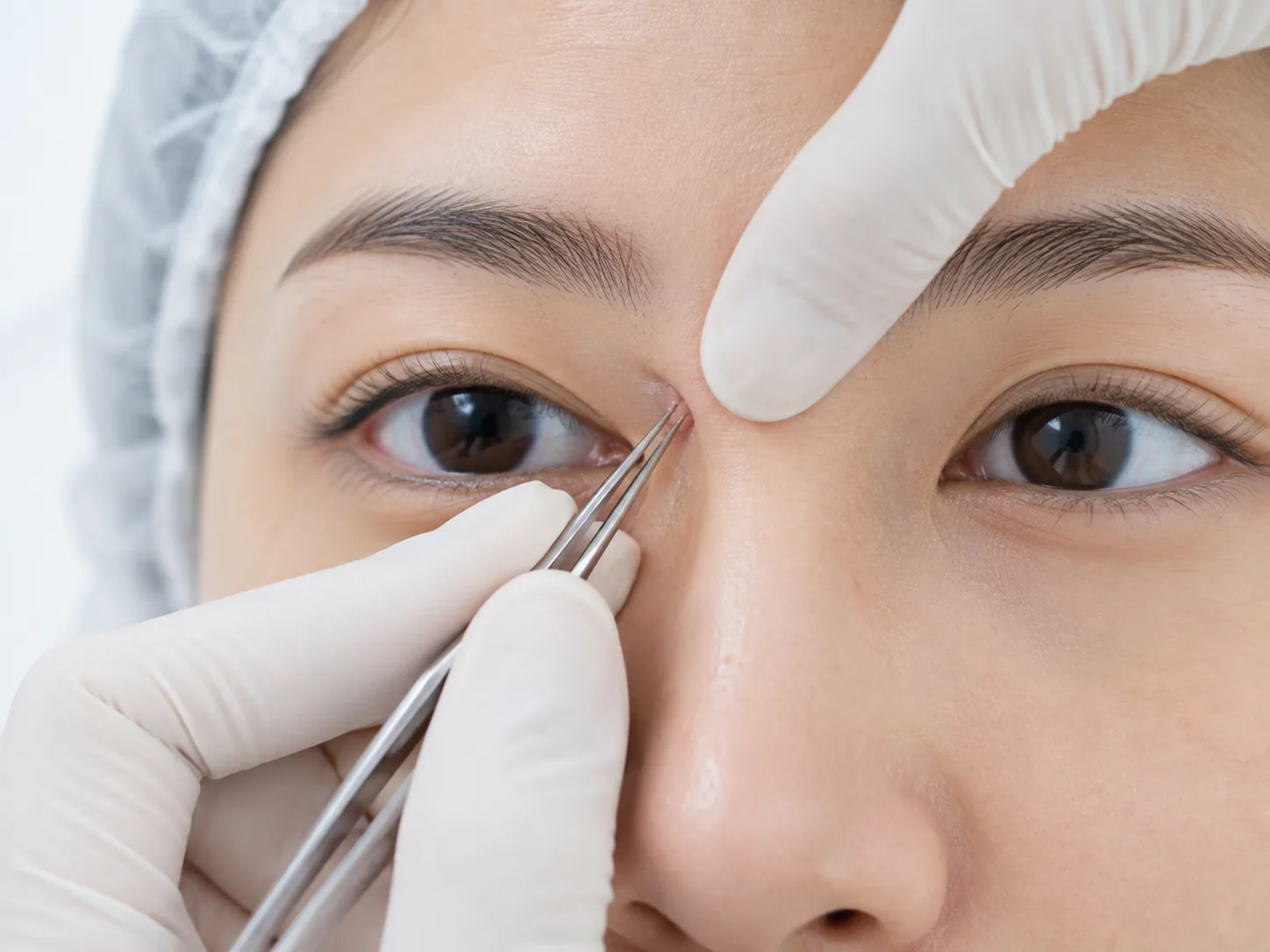
Epicanthal fold correction reshapes the curve of skin at the inner corner of the eye so more of the eye is visible. Surgeons rearrange the skin with a small zig zag or stepped design rather than simply cutting it away. Many folds soften on their own as the face grows, so children are often reviewed before surgery is offered.
At the inner corner of each eye, the skin curves down from the upper lid towards the nose. In many young children this curve is prominent, hiding part of the white of the eye near the nose. A fold on its own is a normal variation in a great many families and needs no treatment at all.
Treatment is considered for other reasons. A heavy fold can make the eyes look wider apart than they are, or make one eye seem turned in when it is not, which doctors call a false squint. Some children have the fold as part of a wider pattern that also includes a drooping lid and a narrow eye opening, and here the fold is corrected as part of a planned sequence.
Correction works by rearranging skin rather than removing it. Small flaps are cut in a zig zag or stepped pattern and swapped over, which lengthens the skin vertically and lets the corner sit open. Because the scar sits in a delicate area, technique and timing both matter.
Most epicanthal folds need nothing at all. Surgery is considered when the fold is part of a wider eyelid problem rather than a family feature.
The corner is examined, the eye position is checked and an eye specialist review is arranged when a squint is suspected. Photographs record the starting point for later comparison.
Many folds flatten as the nose develops. Where the fold is mild, review over a year or two is often advised before any operation is offered.
A stepped or zig zag design is marked at the inner corner. The pattern is chosen so the resulting scar follows natural lines and does not pull the corner inwards.
Under anaesthesia, small flaps are raised and swapped, and any tight band underneath is released. The corner is then closed with fine stitches placed under low tension.
A light ointment and sometimes a small tape are applied. Most children go home the same day, with instructions on cleaning and protecting the area.
Bruising and swelling at the inner corner are usual and settle quickly. Ointment is applied as advised, and cool packs make the first days more comfortable.
Fine stitches are checked or removed. Rubbing the eye, swimming and dusty play are avoided. Most children are back at school within this period.
Scars look pink and slightly raised at this stage, which is expected. Massage and sun protection are usually started once healing is confirmed.
The scar fades and the corner settles into its final shape. Review continues if other eyelid surgery is planned as part of a sequence.
The inner corner becomes more open and the impression of crossed eyes usually goes. The trade is a scar in a place where scars show, and it takes many months to fade. Redness or thickening can occur and is treated if it does. The two sides seldom look identical. Where the fold belongs to a wider eyelid condition, this is only one step in a longer plan and further surgery may follow.
This is a small operation in a visible place, so scar quality matters. These points are discussed openly before a decision is made.
The area is small but delicate, so keeping the scar clean, protected and out of the sun is the main task.
For most people the fold is a normal feature that needs no treatment at all.
It can make straight eyes look crossed. An eye specialist can tell the difference in a few minutes.
The inner corner is a demanding place for a scar. It usually fades well, but it does not disappear.
Folds do soften as the face grows, but a fold that belongs to an eyelid condition still needs proper assessment.
Families come to us for a careful opinion in an area where doing nothing is very often the right advice, and for surgery only where it serves a clear purpose.

Cost depends on whether one corner or both are treated, whether the fold is corrected on its own or with eyelid surgery at the same sitting, the anaesthetic used and the length of the procedure. Children usually need general anaesthesia, which adds to the total compared with an adult case. A written estimate is shared after the assessment, once the plan and timing are agreed with the family.
These are the questions that come up most often in consultation. If yours is not here, send it on WhatsApp and the team will reply, usually the same day.
Ask your question →There is no published band, because plans differ with one corner or two, the technique used and whether eyelid surgery is done at the same time. Anaesthetic type also matters. A written estimate is given after the assessment.
Often not. A fold on its own is a common family trait and causes no harm. Treatment is considered when lashes rub the eye, when the fold creates a false squint appearance, or when it forms part of a wider eyelid plan.
It is a short procedure, and children recover quickly. General anaesthesia is used, with the usual checks first. The main concerns are scarring, partial return of the fold and temporary watering of the eye.
Many folds soften as the nose grows, so waiting and reviewing is common. Where the fold is heavy, or eyelid surgery is already planned, correction can be brought forward and done in the same sitting.
Most children go home the same day. Swelling and bruising settle within one to two weeks and school restarts around then. The scar keeps fading for six months or more before it looks its best.
The design places the scar along natural lines, and it usually fades to a fine pale line. It looks pink for several months first, and some children scar more heavily, so massage and sun protection are advised.
The inner corners are examined, eye position is checked and photographs are taken. You hear whether waiting is reasonable, what the operation would involve if it is offered, and what the cost would be in writing.
Seeing patients from across the city and beyond: read about the practice on the plastic surgeon in Surat page, or check what a written estimate covers on the costs and insurance page.
