Poland syndrome is a difference present from birth where the chest muscle on one side is missing or small, sometimes with changes in the breast, ribs or hand. This page explains the options for rebuilding the chest and when they are best timed.
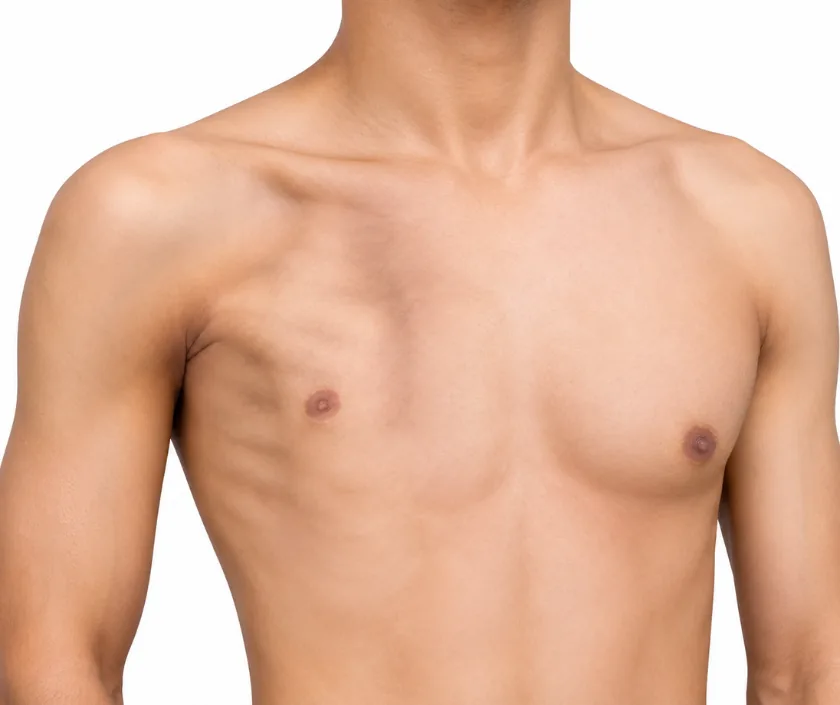
Poland syndrome reconstruction rebuilds the shape of one side of the chest when the pectoral muscle is absent or underdeveloped from birth. Options include fat grafting, a custom made implant, a muscle flap moved from the back, and breast reconstruction in girls. Surgery is usually timed once chest growth is largely finished, and often takes place in stages.
Poland syndrome is a difference that a child is born with, in which the main chest muscle on one side does not form fully. The sternal part of the pectoralis major is usually the piece that is missing. The front of the chest looks flatter on that side, the armpit fold may be absent and the nipple can sit higher or smaller than the other one.
Other features vary a great deal. Some children also have short or joined fingers on the same side, a smaller hand, fewer ribs, less fat under the skin or thin body hair in the armpit. In girls, the breast on that side may develop poorly or not at all. Strength is usually near normal, because other muscles take over the work.
Most families come with questions about appearance, clothing and confidence rather than about function. At Elegance Clinic in Surat the chest is examined and imaging is used when the ribs need assessing. A plan is then built around the child, taking growth, the features present and the family wishes into account.
The right time is usually after growth has finished, because matching two sides is only meaningful once both have settled.
The chest, armpit fold, nipple position and breast are examined and recorded with photographs. A scan may be added to look at the ribs. Growth stage and how the young person feels about the difference guide the timing.
Options are discussed together. Fat grafting adds softness in stages, a custom made implant restores the missing bulk in one shape, and a muscle flap from the back brings living tissue with its own blood supply.
Fat is taken by liposuction from the abdomen or thigh, prepared, and injected in fine layers under the skin of the chest. Part of the fat settles and part is absorbed, so more than one session is often needed.
A custom implant made from a scan of the chest can be placed through a hidden incision. Where more cover is needed, the latissimus dorsi muscle is moved from the back around to the front of the chest.
In girls, breast reconstruction with an implant, a flap or fat grafting is usually timed after the other breast has finished developing. The nipple position can be adjusted at the same stage to improve symmetry.
Soreness and tightness across the chest are expected and are managed with pain relief. Fat grafting is often day care. Implant or flap surgery usually needs a short hospital stay with drains.
Dressings and any drains are dealt with at review. Arm movement is kept gentle. School or desk work is often possible within a week or two after fat grafting, later after a flap.
Most swelling has gone and the new shape becomes clearer. Exercise is reintroduced as the surgeon advises. Heavy upper body work is left until the tissue has fully healed.
The result settles as swelling clears and grafted fat stabilises. Further stages, such as more fat grafting or a nipple adjustment, are planned at this point if wanted.
Reconstruction can make the two sides look far more similar in clothing, though close inspection will still show a difference. Fat grafting usually needs more than one session, because part of the graft does not survive. An implant may need adjusting or replacing in later years. Flap surgery leaves an extra scar where tissue was taken. The missing muscle is not replaced in function, so strength stays as it was before surgery.
Chest reconstruction is planned surgery, so there is time to weigh the benefits against the risks. The list below covers the main ones.
Shape takes months to declare itself here, so patience is part of the treatment.
The heart is normal in most people with this condition, and assessment confirms what applies in each case.
Training strengthens the muscles that are present but cannot build one that never formed.
The aim is a good match in clothing, and refinement across more than one stage is common.
Most cases happen on their own, with no family history.
People come to us wanting the chest, breast and hand looked at together, and the options laid out without pressure.

The cost depends on the method chosen, whether an implant is custom made from a scan, the number of fat grafting sessions, the length of surgery and anaesthesia, hospital stay, and whether breast or nipple work is included. Because a plan is built around each young person, a written estimate is given after the assessment, along with advice on which parts may attract insurance cover.
These are the questions that come up most often in consultation. If yours is not here, send it on WhatsApp and the team will reply, usually the same day.
Ask your question →There is no single price, because plans differ so much. Cost depends on the method, whether a custom implant is made, how many fat grafting sessions are needed and the hospital stay. A written estimate follows the assessment so the family can plan ahead.
These are planned operations done under general anaesthesia with a full check beforehand. Risks such as bleeding, infection and implant problems are explained before any decision. Staged, smaller procedures are often chosen for younger patients to keep each step straightforward.
Timing follows growth rather than a fixed age. Reconstruction usually waits until the chest and, in girls, the opposite breast have largely finished developing, so the two sides stay balanced. Some early steps may be considered sooner if the difference is causing distress.
The aim is a closer match in shape and fullness, not an identical copy. Many people are pleased with how clothing fits and how the chest looks in a swimming costume. More than one stage is often needed to reach that point.
Most people have close to normal arm strength, because neighbouring muscles take over the work. Concerns are usually about shape and confidence rather than function. If strength or shoulder movement is an issue, physiotherapy is arranged alongside the surgical plan.
When fingers on the same side are joined or short, that is treated as a separate pathway with its own timing, usually earlier in childhood because hand use develops young. Chest work and hand work are planned together but rarely done at the same sitting.
The chest is examined and photographed, and imaging is arranged if the ribs need review. Each option is explained with what it can and cannot achieve, along with recovery, staging and scars. A written estimate is sent so the family can decide without hurry.
Each technique below has its own page explaining how it works and when it is chosen.
Seeing patients from across the city and beyond: read about the practice on the plastic surgeon in Surat page, or check what a written estimate covers on the costs and insurance page.
