Pectus excavatum is a sunken breastbone that a child is born with, which often becomes more obvious during the teenage growth spurt. This page explains the options, from a bar placed behind the breastbone to a custom implant that fills the hollow.
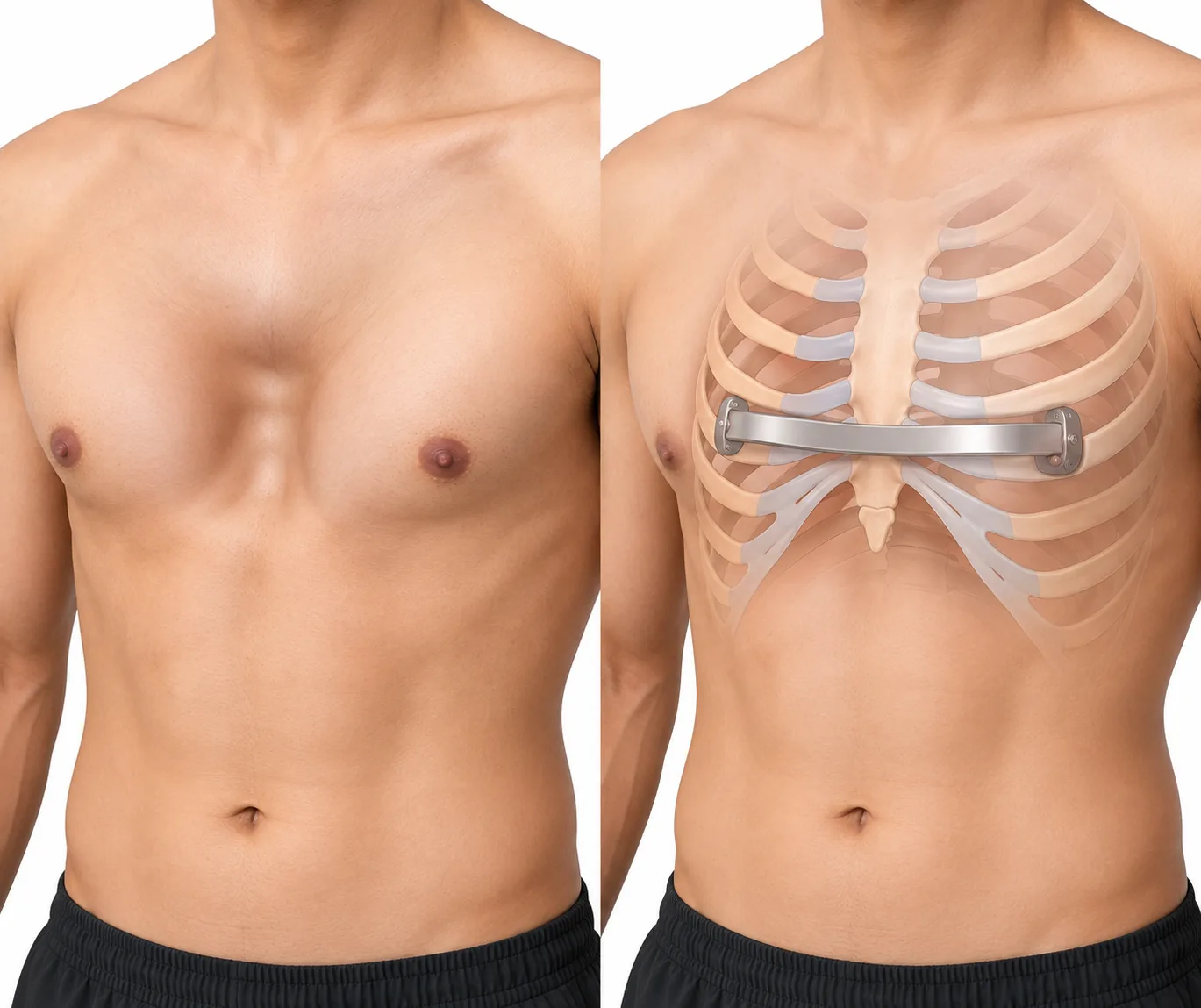
Pectus excavatum correction treats a chest where the breastbone is sunken inward. Surgery can lift the breastbone with a curved metal bar placed behind it, or reshape the ribs and breastbone directly. When the concern is appearance alone, a custom implant or fat grafting can fill the hollow instead. Timing is usually matched to the teenage growth spurt.
In pectus excavatum the cartilage joining the ribs to the breastbone grows more than it should, and pushes the breastbone backward. The result is a dip in the middle of the chest that may be shallow and even, or deep and tilted to one side. It is present from birth, although in many children it stays mild until growth speeds up.
The dip often deepens quickly during the teenage growth spurt, and that is when most families first ask about treatment. A deep hollow can press on the heart and lungs, and some teenagers notice breathlessness on exercise, chest ache or a fast heartbeat. Many others have no physical symptoms at all and are troubled only by how the chest looks.
At Elegance Clinic in Surat the chest is measured and photographed, and a scan is used to judge the depth and to see how much the heart is displaced. Lung and heart tests may be added. Sorting out whether the concern is physical, cosmetic or both is what shapes the plan that follows.
This is a decision about timing as much as about the depth of the hollow, and the young person should be part of it.
The depth of the dip is measured and photographed. A scan shows how far the breastbone sits back and whether the heart is pushed aside. Breathing and heart tests are arranged when symptoms are present.
A bar behind the breastbone suits a flexible teenage chest and lifts it from inside. An open reshaping of the cartilage suits stiffer or uneven chests. A custom implant is chosen when only the appearance matters.
Correction is usually planned around the teenage growth spurt, when the chest is still soft enough to reshape and most of the deepening has happened. Operating too early can allow the dip to return as growth continues.
Under general anaesthesia, small cuts on each side of the chest allow a curved bar to be passed behind the breastbone and turned to lift it. The bar is fixed to the ribs and stays in place for a few years.
The bar is taken out at a second, shorter operation once the chest has held its new shape. This is usually a day case through the same small scars, and recovery from it is much quicker.
Bar surgery is sore, and pain relief is planned carefully, often with an epidural or nerve blocks at first. Deep breathing exercises start early. A hospital stay of several days is usual.
Pain settles steadily and walking is encouraged. Twisting, lifting and rolling onto the side are avoided so the bar stays put. School can often restart in the second or third week.
Most daily activity is comfortable again. Light exercise is reintroduced as advised. Contact sport and heavy lifting stay off the list for longer while the chest wall knits around the bar.
The new chest shape is settled and normal sport is usually allowed. The bar stays for a few years, and its removal is planned once the chest holds the corrected position.
Most young people finish with a much flatter chest and are pleased with it. The trade is real pain in the first weeks, a hospital stay, scars at the sides and a second smaller operation to take the bar out later. Some hollow can remain or return, particularly when surgery is done before growth has settled. Breathing tests often change less than the appearance does, so the honest gain is shape, posture and confidence.
Correcting a sunken chest is major surgery and needs a clear discussion of what can go wrong. Most teenagers recover well with good pain control.
The first fortnight is the hard part, and pain control plus posture do most of the work.
The hollow usually deepens during the growth spurt rather than filling in.
The bar is designed to be taken out at a planned time once the chest has reshaped.
For some young people the heart or lung is being pressed on, and posture and exercise are affected too.
Correction is usually timed around the teenage growth spurt, while the chest is still flexible.
Young people get an assessment of growth, flexibility and symptoms, and a clear picture of what recovery actually asks of them.

Cost depends on the approach, the number of bars used, implants made from a scan, length of surgery and hospital stay, intensive pain relief, physiotherapy and the later operation to remove the bar. Because plans differ so widely, a written estimate is given after assessment, with guidance on which parts a mediclaim policy may cover when there are breathing or heart symptoms.
These are the questions that come up most often in consultation. If yours is not here, send it on WhatsApp and the team will reply, usually the same day.
Ask your question →There is no fixed figure. Cost depends on the method chosen, the number of bars or a custom implant, hospital stay, pain relief and the later operation to remove the bar. A written estimate is prepared after the chest has been assessed and scanned.
It is major surgery and is done in a hospital setting with careful anaesthesia and pain control. Risks such as air around the lung, bar movement and infection are explained fully beforehand. Fitness for surgery is checked with heart and lung tests.
Most surgeons aim for the teenage growth spurt, when the chest is still flexible and most of the deepening has already happened. Correcting much earlier risks the dip returning with later growth, while a stiffer adult chest is harder to reshape.
The first week or two after bar surgery is genuinely uncomfortable, and pain relief is planned in advance rather than added later. Discomfort eases steadily, and most teenagers are back at school within two to three weeks with limits on twisting and lifting.
In most cases the chest holds its new shape, because the bar stays in long enough for the cartilage to remodel. A small dip can return in some people. Regular reviews before and after bar removal help pick this up early.
For a shallow, flexible dip in a younger person, a suction device worn on the chest over many months can lift the breastbone gradually. It suits selected cases only, needs steady daily use, and results vary from one person to another.
The chest is measured and photographed and the depth of the dip is assessed. Scans and breathing or heart tests are arranged if needed. Options, timing with growth, recovery and scars are explained, and a written estimate follows for the family to consider.
Each technique below has its own page explaining how it works and when it is chosen.
Seeing patients from across the city and beyond: read about the practice on the plastic surgeon in Surat page, or check what a written estimate covers on the costs and insurance page.
