Symbrachydactyly is a difference where fingers are short, joined or missing, almost always in one hand. This page explains why it happens, how your child is likely to manage and which treatments are worth considering.
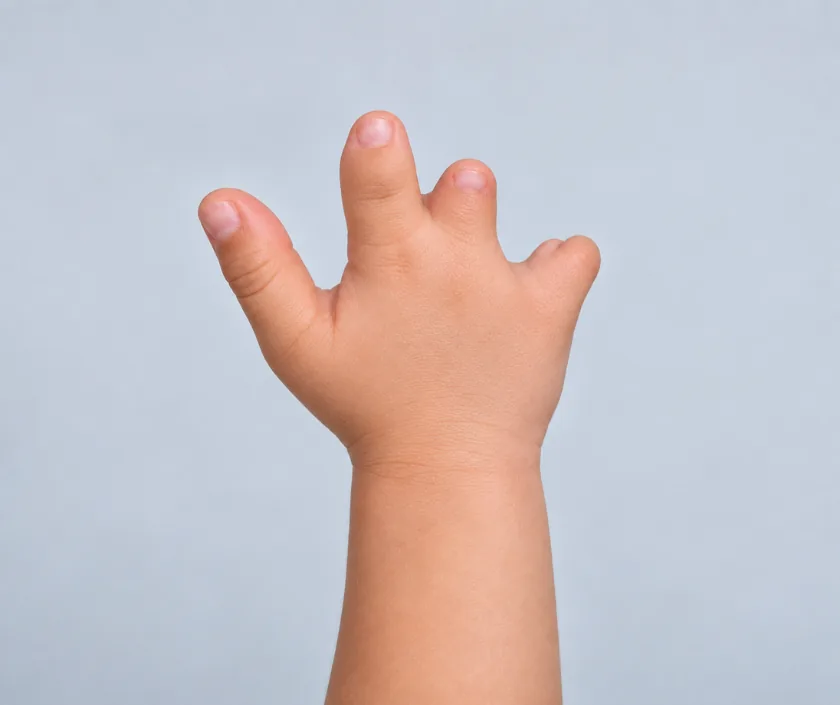
Symbrachydactyly means short, webbed or missing fingers, usually affecting one hand only. Small skin buds with tiny nails often sit where fingers would have been. It happens before birth and is not caused by anything a parent did. Many children use the hand very well, and treatment ranges from therapy alone to web release, bone transfer or a prosthesis.
Symbrachydactyly is a difference in the way one hand formed before birth. The fingers may simply be short, or joined together, or missing with only small soft buds and tiny nails in their place. The thumb is often better formed than the fingers. In most children one hand alone is affected, the other hand is typical, and the difference is not inherited.
Parents often ask what caused it. In almost every case there is no answer to find, and nothing done during pregnancy is to blame. Sometimes the chest muscle on the same side is smaller too, which is part of the same pattern rather than a new problem.
What matters most is what the hand can do. Babies start using whatever they have and become skilled at tasks their parents assume will be hard. Assessment therefore begins with watching play and grasp. Treatment is then chosen to add something the hand lacks, such as a wider grasp or a longer digit to pinch against, rather than to make the hand look ordinary.
The decision rests on what the hand can already do. A child who pinches between two short digits may need nothing, while a child with no pinch at all has more to gain.
The hand is examined and X ray pictures show which small bones are present. Your child is watched picking up objects, since what the hand already does decides whether surgery would add anything.
A hand therapist works on grasp, on using both hands together and on tools that make school tasks easier. Many families need nothing more than this, especially when the thumb works.
Where fingers are held together, the skin is divided and the sides are resurfaced with local flaps and small grafts. Separation gives a wider span and makes cleaning and nail care simpler.
Some children benefit from transferring a small bone from a toe into a short finger, or from slow lengthening with a frame. Both are specialised and are chosen only for clear functional gain.
A simple prosthesis can help with two handed tasks, sport or riding a cycle. Children accept these best when they solve a specific problem rather than being worn all day.
A cast or bulky dressing protects the hand and is kept dry and raised. Discomfort is usually mild. Most children are back to eating and playing normally within days.
Dressings come off at review and therapy begins. Scar care, gentle stretches and games that use the new web spaces help the hand settle into its shape.
Grasp is measured again and compared with the first visit. Splints may be worn at night for a while. School and sport have usually returned to normal by now.
The hand is reviewed as it grows. Some children need a further stage, and a prosthesis may be refitted every so often as they get taller.
The affected hand stays smaller and shorter than the other one for life. Surgery adds function in steps rather than transforming the hand. A transferred toe usually grows with the child and gives useful pinch, though it moves less than a natural finger and leaves a change in the foot. Sensation is often reduced. Most children with this difference reach ordinary milestones and manage school, sport and self care using the hand in their own way.
Surgery here is elective, so weighing the benefit against these risks is part of the decision. Most children heal without trouble.
After surgery the hand is protected for several weeks. After a toe transfer the foot needs care too, and both are watched closely at first.
It is not caused by anything a parent ate, took or did. It happens early in development for reasons still being studied.
Fingers cannot be created from nothing. Surgery gives a way to pinch and hold using what is present or by moving a toe.
Most children adapt early and reach ordinary milestones. They often solve tasks in their own way before adults notice.
Children usually walk and run normally afterwards. The change in the foot is discussed in full before deciding.
We spend the first appointment watching your child play, because that shows more about the hand than any examination or scan.

Treatment for symbrachydactyly ranges from hand therapy alone to several operations, so a single price would not be honest. An estimate reflects how many fingers are separated, whether a bone transfer or lengthening is planned, the anaesthetic and theatre time, the grafts used and the therapy afterwards. A prosthesis is costed separately and needs replacing as your child grows. Cover under a government scheme or a mediclaim policy varies with the diagnosis, and a written estimate follows the assessment visit.
These are the questions that come up most often in consultation. If yours is not here, send it on WhatsApp and the team will reply, usually the same day.
Ask your question →No fixed band is published, because plans vary from therapy alone to staged surgery. Separating fingers, transferring a small bone or fitting a prosthesis each carry their own cost. A written estimate is given after assessment, with a note on scheme or insurance cover.
These operations are routine in children who are fit for anaesthesia. General health and weight are checked first, and a paediatrician reviews the child. Most procedures are short, with close monitoring afterwards and a same day or overnight discharge.
Dressings or a cast stay on for a few weeks, then hand therapy begins. Children are usually comfortable within days. Skill with the new shape of the hand builds over the following months, helped by regular therapy sessions.
Many children do remarkably well, because they adapt from infancy and use both hands together without being taught. Writing, dressing and sport are usually possible. Surgery aims to add grasp or length rather than to create a typical looking hand.
Often not. When the thumb works and objects can be held, therapy and time may be all that is needed. Surgery is suggested for joined fingers, sore skin between digits or where a longer digit would give pinch that is missing.
No. The difference happens early in development and no parental action is known to bring it on. It is very rarely inherited, so brothers and sisters usually have typical hands. This is worth hearing clearly, since many parents carry needless guilt.
The hand is examined, X ray pictures are reviewed and your child is watched at play. You will hear what the hand is likely to manage, which treatments could add function, how therapy fits in and what a written estimate would include.
Each technique below has its own page explaining how it works and when it is chosen.
Seeing patients from across the city and beyond: read about the practice on the plastic surgeon in Surat page, or check what a written estimate covers on the costs and insurance page.
