Syndactyly means two or more fingers are joined at birth. This page explains when joined fingers are separated in Surat, what the operation involves, how splints and hand therapy help and what it may cost.
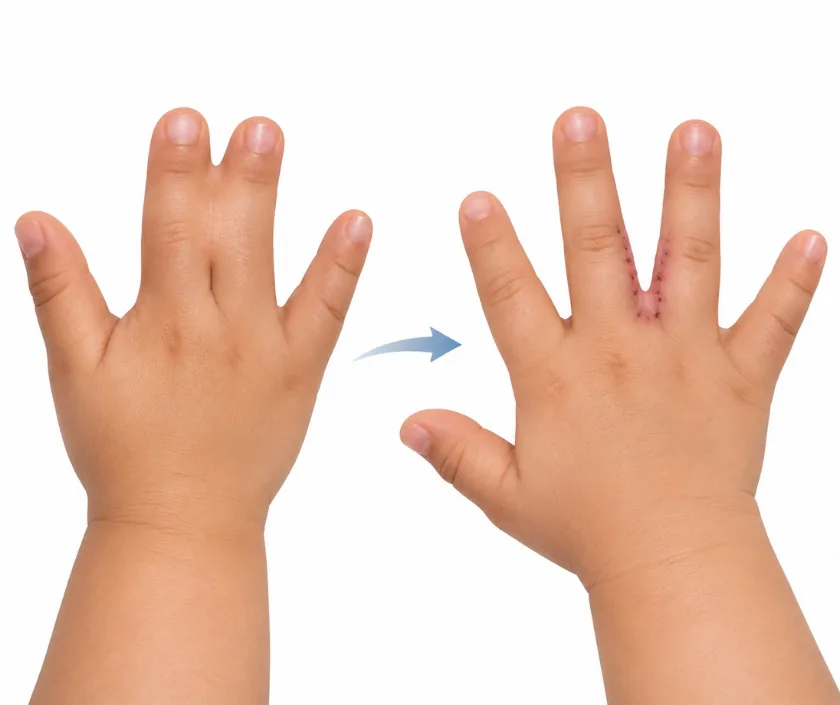
Syndactyly surgery separates fingers that are joined by skin, and sometimes by bone or nail. Timing follows the fingers involved, so a short finger joined to a long one is usually released early, before growth pulls it sideways. Skin grafts are often needed. Splinting and hand therapy follow, and a second release is sometimes advised as the hand grows.
Syndactyly is one of the more common hand differences present at birth. During early development the fingers normally separate from a shared paddle of tissue. When that separation is incomplete, two or more fingers stay joined. The join may involve skin alone, which is called simple syndactyly, or it may include shared bone or nail, which is called complex syndactyly.
Surgery opens the web between the fingers and rebuilds a natural looking web space. The skin along each finger is closed with interlocking flaps, and because there is rarely enough skin to cover both new fingers, a small graft is often taken from the groin crease or the inner arm. Only one side of any finger is released at a sitting, so the blood supply to that finger is protected.
Timing is guided by the child. Fingers of very different lengths, such as the little and ring finger or the thumb and index finger, pull on each other as the hand grows, so these are usually released in the first year or two. A simple join between fingers of similar length can safely wait. Splinting, scar care and hand therapy matter as much as the operation itself.
Most joined fingers are separated, but the urgency varies a great deal. Fingers of different length joined together are the ones that need attention soonest.
The hand is examined and X rays may be taken to see whether bone is shared. The surgeon marks which web will be released first and explains how many sittings are likely to be needed.
Your child sleeps under general anaesthesia. A soft tourniquet on the arm keeps the field clear, so the small nerves and vessels of each finger can be seen and protected throughout.
A flap of skin from the back of the hand is turned down to line the new web space, so the gap between the fingers sits at the right depth and does not creep upwards later on.
Interlocking zigzag flaps are cut along each finger and closed so that no scar runs straight down the side. Shared nail or bone is divided and reshaped where that is needed.
Any raw area is covered with a skin graft, often taken from the groin crease. A bulky dressing and a light plaster hold the hand still while the graft takes.
The hand stays in a bulky dressing and plaster. Keeping the arm raised helps swelling settle. Most children are comfortable with simple pain relief and go home the same day or after one night.
The dressing is changed, sometimes with a short anaesthetic in small children, and the graft is checked. A lighter splint may then be used and gentle movement is encouraged.
Scars are usually settled enough for massage and silicone to begin. A hand therapist guides night splinting and simple exercises so the new web space stays open.
Scars soften slowly over many months. Reviews continue as the hand grows, because the web can drift towards the finger tips and a further release is sometimes advised.
Separated fingers move well but the skin between them will always show that work was done. Grafted skin often heals a shade darker or lighter and may grow a little hair in later life. The web can creep upwards as the child grows, and a small number of children need a second operation to deepen it again. Fingers joined at the bone or sharing a nail end up more different in shape than fingers joined by skin alone.
Syndactyly release is a well established operation and most children use the hand freely afterwards. Knowing what can go wrong helps you spot a problem early.
The cast usually covers the whole arm so a small child cannot pull it off. Once it comes off, the daily work moves to scar care.
There is not enough skin to cover both sides once separated, so a graft is nearly always needed and the repair is carefully planned.
Fingers are separated one side at a time to protect the blood supply, so more than one operation is often planned.
Movement usually becomes good. The skin between the fingers keeps a visible difference in colour and texture.
The web can drift upwards during growth. This is watched at follow up visits and sometimes needs a further small operation.
The depth and shape of the new web is what decides whether a hand works well in ten years, so we plan that part carefully before the day of surgery.

What a family pays depends on how many webs need releasing, whether bone or nail is shared, how many sittings are planned, whether skin grafts are used, the anaesthetic time and the length of stay. Dressing changes under anaesthesia add to the total in very small children. Many children in Gujarat are covered under PM JAY for this release. A written estimate is shared after your child is examined, so the figure is clear before admission.
These are the questions that come up most often in consultation. If yours is not here, send it on WhatsApp and the team will reply, usually the same day.
Ask your question →The published band for a syndactyly release runs from about Rs 40,000 to Rs 85,000. The final figure depends on how many webs are treated, whether grafts are needed and how long the anaesthetic takes. Many children are covered under PM JAY, so ask about scheme cover at the first visit.
Surgery is planned only when a child is well and gaining weight, and an anaesthetist reviews the child beforehand. Hand surgery in children is carried out very often. Risks are lower in a healthy child, and the hand is watched closely in the hours after waking.
Most children go home the same day or after one night. A bulky dressing stays on for about two weeks, then a lighter splint is used. Everyday play usually returns within a month, while scars keep softening for many months afterwards.
Fingers move separately and most children use the hand well for writing, sport and daily tasks. Scars stay visible and a skin graft may differ a little in colour. Function usually matters more to the child than the look of the scar.
Not always. Some children manage well with a mild join between fingers of similar length, and no operation is advised. A hand assessment weighs how the join affects grip, nail growth and finger length before surgery is even discussed.
Timing follows the fingers involved. When a short finger is joined to a long one, such as the ring and little finger or the thumb and index, release is usually planned in the first year or two so growth is not pulled sideways. Fingers of similar length can wait.
The hand is examined, grip and finger movement are checked and X rays may be taken to look for shared bone. Photographs are often kept for the record. You will hear how many sittings are likely, what therapy follows and what the cost and scheme cover would be.
Each technique below has its own page explaining how it works and when it is chosen.
Seeing patients from across the city and beyond: read about the practice on the plastic surgeon in Surat page, or check what a written estimate covers on the costs and insurance page.
