A thyroglossal cyst is a smooth lump in the middle of the neck that moves when your child swallows or pokes out the tongue. This page explains what it is and why the operation also removes a small piece of the hyoid bone.
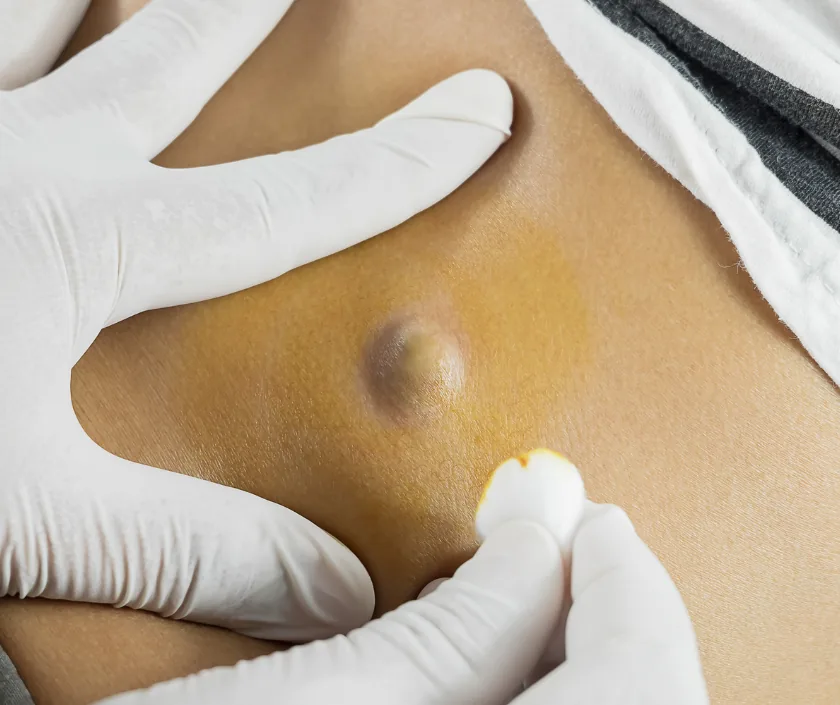
Thyroglossal cyst surgery removes a fluid filled lump that sits in the midline of the neck, left behind by the path the thyroid gland took as the baby developed. The operation, known as the Sistrunk procedure, takes out the cyst, the tract above it and the middle part of the hyoid bone, because the tract passes through that bone.
Early in pregnancy the thyroid gland starts at the base of the tongue and travels down the front of the neck to its final place. The path it takes normally closes and disappears. When part of that path stays open, fluid collects in it and forms a thyroglossal cyst, sitting in the midline near the hyoid bone.
The classic sign is a soft, round lump in the middle of the neck that rides upward when your child swallows or sticks the tongue out, because the tract is still attached above. Many are noticed in the early school years. Some swell suddenly during a throat infection, and a few burst and leave a weeping opening in the skin.
At Elegance Clinic in Surat the lump is examined and an ultrasound is arranged to confirm the diagnosis and to check that normal thyroid tissue is present in the usual place. Thyroid blood tests may be added. Once that is clear, surgery is planned as a day case or a single night stay.
Surgery is usually advised once a thyroglossal cyst is confirmed, because these cysts tend to become infected over time. Timing depends on infection and on the thyroid check.
The neck is examined and an ultrasound confirms the cyst and shows that the thyroid gland is in its normal position. Blood tests of thyroid function may be added before the operation is booked.
Under general anaesthesia, a short cut is made in a natural crease of the neck over the lump. Placing it in a crease helps the healed line settle into the skin lines rather than across them.
The cyst is separated from the surrounding muscle and the tract leading upward from it is identified. The surgeon keeps the wall of the cyst intact so that no lining is left behind.
Because the tract runs through the hyoid bone, the middle part of that bone is removed along with it. Taking this small central segment is why the Sistrunk approach has a much lower rate of the cyst returning than simply lifting out the lump.
The tract is followed toward the base of the tongue and tied off. A small drain may be left, the muscle layer is repaired and the skin is closed with fine stitches under a light dressing.
A sore throat and neck stiffness are common because the work is close to the tongue base. Soft food and cool drinks help. Any drain comes out before discharge or at the first check.
The wound is reviewed and stitches attended to. Most children return to school within a week or so. Swallowing feels normal again as the swelling inside settles.
Normal diet, sport and swimming are usually fine by now with the surgeon agreeing. The scar is still pink and slightly firm, which is a normal stage of healing.
The line softens and fades. The lump should not return once the tract and the central hyoid segment have been removed. Any new midline swelling is worth showing to the team.
Most children go home within a day or two and are back to normal within a couple of weeks. A short scar sits in a natural crease of the neck and usually fades to a pale line over a year. Swallowing feels odd for a few days and then settles. A small number of cysts return, most often when part of the tract was hidden or when the area was infected at the time of surgery, and a second operation is then discussed.
The Sistrunk operation is well established and most children recover smoothly. It helps to know the small risks in advance.
Recovery is usually straightforward. Keep the wound clean, keep meals soft for a few days and watch for signs of infection.
Antibiotics settle an infection but the cyst and its tract stay behind, so swelling tends to come back.
Removing the lump alone leaves the tract, and that is the main reason cysts return. The tract and part of the hyoid bone go too.
The scar is placed in a natural neck crease and usually settles into a pale line, though it never disappears.
The thyroid is checked before surgery for this reason. In most children the gland is in its usual place and works normally afterwards.
This is a common childhood operation, and the details that reduce the chance of it returning are the ones we spend our time on.

The figure depends on the size of the cyst, whether it has been inflamed or has burst before, the anaesthesia time, day care against an overnight stay, ultrasound and thyroid blood tests, and the sample sent for testing. A written estimate is given after the assessment, together with a clear note of what your policy or a government scheme is likely to cover.
These are the questions that come up most often in consultation. If yours is not here, send it on WhatsApp and the team will reply, usually the same day.
Ask your question →There is no fixed price. Cost depends on the size of the cyst, earlier infection, anaesthesia time, hospital stay, scans and blood tests. A written estimate is prepared after the neck has been examined, so the family knows the whole figure before agreeing to a date.
The tract from the cyst passes through the middle of the hyoid bone. Leaving that segment behind leaves lining that can refill. Removing the central part of the bone with the tract is the reason this approach has a lower chance of the lump coming back.
Only the small central segment is taken and the muscles attached nearby are repaired. Swallowing feels sore for a few days and then settles. Swallowing and speech in the long run are usually unaffected, and any concerns are checked at follow up visits.
Most children go home the same day or the next morning. A sore throat and neck stiffness ease over a few days with soft food and simple pain relief. School is usually possible within about a week, sport a little later.
Removal is usually advised even for a quiet cyst, because it tends to grow and can become infected, and an infected cyst is harder to remove cleanly. Operating before repeated infections gives a tidier result and a lower chance of return.
An active infection is treated first with antibiotics, and sometimes the fluid is drained. Surgery is planned once the tissue has calmed down, because operating through inflamed tissue makes it harder to take the whole tract out in one piece.
The neck is examined, the way the lump moves is checked and an ultrasound is arranged if it has not been done. Thyroid blood tests may be requested. The operation, scar, anaesthesia and recovery are explained, followed by a written estimate.
Seeing patients from across the city and beyond: read about the practice on the plastic surgeon in Surat page, or check what a written estimate covers on the costs and insurance page.
