The brachial plexus is the web of nerves that leaves the neck and powers the whole arm. Damage to it, most often after a motorcycle accident, can leave the limb weak or completely still, and timing then becomes critical.
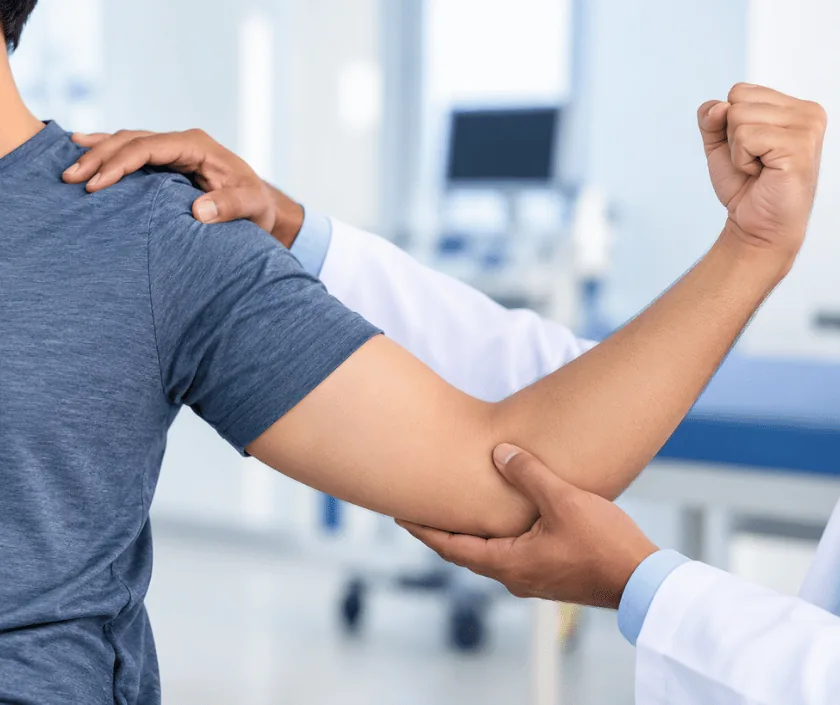
Brachial plexus injury damages the network of nerves running from the neck into the shoulder and arm. Most cases in India follow motorcycle accidents, where the head and shoulder are forced apart. Surgery may repair, graft or transfer nerves to bring back priority movements such as bending the elbow. Timing is critical, and full recovery is uncommon.
Signals to the arm all travel through one crowded junction. Nerve roots leave the spinal cord in the neck, merge, split and rearrange themselves behind the collarbone, then emerge as the main nerves of the limb. That arrangement gives the arm its range, and it also means a single accident can knock out shoulder, elbow and hand together.
Force is usually the cause. A rider thrown from a motorcycle lands with the shoulder pushed down while the head is thrown the other way, stretching the nerves beyond what they can take. Some fibres are merely bruised. Others tear along their length, and in the worst pattern a root is pulled clean out of the spinal cord, which cannot be stitched back.
Assessment therefore takes time and repetition. Examination, scans and nerve studies together build a picture of which roots survive and which do not. Because muscles that receive no signal begin to waste, this assessment cannot be allowed to drift, and decisions are usually made within months rather than years.
Reconstruction suits patients whose injury has been mapped carefully and who come forward while the muscles of the arm are still capable of responding.
Repeated examination, imaging of the neck and nerve conduction studies are combined to work out which roots are torn, which are pulled out and which may recover alone.
Not everything can be restored, so goals are agreed in order. Bending the elbow usually comes first, followed by shoulder stability, then wrist and hand where possible.
Under general anaesthesia the nerves are exposed through the neck and above or below the collarbone. Each element is traced and stimulated to confirm what is working.
Torn nerves are bridged with grafts. Where a root has been pulled from the cord, a healthy nearby nerve is redirected to power an important muscle instead.
The wound is closed and the arm supported. A long therapy programme begins, retraining the brain to use the transferred nerve for its new job.
You stay in hospital with the arm supported and pain controlled. Movement of the neck is limited at first to protect the repair.
Sutures are reviewed and the sling continues. Gentle passive movement of the shoulder, elbow and hand keeps the joints from stiffening.
Support is usually reduced and active therapy increases. No muscle response is expected yet, because fibres have only just begun their journey.
First flickers of movement may appear, often around the elbow. Strength then builds slowly over a long period, and therapy remains central throughout.
Frank discussion matters more here than almost anywhere else in hand surgery. Complete recovery of a severe brachial plexus injury is uncommon, and the aim is a useful arm rather than a normal one. Elbow bending and shoulder stability respond better than hand function, which is the hardest to regain. Results depend on which roots survived, how quickly surgery followed the injury and how consistently therapy is done.
This is major surgery on delicate structures, and the risks deserve careful thought before you agree.
Rehabilitation after plexus surgery is measured in months, and much of it happens at home between therapy visits.
Some stretch injuries do recover, but torn roots or roots pulled from the cord will not. Only assessment can tell which pattern you have.
Delay allows arm muscles to waste beyond rescue. Nerve reconstruction has a window, and missing it changes what remains possible.
Reconstruction aims to restore priority movements. A useful, working arm is a realistic target, whereas a normal one usually is not.
Therapy is essential yet cannot reconnect a torn nerve. It supports the surgery and keeps joints ready, rather than replacing it.
Brachial plexus injuries at Elegance Clinic in Surat are handled as a planned reconstructive pathway, with assessment, surgery and rehabilitation discussed openly from the first visit.

Brachial plexus reconstruction is planned surgery, and its cost reflects the length of the operation, the number of grafts or transfers required, the hospital stay and the imaging done beforehand. Rehabilitation continues for a long time afterwards and forms a real part of the total, so it is included in the discussion rather than left out. A written estimate is prepared once your assessment is complete. Road accident cases often involve insurance, and the team will help you assemble the paperwork.
These are the questions that come up most often in consultation. If yours is not here, send it on WhatsApp and the team will reply, usually the same day.
Ask your question →The figure depends on operating time, how many grafts or nerve transfers are used, the hospital stay and the scans arranged beforehand. Therapy afterwards adds to the total. A written estimate is prepared once assessment is complete.
It is major surgery performed under general anaesthesia near important vessels, so it is undertaken with care. Bleeding, infection, donor site weakness and persistent nerve pain are the main concerns, and each is explained fully before consent.
Wounds settle within a few weeks, while nerve recovery is far slower. Fibres must travel from the neck down the arm, so the first flicker of movement often appears months later, and strength then builds gradually.
Full recovery after a severe injury is uncommon. Reconstruction targets priority movements, usually elbow bending and shoulder stability, so the arm becomes useful for daily tasks. Hand function is the most difficult part to regain.
Some stretched nerves that remain in one piece recover with time and therapy. Torn nerves and roots pulled from the spinal cord will not, so surgery is the only route towards restoring movement in those patterns.
Timing is the single most important factor. Sharp cuts are explored early, while closed stretch injuries are watched for a defined period, then operated on if no recovery appears. Long delay allows muscles to waste past rescue.
Every muscle group in the arm is graded and areas of numbness mapped, then compared with any earlier findings. Scans and nerve studies are usually arranged. Realistic goals, timing and a written estimate are then discussed together.
Seeing patients from across the city and beyond: read about the practice on the plastic surgeon in Surat page, or check what a written estimate covers on the costs and insurance page.
