Nerves carry two messages. They bring feeling back from the skin, and they carry movement instructions out to muscle. When a nerve in the arm or hand is cut, bruised or stretched, both jobs are affected in the area that nerve supplies, which is why a numb patch and a weak movement usually appear together.

Recovery depends heavily on what happened to the nerve. A bruised nerve that stays in continuity often recovers on its own over weeks. One that has been cleanly divided will not rejoin by itself and needs stitching under magnification. Where a length of nerve is missing, a graft or a conduit is used to bridge the gap. Regrowth is slow in every case, measured in months rather than weeks, so patience and steady therapy matter as much as the surgery itself. Timing also counts, because muscle that waits too long for a nerve supply responds less well even to a good repair.
Grading tells the surgeon whether to wait or to operate, since some injuries recover unaided while others never will.
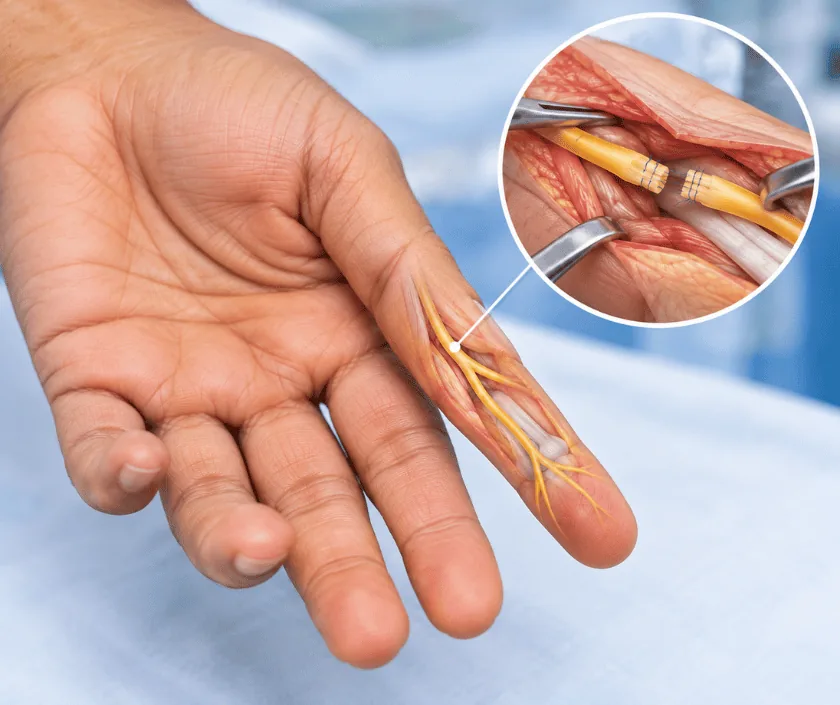
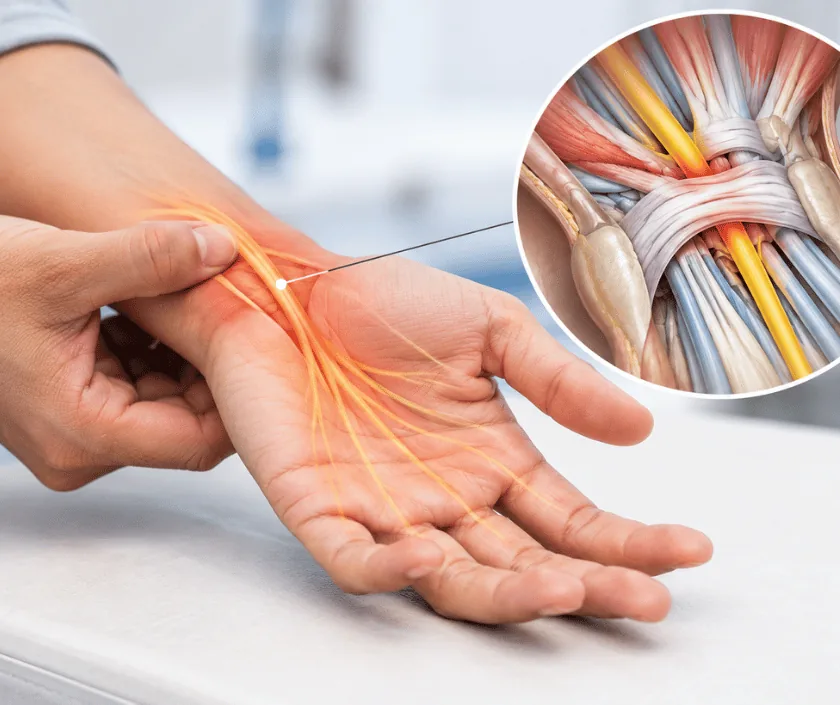
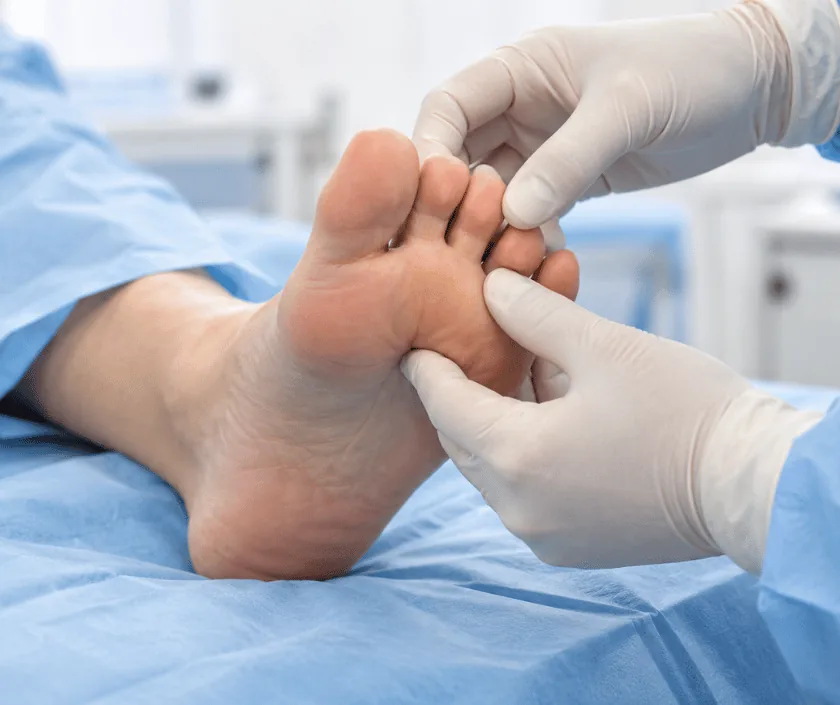
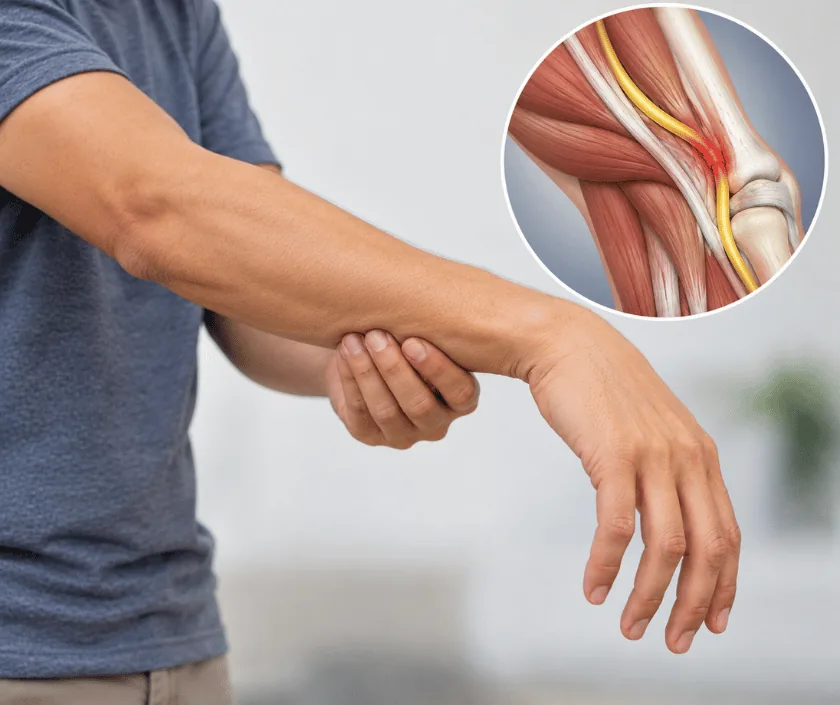
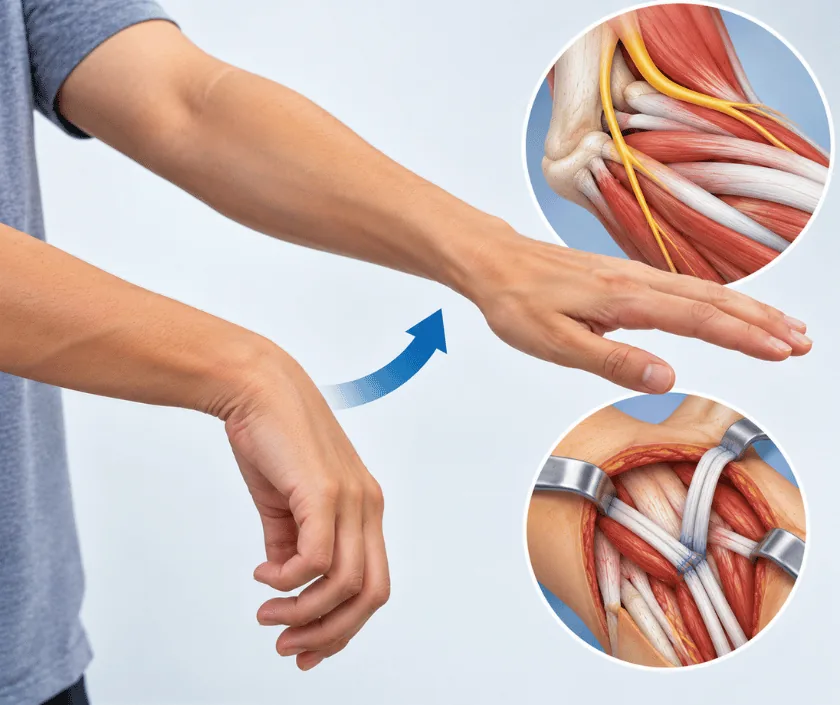
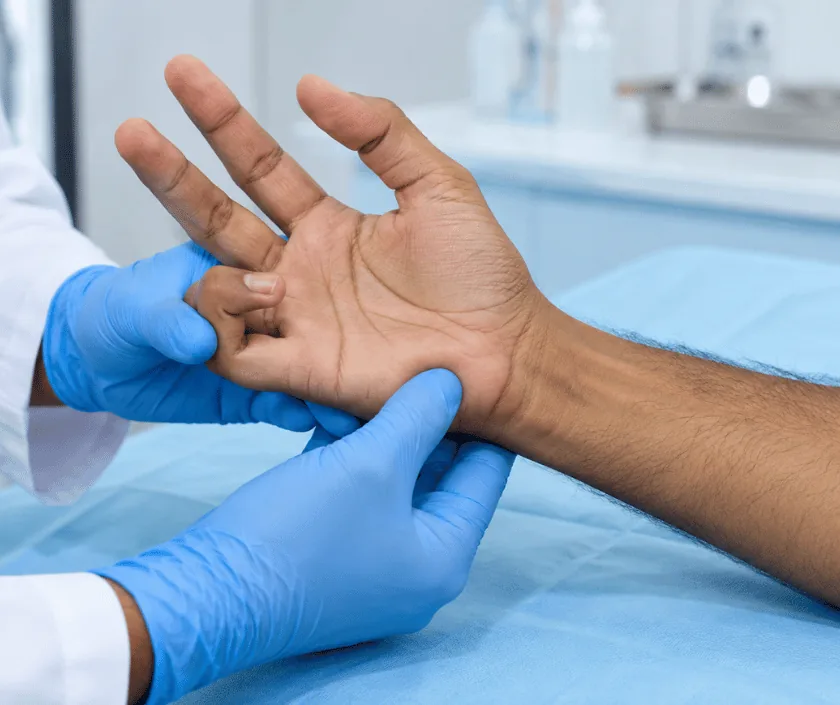
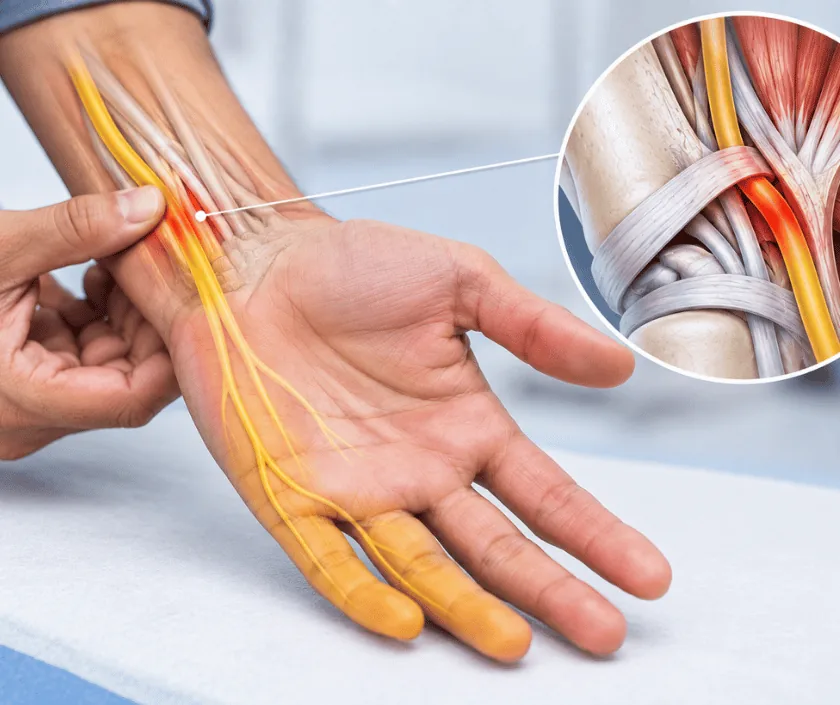
Regrowth happens at a slow crawl, measured in millimetres a day, so an injury near the elbow takes many months to reach the fingertips. Progress is tracked by a tingling point that moves gradually down the limb as the fibres advance.
Skin without feeling is easily burned or cut without the person noticing. Care around hot vessels, tools and cigarettes is important until sensation returns. Checking the hand by eye each day catches small wounds before they turn into deep ulcers.
Nerve conduction studies and ultrasound show whether signals are crossing the injured segment and whether the nerve is in continuity. Repeating a study after some weeks is often more useful than a single one, because change over time guides the decision.
Burning pain, tingling and dislike of cold are common while nerves recover, and occasionally a tender lump of nerve fibres forms in a scar. Desensitisation therapy, medication and sometimes a small operation all help settle these symptoms.
Nerve problems reward early assessment, because the window for a good repair is limited.
The answers below cover timing, cost, safety and what recovery honestly involves.
Ask your question →A single clean repair as a day case is the least expensive. Grafting, nerve transfers and longer operations raise the figure, as do nerve conduction studies and months of therapy. An itemised estimate is provided once the injury has been assessed.
Repairs are done under magnification, usually with a regional block that numbs the whole arm. Risks include infection, scarring around the repair and incomplete recovery. Taking a graft leaves a numb strip of skin at the donor site, which is discussed beforehand.
Regrowth is slow, so months pass before sensation reaches the fingertips, and longer for injuries higher up the arm. A moving area of tingling is a sign of progress. Improvement can continue for a year or two after the operation.
Protective feeling usually returns after a good repair, so heat and sharp objects are noticed again. Fine discrimination often remains reduced. Children tend to recover more completely than adults, and results are better when the repair was done early.
Sensation can sometimes still be improved, but muscle that has been without a nerve supply for a long time may not respond even to a successful repair. In those cases tendon or muscle transfers are the reliable way to restore movement.
A cleanly cut nerve is best repaired within the first days or weeks, while the ends still meet easily. Closed injuries are often watched for a few months first. Either way, early assessment sets the clock running and avoids missing the window.
Sensation is mapped area by area, individual muscles are tested, and the wound or scar is examined. Nerve studies may be arranged. You will hear whether waiting or operating is advised, and what recovery is likely to look like month by month.
